Should You Take an Iodine Supplement?
You should only take an iodine supplement if a healthcare provider confirms you have a deficiency or a higher need, such as during pregnancy or breastfeeding. Iodine plays a crucial role in thyroid health, and most people get enough from their diet.
Common sources include seafood, dairy, eggs, and iodized salt.
Taking iodine supplements without medical advice can lead to thyroid problems and unwanted side effects. If you’re unsure about your iodine levels or experience symptoms like fatigue or a swollen neck, it’s best to get tested and receive professional guidance.
Understanding how iodine impacts your thyroid health is important for maintaining overall well-being.
Key Takeaways
- Iodine supplements are only recommended if a deficiency is diagnosed or if you belong to a high-risk group like pregnant women or those in iodine-deficient areas.
- Most people meet iodine needs through diet, especially from seafood, dairy, eggs, and iodized salt, so supplements are often unnecessary.
- Excess iodine intake from supplements can disrupt thyroid function, causing hypothyroidism, hyperthyroidism, or autoimmune thyroid issues.
- Consult a healthcare provider before taking iodine supplements to avoid risks and ensure safe, appropriate dosing.
- Monitoring thyroid function with blood tests helps guide the need for supplementation and prevents complications from iodine imbalance.
What Is Iodine And Why Your Thyroid Needs It
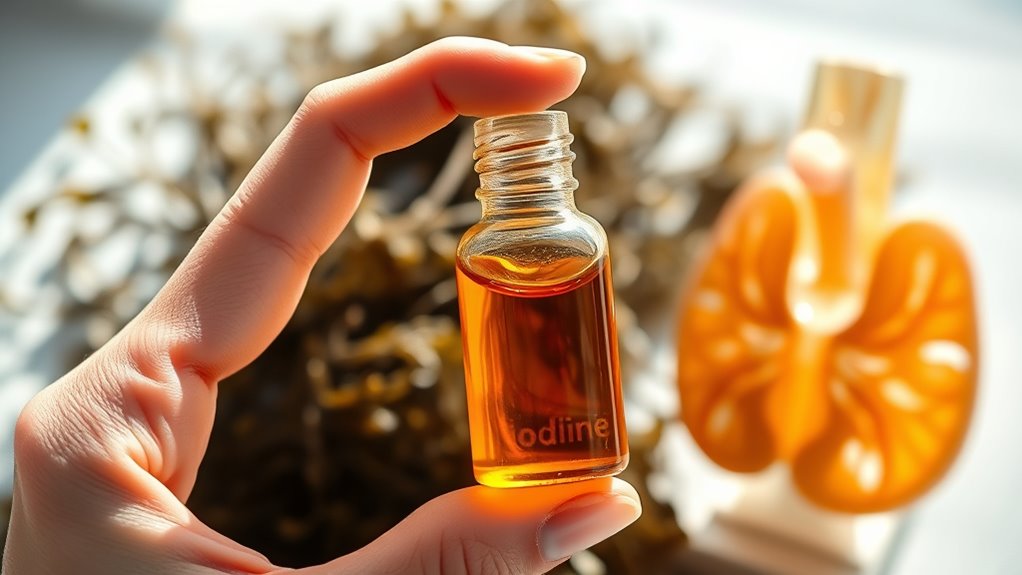
Why is iodine so important for your thyroid? Iodine is a crucial mineral your thyroid needs to produce thyroid hormones like thyroxine (T4) and triiodothyronine (T3). These hormones regulate your metabolism, growth, and overall energy use.
Without enough iodine, your thyroid can’t make these essential hormones properly, which may cause issues like goiter or hypothyroidism. Since your body can’t create iodine on its own, you need to get it from your diet—seafood, dairy products, and iodized salt are common sources.
It’s especially important to maintain adequate iodine intake during pregnancy and breastfeeding to support your baby’s development. Ensuring your thyroid has enough iodine helps keep these hormones balanced and your body functioning smoothly.
How Iodine Affects Thyroid Function And Hypothyroidism
You need iodine to produce thyroid hormones that regulate your metabolism, but not getting enough can lead to hypothyroidism with symptoms like fatigue and weight gain.
While supplements can help correct deficiencies, too much iodine might actually disrupt your thyroid function.
It’s important to balance iodine intake carefully and consult a doctor before starting supplements.
Iodine’s Role In Hormone Production
Although iodine might seem like just another mineral, it plays a crucial role in your body’s hormone production by enabling the thyroid gland to create thyroxine (T4) and triiodothyronine (T3). These thyroid hormones are essential for regulating your metabolism, growth, and development. Your thyroid absorbs iodine from the bloodstream to produce them, so getting enough iodine is key to maintaining proper hormone production.
If iodine levels drop too low, your thyroid can’t make enough hormones, which disrupts your body’s balance. On the other hand, too much iodine can also interfere with hormone synthesis. By ensuring adequate iodine intake, you support your thyroid’s ability to produce hormones efficiently, keeping your metabolism and overall health in check.
Deficiency And Hypothyroidism Risks
When your body doesn’t get enough iodine, your thyroid can’t produce the hormones it needs, leading to hypothyroidism. Iodine deficiency directly impairs thyroid function, causing symptoms like fatigue, weight gain, and sensitivity to cold. If the deficiency is severe, your thyroid gland may enlarge, forming a goiter as it tries to compensate for low hormone levels.
It’s important to note that in areas with sufficient iodine intake, hypothyroidism usually results from autoimmune disorders rather than iodine deficiency. So, if you suspect thyroid issues, understanding whether iodine deficiency is the cause is vital. Without confirmed deficiency, iodine supplementation might disrupt your thyroid function and worsen hypothyroidism, so be cautious before adding iodine supplements to your routine.
Supplementation Benefits And Dangers
Since iodine plays a crucial role in thyroid hormone production, getting the right amount is necessary for maintaining your metabolism and energy. Iodine supplements can help if you have an iodine deficiency, which may cause hypothyroidism, leading to fatigue and weight gain.
However, taking iodine supplements without a confirmed deficiency can harm your thyroid health. Excess iodine can disrupt hormone regulation, causing either hypothyroidism or hyperthyroidism, both affecting your energy and weight.
Most people get enough iodine from a balanced diet, so supplementing unnecessarily might do more harm than good. Always consult a healthcare professional before starting iodine supplements to ensure they’re safe and beneficial for your thyroid health, especially if you suspect or have been diagnosed with iodine deficiency.
Common Dietary Sources Of Iodine You Might Already Eat
You might be surprised to learn that many foods you already enjoy contain iodine naturally, like seafood and dairy products. Iodized salt, which is commonly used in cooking and processed foods, also helps boost your iodine intake.
Understanding these sources can make it easier to meet your iodine needs without extra supplements.
Natural Iodine Foods
A variety of everyday foods naturally contain iodine, so you might already be getting enough without realizing it. Iodine-rich foods like seafood—fish, shrimp, and seaweed—offer a substantial source of this essential mineral.
Dairy products such as milk, yogurt, and cheese also contribute iodine because of fortified animal feed and the sanitizing agents used during processing. Don’t overlook eggs, especially the yolk, which accumulates iodine from the hen’s diet. Even some bread products contain iodine, thanks to iodized salt used in baking.
Keep in mind that the iodine content in fruits, vegetables, and grains depends on the soil where they’re grown, so local produce may vary in iodine levels. Understanding these natural sources can help you determine if you need a supplement.
Iodized Salt Benefits
How often do you consider the salt you use as more than just a seasoning? Iodized salt is actually a key player in maintaining your iodine intake and supporting thyroid health. Just a teaspoon of iodized salt typically provides about 150 micrograms of iodine, meeting the daily recommended amount for most adults.
Who Should Consider Iodine Supplements And Why
Although most adults get enough iodine from iodized salt and their regular diet, certain groups should think about supplements to meet their specific needs. If you follow a vegan diet or avoid processed foods, you might be at risk of iodine deficiency and should consider discussing supplements with your healthcare provider.
Pregnant women need extra iodine to support thyroid health and fetal development, so supplementation is often recommended for them. If you have hypothyroidism and take medication, you typically don’t need additional iodine unless a deficiency is confirmed. Also, if you live in an area known for iodine deficiency or have limited access to iodine-rich foods, consulting a doctor about supplements is wise to ensure your thyroid functions properly and you avoid potential health issues.
Iodine Supplementation During Pregnancy And Breastfeeding
Since your body supports not only your health but also your baby’s development during pregnancy and breastfeeding, guaranteeing adequate iodine intake is vital. Iodine during pregnancy is indispensable for your baby’s brain and nervous system growth, requiring about 150 micrograms daily.
Breastfeeding moms need even more—around 290 micrograms—to keep breast milk rich in iodine. Here’s what you should know:
- Most prenatal vitamins include the recommended iodine amount to support a proper thyroid function.
- Iodine supplements help prevent developmental delays and intellectual disabilities linked to iodine deficiency.
- Avoid excess iodine intake, which can disrupt your and your baby’s thyroid health.
- Always consult your healthcare provider before starting iodine supplements during pregnancy or breastfeeding to guarantee safety.
Risks Of Taking Iodine Supplements Without Medical Advice
You are trained on data up to October 2023. Taking iodine supplements without medical guidance can expose you to risks like excessive iodine intake, which may disrupt your thyroid function. This imbalance can lead to thyroid dysfunction, including hypothyroidism or hyperthyroidism, especially if you have pre-existing thyroid conditions.
Self-medicating with iodine might interfere with your body’s natural hormone production and trigger autoimmune reactions or worsen autoimmune thyroid diseases. You might also experience side effects such as metallic taste, mouth soreness, or stomach upset. Since iodine affects your hormonal balance, it’s vital to consult a healthcare professional before starting supplements.
Proper medical guidance ensures safe use and helps avoid complications related to unnecessary or excessive iodine consumption.
Signs Of Iodine Deficiency And Excess To Watch For
When your iodine levels aren’t balanced, your body will often give clear signals. Both iodine deficiency and iodine excess can disrupt thyroid health, so it’s important to recognize the signs early.
Here are 4 key symptoms to watch for:
- Fatigue and unexplained weight gain, common with iodine deficiency.
- Visible swelling in the neck (goiter), indicating your thyroid is struggling.
- Rapid heartbeat, nervousness, and weight loss, which may suggest iodine excess.
- Cognitive difficulties or brain fog, which can occur in both deficiency and excess.
If you notice these signs, it’s a signal your thyroid health might be off due to iodine imbalance. Monitoring your symptoms helps avoid complications linked to both iodine deficiency and iodine excess.
What To Do If You Have Thyroid Symptoms Or Suspect Hypothyroidism
If you notice symptoms like fatigue, weight gain, or feeling unusually cold, it’s important to consult a healthcare provider to check for hypothyroidism. Thyroid symptoms can be subtle but should never be ignored. Your doctor will likely order blood tests to measure TSH and thyroid hormone levels to confirm whether hypothyroidism or another thyroid issue is present.
Don’t start iodine supplements on your own; unnecessary iodine can worsen thyroid problems. Treatment usually involves prescribed levothyroxine, and iodine supplements are only recommended if a deficiency is confirmed. Regular follow-ups are essential to monitor your thyroid function and adjust treatment as needed.
Frequently Asked Questions
How Do I Know if I Need an Iodine Supplement?
You’ll know if you need an iodine supplement by getting tested—either a blood test or urine iodine concentration test can show your levels. Since symptoms aren’t reliable, it’s best to consult a healthcare provider, especially if you’re pregnant, breastfeeding, or follow a restrictive diet like veganism.
They can recommend supplementation if your iodine levels are low, ensuring you get the right amount without risking excess intake.
Why Can’t People Over 40 Take Iodine?
You can take iodine after 40, but you need to be careful. Your thyroid becomes more sensitive with age, so excess iodine might cause problems like hyperthyroidism or autoimmune issues. Your body’s ability to handle iodine declines, increasing the risk of overload.
It’s best to get medical advice before starting supplements to avoid triggering thyroid dysfunction or worsening existing conditions. So, don’t just take iodine blindly—check with your doctor first.
What Happens if You Take Iodine and Don’t Need It?
If you take iodine when you don’t need it, you might think it’s harmless, but it can actually disrupt your thyroid. Excess iodine can cause your thyroid to malfunction, leading to conditions like hypothyroidism or hyperthyroidism.
You could experience symptoms like a metallic taste or stomach upset, and in some cases, it might even trigger inflammation or autoimmune issues. So, it’s best not to supplement unless a deficiency is confirmed.
Who Should Not Take Iodine?
You shouldn’t take iodine supplements if you have autoimmune thyroid diseases like Hashimoto’s or Graves’, unless your doctor says so. Also, avoid them if you have an iodine allergy or thyroid nodules, as excess iodine can cause problems.
Pregnant or breastfeeding women should only take iodine if recommended by a healthcare provider. If you’re on medications like amiodarone or lithium, check with your doctor before using iodine supplements to avoid interactions.
Conclusion
Imagine your thyroid as a delicate engine, finely tuned by iodine’s invisible hand. Before you reach for a supplement, picture the balance it requires—too little, and the engine sputters; too much, and it overheats.
You likely get enough iodine from your daily meals, but if pregnancy, breastfeeding, or symptoms cloud your health, consulting a doctor is your safest map.
Listen to your body’s signals before adding iodine to your routine. When deciding whether to take an iodine supplement, always consider your individual needs and seek medical advice to maintain optimal thyroid health.