How to Determine If Protein Powder Is a Supplement
You can tell a protein powder is a supplement by checking its label for a Supplement Facts panel, ingredient list, and serving size details. These elements are key indicators that the product is designed to provide nutritional benefits beyond regular food.
Look for certifications like USP or NSF that confirm quality and safety.
Avoid proprietary blends and artificial sweeteners to guarantee transparency in what you’re consuming. Third-party testing reports help verify protein content and rule out contaminants.
Want to understand ingredient choices and how to spot authentic supplements?
Keep exploring to get the full picture.
Key Takeaways
- Check for a Supplement Facts panel listing serving sizes, nutrients, and ingredients on the protein powder label.
- Look for explicit labeling indicating the product is a “dietary supplement” or related disclaimers.
- Verify the presence of third-party certifications like USP or NSF for quality and safety assurance.
- Confirm added vitamins, minerals, or herbal extracts that suggest supplement marketing.
- Ensure ingredient transparency with clear lists and avoid proprietary blends that hide exact protein content.
Identifying Protein Powders as Dietary Supplements
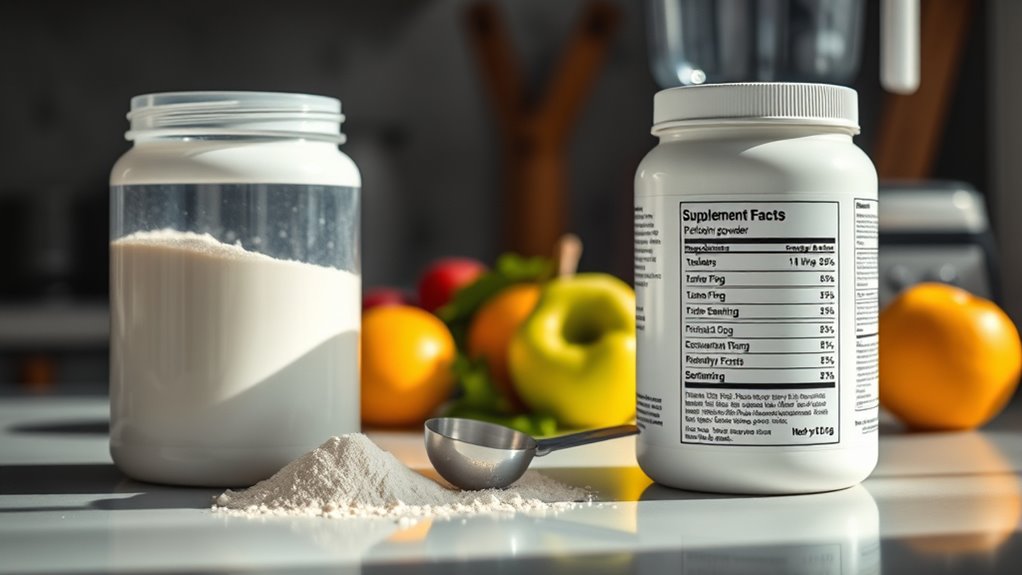
Although protein powders come in various forms, you can identify them as dietary supplements by checking their labels for specific indicators. First, look for a Supplement Facts panel that lists ingredients, serving sizes, and nutrient content—this confirms they’re regulated as supplements. The label often explicitly states “dietary supplement” or includes disclaimers about supporting health or muscle growth.
Many products also undergo third-party testing, so spotting certifications like USP or NSF on the label can assure you the protein powder meets safety and quality standards. Additionally, if you see added vitamins, minerals, or herbal extracts in the ingredients, that’s another sign it’s marketed as a dietary supplement. Paying attention to these details helps you clearly distinguish protein powders from other food products.
Labels and Certifications That Confirm Supplement Status
When you’re checking a protein powder to see if it’s a dietary supplement, the labels and certifications provide clear clues. Look for proper labeling that includes an ingredient list, serving sizes, and disclaimers stating it’s a dietary supplement—not a food or medication.
Certifications from independent organizations like USP, NSF, or Informed-Sport are key; they verify product safety and ingredient accuracy. These certifications often indicate the product has undergone independent testing to confirm it contains what the label claims and is free from contaminants.
Since the FDA doesn’t require pre-market approval, these certifications and clear labeling reassure you about the supplement status and quality of the protein powder you’re considering.
Why Third-Party Testing Matters for Protein Powders
A reliable protein powder should come with third-party testing to guarantee what’s on the label matches what’s inside the container. This independent verification assures label accuracy, confirming the protein content and ingredients are truthful. Third-party testing also checks for contaminants, including dangerous heavy metals like arsenic, lead, cadmium, and mercury, ensuring their levels stay within safe limits.
When a product carries certification from trusted organizations such as NSF International or USP, it reflects a commitment to transparency and quality. These seals show you’re choosing a protein powder free from unlisted fillers, artificial additives, or harmful adulterants. Without this testing, you can’t be sure the supplement is safe or accurately represented, making third-party testing essential for protecting your health and trust in the product.
Ingredients to Look For and Avoid in Protein Supplements
If you want a protein supplement that supports your health without unnecessary additives, focus on simple, recognizable ingredients like whey isolate, pea protein, or rice protein. Check the ingredients list carefully to verify the protein source is transparent and free from hidden components. Avoid proprietary blends since they hide protein content and additives, making it tough to know exactly what you’re consuming.
Also, skip artificial sweeteners like sucralose or aspartame, which may pose health risks.
Look out for:
- Short ingredients list with clean protein sources
- No artificial sweeteners or excessive additives
- Avoidance of proprietary blends that obscure content
Choosing wisely helps you get a cleaner supplement that truly benefits your nutrition.
Verifying Protein Powder Content Accuracy on Labels
You’ll want to check if the label’s protein content is backed by third-party testing from trusted organizations like NSF or USP. Be cautious of products with proprietary blends that hide exact amounts, as this can mask protein spiking.
Always look for transparency reports or certifications that confirm the protein levels match what’s claimed on the label.
Label Claim Verification
When verifying protein powder content accuracy on labels, it’s essential to compare the listed protein amounts with third-party testing results. This helps guarantee label claims are truthful and reliable. You should also examine the amino acid profile to confirm the protein quality and detect any amino spiking.
Certification from reputable organizations like NSF or USP strengthens confidence in ingredient verification. Be wary of proprietary blends, as they often hide exact ingredient amounts, making it tough to verify claims. To effectively verify label claims, focus on:
- Checking third-party testing reports for protein content accuracy
- Reviewing certifications that confirm scientific validation
- Comparing amino acid profiles with declared protein amounts to detect inconsistencies
This approach helps you trust that the protein powder truly meets its labeled specifications.
Third-Party Testing Importance
Although protein powder labels often claim specific protein amounts, you can’t always take them at face value without third-party testing. This process is essential because it verifies label accuracy by ensuring the protein content listed matches what’s actually in the product. Independent labs use reliable methods like amino acid analysis to measure protein levels and check for contaminants.
Certifications from organizations like NSF International offer you peace of mind, signaling that the product has undergone rigorous verification. When shopping, look for these third-party seals or transparency reports to confirm authenticity. Without this verification, manufacturers might inflate protein claims, misleading you.
Relying on third-party testing helps you make informed choices and trust that your protein powder really delivers what it promises.
Detecting Protein Spiking
Third-party testing not only confirms the accuracy of protein content but also helps spot practices like protein spiking, where manufacturers add free amino acids to inflate protein numbers on labels. To detect protein spiking, you’ll want to focus on amino acid analysis, which compares the product’s amino acid profile against its label claims.
Discrepancies often reveal the addition of non-essential amino acids like glycine or alanine, signaling spiking. Here’s what to look for:
- A balanced amino acid profile reflecting true protein sources
- Reports from third-party testing labs confirming label claims
- Unusually high levels of free amino acids indicating spiking
How to Tell If a Protein Powder Is a Supplement or Meal Replacement
You can tell if a protein powder is a supplement or a meal replacement by checking the label for nutritional content and serving size. Supplements usually focus on protein with minimal calories and few added nutrients, while meal replacements offer a balanced mix of macros and vitamins.
Understanding the intended use helps you choose the right product for your needs.
Protein Powder Label Indicators
When examining protein powder labels, you can often tell if the product is meant as a supplement or a meal replacement by looking at its nutritional content and ingredient list. The protein label typically shows the grams of protein per serving size, which is essential. Supplements usually offer 20-25 grams of protein with fewer added ingredients.
Meal replacements contain more diverse macronutrients and extras. Look for these label indicators:
- Serving size and grams of protein: supplements focus on high protein with minimal extras.
- Ingredients list: meal replacements include fiber, healthy fats, vitamins, and minerals.
- Macronutrient profile: added calories and carbs suggest a meal replacement, not just protein supplementation.
Checking these details helps you choose the right product for your needs.
Nutritional Content Differences
Although both protein supplements and meal replacements come in powder form, their nutritional content sets them apart clearly. When you check the nutrition facts label, protein supplements usually highlight a high protein content—around 20-25 grams per serving—with minimal calories and sugars.
Meal replacements, on the other hand, pack 200+ calories per serving and include a wider range of macronutrients like carbohydrates, fats, and fiber to mimic a full meal. Ingredients in meal replacements often list added vitamins and minerals such as iron and vitamin D for completeness.
Serving size is another clue: meal replacements tend to have larger servings with extensive macros, while protein powders focus on smaller, protein-heavy servings. Paying attention to these differences helps you decide if a powder is a supplement or a meal replacement.
Intended Usage Purposes
Since protein powders serve different roles, understanding their intended usage helps you decide whether a product is a supplement or a meal replacement. Meal replacement powders usually have larger serving sizes with added macronutrients like carbs and fats, providing more calories and diverse ingredients.
In contrast, supplement protein powders focus on high protein content with minimal extras, supporting muscle recovery rather than replacing meals. To identify the purpose, check the product’s marketing claims and nutritional profile. Look for:
- Labels specifying meal replacement formulas, often including vitamins, minerals, and fiber
- Serving sizes and macronutrients that indicate either a balanced meal or a protein boost
- Ingredients like oats or superfoods suggesting satiety and weight management focus
This helps you choose the right protein powder for your goals.
Frequently Asked Questions
Is Protein Powder Considered a Supplement?
Yes, protein powder is considered a supplement. It’s designed to add extra protein to your diet, helping with muscle growth and recovery.
You’ll usually see it labeled as a dietary supplement, which means it’s regulated differently than medications.
Just remember, it doesn’t require FDA approval before sale, so it’s smart to check for third-party testing and clear ingredient lists to make sure you’re getting a quality product.
How to Read Protein Powder Labels?
They say, “Don’t judge a book by its cover,” and the same goes for protein powders. When reading the label, check the protein amount per serving—aim for 20-25 grams. Look for clear ingredient lists with whole-food sources and avoid mystery blends.
Be sure calories, fats, and carbs are transparent. Also, verify third-party testing seals for safety. Finally, note the serving size and number of servings to manage your intake effectively.
How to Use Protein Powder in Pregnancy?
You can use protein powder during pregnancy by first consulting your healthcare provider to guarantee it’s safe for you. Choose clean, minimally processed options without artificial additives, and stick to recommended serving sizes—usually about 20 grams per serving.
Incorporate it into a balanced diet, mixing it into smoothies or meals. Always pick products certified by third parties to avoid contaminants, supporting both your health and your baby’s development safely.
Can You Drink Protein Shakes After Gallbladder Surgery?
Absolutely, you can drink protein shakes after gallbladder surgery—think of it like tuning a vintage jukebox to play just the right tune. Start with low-fat, easily digestible shakes like whey isolate or simple plant-based powders. Avoid artificial sweeteners and high-fat options to prevent discomfort.
Always check with your doctor about your protein needs, and introduce shakes slowly to see how your body reacts. You’ll be back to feeling great in no time!
Conclusion
Now that you know how to spot if your protein powder is truly a supplement, you can make smarter choices for your health. Always check labels, certifications, and third-party tests—don’t just trust the flashy packaging like a knight trusting a shiny sword.
Remember, real supplements focus on quality ingredients and accurate content. By staying informed, you’ll avoid meal replacements masquerading as supplements and fuel your body the right way every time.
In conclusion, determining if protein powder is a supplement comes down to verifying its ingredients, purpose, and labeling. Prioritize products that are transparent and tested to ensure you’re getting a genuine protein supplement, not just a meal replacement. This approach helps you maintain optimal nutrition and supports your fitness goals effectively.