
How to Manage Diarrhea Caused by Iron Supplements
If iron supplements give you diarrhea, managing these side effects is essential for comfort and continued treatment. Diarrhea caused by iron supplements can be uncomfortable, but there are several strategies to help reduce symptoms and improve tolerance.
Adjusting how you take iron can make a significant difference in your digestive health. Try lowering your dose or splitting it into smaller amounts throughout the day. Taking iron with meals—especially non-dairy foods—and choosing gentler forms like ferrous fumarate or extended-release options can soothe your gut.
Also, eat bland, easy-to-digest foods and drink plenty of fluids to stay hydrated. Adding vitamin C-rich foods can improve iron absorption and digestion.
Keep these tips in mind to better manage symptoms, and there’s more useful advice to help you feel better soon.
Key Takeaways
- Take iron supplements with meals and start with lower doses, gradually increasing to improve tolerance and reduce intestinal irritation.
- Switch to gentler iron forms like ferrous fumarate, ferrous bisglycinate, or extended-release options to minimize diarrhea and gut upset.
- Incorporate probiotic and vitamin C-rich foods while avoiding spicy, high-fiber, and dairy products during supplementation to support digestion.
- Stay well-hydrated with water, herbal teas, and electrolyte-rich foods to prevent dehydration from diarrhea caused by iron supplements.
- Consult a healthcare provider if diarrhea persists beyond two days, worsens, or is accompanied by severe symptoms or dehydration signs.
How To Manage Diarrhea Caused By Iron Supplements
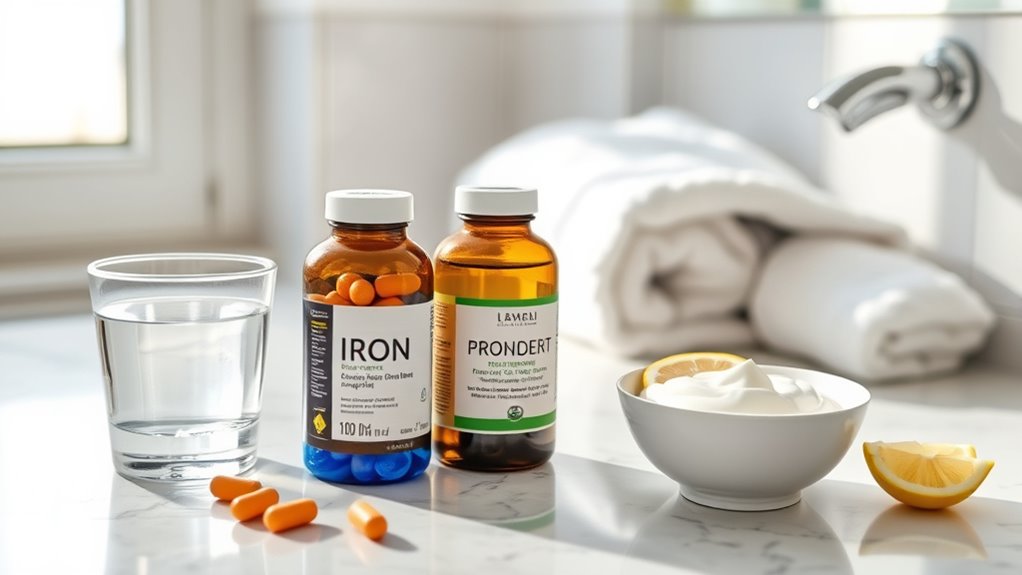
If you’re experiencing diarrhea from iron supplements, taking them with food or right after meals can ease gut irritation and reduce symptoms. You might also want to split your daily iron dose into smaller amounts throughout the day to lessen gastrointestinal side effects. Switching to gentler forms of iron supplementation, like ferrous fumarate or iron bisglycinate, can further minimize diarrhea and other gut issues.
Staying well-hydrated and increasing your fiber intake supports bowel regularity, helping to alleviate diarrhea symptoms. However, if diarrhea persists or worsens despite these measures, it’s important to consult a healthcare provider. They can adjust your iron dosage or recommend alternative formulations better suited to your digestive system, ensuring effective supplementation without uncomfortable gastrointestinal side effects.
What Causes Diarrhea From Iron Supplements
Understanding why iron supplements cause diarrhea can help you manage this side effect more effectively. Diarrhea often results from unabsorbed iron irritating your intestinal lining and disrupting gut bacteria balance. This irritation, combined with excess unabsorbed iron drawing water into your intestines, leads to increased stool frequency and watery diarrhea.
Taking iron supplements on an empty stomach or in high doses raises your risk of gastrointestinal upset. If you have conditions like irritable bowel syndrome or gastritis, you’re more susceptible to iron-induced diarrhea.
| Cause | Effect on Gut | Resulting Symptom |
|---|---|---|
| Unabsorbed iron | Intestinal irritation | Diarrhea |
| Excess iron | Water drawn into intestines | Watery stools |
| High dose or empty stomach | Increased gastrointestinal upset | Nausea, diarrhea |
| Pre-existing GI conditions | Heightened sensitivity | More frequent diarrhea |
How Different Iron Supplement Types Affect Digestion And Diarrhea Risk
Because different iron supplement types vary in how they’re absorbed and tolerated, your choice can considerably affect digestion and diarrhea risk. Ferrous sulfate, the most common iron supplement, often causes more gastrointestinal irritation, including diarrhea, than gentler forms like ferrous fumarate or ferrous gluconate.
Extended-release iron supplement forms release iron slowly, reducing stomach lining irritation and improving tolerance. Chelated forms such as ferrous bisglycinate and alternatives like carbonyl iron or iron polymaltose complex enhance iron absorption while lowering gastrointestinal side effects.
Liquid iron supplements, especially in kids, tend to cause more digestive upset and blackened stools. By selecting iron supplement forms suited to your digestive sensitivity, you can minimize diarrhea risk and improve your overall iron absorption experience.
Why Taking Iron With Food Might Help Diarrhea
Taking iron with food can ease gut irritation by slowing absorption and reducing unabsorbed iron that might cause diarrhea. You’ll want to choose foods low in calcium and caffeine to avoid blocking iron uptake.
Pairing your supplement with a small snack or vitamin C-rich drink can make it gentler on your stomach while still getting the benefits.
Food and Iron Absorption
If you find iron supplements upsetting your stomach, having them with a small amount of food might ease diarrhea and irritation. Taking iron on an empty stomach often causes gastrointestinal discomfort, but a light snack like bread or crackers can act as a buffer, reducing direct contact with your gut lining. This not only minimizes side effects but also maintains good iron absorption.
Including foods rich in vitamin C, such as orange slices or strawberries, with your iron can boost absorption further while helping your digestive system handle the supplement more smoothly. Just avoid high-fiber, dairy, or spicy foods when you take iron, as these can worsen diarrhea.
Reducing Gut Irritation
When you pair iron supplements with a small amount of food, you’ll often find your stomach feels less irritated and diarrhea is less likely to occur. Food buffering slows iron absorption slightly, which helps reduce gastrointestinal discomfort and gut irritation.
To maximize benefits, choose gentle, bland foods like crackers or toast that protect your gut lining. Avoid dairy and high-fiber foods when taking iron supplements, as they can interfere with absorption and increase gut irritation.
Instead, opt for meals low in calcium and rich in vitamin C to enhance iron uptake while minimizing gastrointestinal side effects. By adjusting how and what you eat with your supplements, you’ll better manage diarrhea and discomfort caused by iron without sacrificing effectiveness.
How Vitamin C Affects Iron Absorption And Your Digestion
Although iron supplements are essential for many, vitamin C plays a crucial role in helping your body absorb iron more effectively by converting it into a form that’s easier to take in. This improves iron absorption and can reduce gastrointestinal discomfort related to poor iron uptake.
However, too much vitamin C might lead to loose stools or diarrhea during digestion. Balancing vitamin C intake is key to optimizing iron absorption while minimizing digestive upset.
| Factor | Effect on Iron Absorption | Impact on Digestion |
|---|---|---|
| Vitamin C amount | Converts Fe3+ to Fe2+, enhancing absorption | Supports smoother digestion |
| Vitamin C source | Orange juice, citrus fruits | May cause mild gastrointestinal upset if excessive |
| Iron supplement form | Ferrous forms absorb better with vitamin C | May irritate gut if not balanced |
| Overconsumption | No additional absorption benefit | Can cause diarrhea or loose stools |
| Timing of intake | With iron supplements | Helps reduce digestive discomfort |
How To Prevent Diarrhea When Taking Iron
To prevent diarrhea when taking iron, you should consider choosing gentler forms like ferrous fumarate or iron bisglycinate. Taking smaller doses more frequently throughout the day can also help reduce digestive upset. Timing your supplements with meals, especially non-dairy, high-protein ones, makes a big difference too.
Choosing Gentle Iron Forms
If you’re struggling with diarrhea from iron supplements, choosing gentler iron forms can make a big difference. Opt for options like ferrous fumarate or chelated iron, which tend to cause less gastrointestinal upset than standard ferrous sulfate. Extended-release iron supplements can also help by releasing iron slowly, reducing irritation in your digestive tract.
These milder forms improve tolerance and lower the risk of diarrhea. When selecting iron supplements, look for those labeled as chelated or extended-release, and consider ferrous fumarate as a good alternative. By choosing these gentler forms, you’ll likely experience fewer side effects while still getting the iron your body needs.
This approach helps you manage side effects without compromising on your iron intake.
Timing And Dosage Tips
When you take iron supplements, timing and dosage play a big role in preventing diarrhea. To reduce gastrointestinal irritation, try taking your iron with food, ideally after meals. Splitting your daily dosage into smaller, more frequent amounts can also ease stomach upset and lower the risk of diarrhea.
Start with the lowest effective dose and gradually increase it as your body adapts, avoiding high-dose supplements that often trigger loose stools. Enhancing iron absorption by consuming vitamin C-rich foods or drinks, like orange juice, can help you get the most from lower doses, minimizing gastrointestinal side effects.
How To Adjust Your Iron Dose To Reduce Diarrhea
Although managing iron supplementation can be challenging, adjusting your dose carefully can ease diarrhea symptoms. Start by reducing your iron dose gradually to give your digestive system time to adapt, which helps improve diarrhea management. Instead of taking your full daily dose at once, try splitting it into smaller amounts throughout the day.
This approach can lessen gastrointestinal upset and optimize iron absorption. Taking supplements with non-spicy, easy-to-digest food can further minimize diarrhea. Remember, adjusting supplements thoughtfully is key to balancing effectiveness with comfort.
If diarrhea persists despite these changes, consult your healthcare provider to review your iron dose or consider other options. This way, you can manage your iron needs without compromising your digestive health.
When To Switch Iron Supplement Types
Should you find that diarrhea or stomach discomfort persists despite adjusting your iron dose, it might be time to switch to a different supplement type. Iron supplements cause side effects like diarrhea and stomach cramps, especially with ferrous sulfate or gluconate. If these symptoms continue, try gentler options such as ferrous bisglycinate or ferrous fumarate, which are often easier on your digestive system.
Liquid iron can irritate or stain, so switching to coated tablets or capsules may reduce side effects of iron. Extended-release or chelated iron products might also help if standard ferrous forms trigger frequent diarrhea. Persistent or worsening symptoms mean you should consult your healthcare provider to find a suitable alternative that minimizes gastrointestinal discomfort and helps you stick with your iron therapy.
Best Foods To Eat When You Have Iron Supplement Diarrhea
A diet focused on bland, easy-to-digest foods can help calm your stomach if iron supplements are causing diarrhea. Stick to options like bananas, rice, applesauce, and toast, which soothe stomach upset without adding stress to your digestive system. Including probiotic-rich foods such as yogurt or kefir may restore gut balance and reduce diarrhea severity.
To boost iron absorption safely, eat foods high in vitamin C like oranges or strawberries, but avoid anything spicy, greasy, or high in fiber, as these can worsen symptoms. Remember to maintain proper hydration by drinking plenty of water, herbal teas, or oral rehydration solutions to prevent dehydration and support recovery. This balanced approach helps manage discomfort while keeping your iron intake effective.
Natural Remedies For Iron Supplement Diarrhea
When dealing with diarrhea from iron supplements, staying hydrated is key, so make sure you drink plenty of clear fluids like oral rehydration solutions or herbal teas.
Soothing herbal teas such as ginger or chamomile can calm your digestive system and reduce discomfort. These natural remedies support your recovery while helping maintain electrolyte balance.
Hydration And Electrolytes
How can you best stay hydrated while dealing with diarrhea from iron supplements? Maintaining electrolyte balance is key to preventing dehydration and supporting recovery. Here’s what you can do:
- Drink oral rehydration solutions (ORS) with the right mix of salts and glucose to quickly replenish lost fluids and electrolytes.
- Sip natural electrolyte-rich drinks like coconut water to restore sodium, potassium, and magnesium.
- Eat foods high in natural electrolytes, such as bananas and watermelon, to support hydration internally.
- Consume small amounts of clear broths to add gentle hydration and essential minerals.
- Keep up your overall fluid intake with electrolyte solutions to maintain proper hydration and mineral balance.
Focusing on these steps helps you manage diarrhea symptoms effectively while minimizing dehydration risks.
Soothing Herbal Teas
Although iron supplements can upset your stomach, drinking certain herbal teas might help soothe your digestive system and ease diarrhea symptoms. Herbal teas like ginger, chamomile, and peppermint offer natural relief by calming gastrointestinal irritation and promoting digestion. Chamomile’s anti-inflammatory properties reduce inflammation, peppermint relaxes intestinal muscles to ease cramping, and ginger supports overall gastrointestinal health while reducing nausea.
Be sure to choose caffeine-free options and drink these teas in moderation to avoid further irritation.
| Herbal Tea | Benefit | Effect on Diarrhea |
|---|---|---|
| Chamomile | Anti-inflammatory | Calms gastrointestinal irritation |
| Peppermint | Muscle relaxant | Reduces cramping and diarrhea |
| Ginger | Supports digestion and nausea | Lessens loose stools |
How To Stay Hydrated During Iron Supplement Diarrhea
Since iron supplements can cause diarrhea, keeping yourself properly hydrated is essential to avoid dehydration. Focus on maintaining hydration by drinking plenty of water and replenishing lost electrolytes.
Here’s how you can stay hydrated during iron supplement diarrhea:
- Drink at least 8 ounces of water or clear fluids every hour to replace lost fluids.
- Sip fluids frequently in small amounts instead of large gulps to aid absorption.
- Use oral rehydration solutions to restore electrolytes and support hydration balance.
- Avoid caffeinated, sugary, or alcoholic drinks as they can worsen dehydration and irritate your gut.
- Monitor your urine color; light yellow means good hydration, while dark urine signals you need more fluids.
Following these steps will help you maintain proper hydration and manage diarrhea symptoms effectively.
When To See A Doctor For Diarrhea Caused By Iron
If your diarrhea caused by iron supplements lasts more than two days or gets worse despite changes in your diet, it’s important to see a doctor. Certain symptoms indicate a need for prompt medical attention to protect your health and prevent complications.
| Symptom | When to See a Doctor |
|---|---|
| Blood in stools | Immediately |
| Severe abdominal pain | Immediately |
| Signs of dehydration | Dizziness, dry mouth, seek urgent care |
| High fever (>102°F/39°C) | Urgent medical care needed |
| Vomiting or weakness | If unable to keep fluids down, see a doctor |
Don’t ignore worsening stool color or allergic reactions. Prioritizing your health means knowing when to see a doctor if diarrhea from iron supplements becomes serious.
Frequently Asked Questions
How to Prevent Diarrhea From Iron Supplements?
To prevent diarrhea from iron supplements, try taking them with meals that aren’t high in dairy or fiber. You might want to switch to gentler iron types like ferrous fumarate or chelated iron. Splitting your dose into smaller amounts throughout the day can also help.
Make sure you stay hydrated and gradually increase fiber in your diet. Avoid high doses of vitamin C with your iron unless your doctor says it’s okay.
Is Diarrhea a Symptom of Too Much Iron?
Yes, diarrhea is a symptom of too much iron. When you take excessive iron, it irritates your gut, disrupts your bowel movements, and alters your gut bacteria. When your intestines draw in extra water due to unabsorbed iron, diarrhea can result.
When your body struggles to handle high iron levels, gastrointestinal symptoms like diarrhea often follow. So, if you notice diarrhea after iron supplements, it might mean you’re taking too much.
Can You Take Iron With Gabapentin?
Yes, you can take iron with gabapentin, but it’s best to space them out by at least two hours to help your body absorb the iron better. Taking them together usually doesn’t cause problems, but you should still check with your doctor first, especially if you’re on other medications.
Keep an eye on any side effects or changes in how you feel, and always follow your healthcare provider’s advice for the safest experience.
How Long Does It Take for Your Body to Adjust to Iron Supplements?
You’ll usually start feeling better within 3 to 7 days, as your body begins adjusting to iron supplements. Full adjustment typically takes about 2 to 4 weeks, during which side effects like diarrhea often decrease markedly.
If symptoms persist beyond two weeks, you might need to tweak how you take your iron or consult a healthcare provider. Splitting doses or taking iron with food can also help ease your digestive system’s adaptation.
Conclusion
Managing diarrhea from iron supplements can feel like charting a stormy sea, but with gentle adjustments—like taking iron with food or sipping soothing herbal teas—you can find calmer waters.
Remember to nourish your body with easy-to-digest foods and stay hydrated like a steady stream replenishing dry earth.
If symptoms persist, don’t hesitate to seek guidance.
With mindful care, you’ll restore balance and sail smoothly toward better health. Managing diarrhea caused by iron supplements involves patience, proper hydration, and dietary adjustments to ensure comfort and recovery.