Does Using Protein Supplements Cause Hair Loss?
Using protein supplements for muscle building and fitness is common, but many people wonder, does using protein supplements cause hair loss? The answer isn’t straightforward because protein itself doesn’t directly lead to hair loss.
However, some ingredients found in certain protein supplements, like whey isolate, creatine, or DHEA, may increase hormone levels such as DHT, which is linked to hair thinning and shedding.
If you notice more hair shedding after starting supplements, it’s wise to review the ingredients carefully.
Balancing your diet with nutrients that promote hair health can also make a difference. Staying informed about these factors helps you protect your hair while reaching your fitness goals.
You can find out more about managing hair loss related to supplements below.
Key Takeaways
- No direct scientific evidence links protein supplements to hair loss in most users.
- Some protein isolates like whey and creatine may raise DHT, a hormone linked to hair thinning.
- High DHT levels can contribute to androgenetic alopecia and hair follicle miniaturization.
- Choosing plant-based proteins and avoiding hormone-boosting ingredients can reduce hair loss risk.
- Consult a doctor if experiencing significant or persistent hair shedding while using supplements.
Do Protein Shakes Cause Hair Loss?
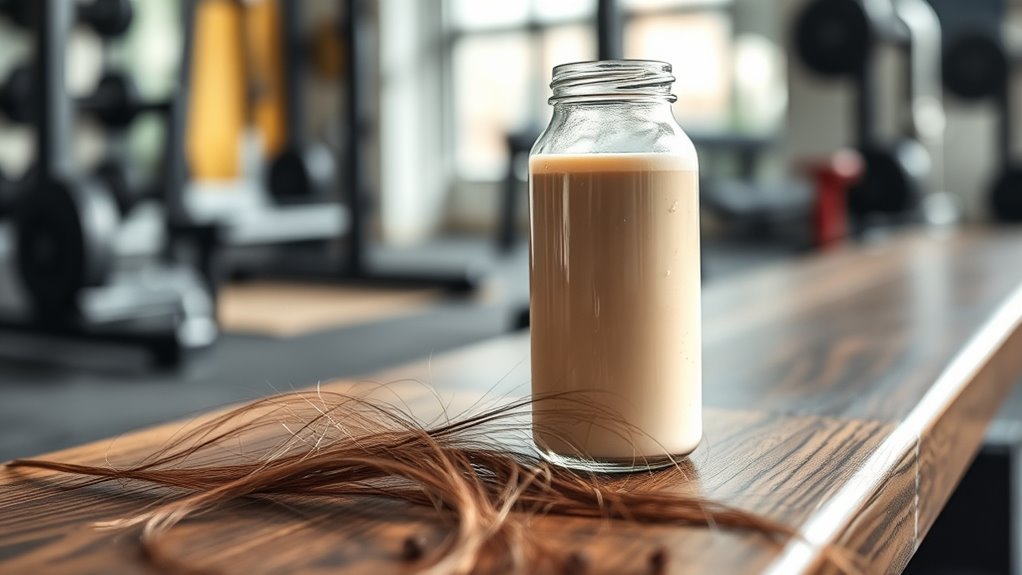
Although some people worry that protein shakes might cause hair loss, there’s no solid scientific proof directly linking them to it. Whey protein and other protein supplements actually support hair health by providing essential nutrients for growth. However, some studies suggest that certain protein isolates might raise testosterone levels and DHT, a hormone linked to hair thinning and androgenetic alopecia, especially if you’re genetically predisposed.
Ingredients like creatine found in some shakes may also increase DHT, potentially contributing to hair loss risk in sensitive individuals. For most people, moderate use of protein shakes won’t cause hair loss. If you’re concerned, focus on balanced protein intake and monitor your hair health while considering any family history of hair thinning before relying heavily on protein supplements.
Which Ingredients in Protein Shakes Might Affect Your Hair?
When you choose a protein shake, it’s important to contemplate the ingredients that might impact your hair health. Whey protein, especially whey isolate, can increase testosterone and DHT levels, hormones closely linked to hair loss and hair thinning.
Protein supplements containing creatine or DHEA also affect hormone levels; creatine has been shown to raise DHT by up to 56%, while DHEA can elevate testosterone and DHT, potentially worsening hair thinning if you’re genetically predisposed.
Beyond pure protein, some shakes include prohormones or anabolic agents, which may further disrupt your hormone balance and increase the risk of hair loss. Paying attention to these protein shake ingredients helps you make informed choices, minimizing the chances that your supplement routine contributes to unwanted changes in your hair.
Creatine, DHEA, and Hair Loss: What Science Says
If you’re using supplements with creatine or DHEA, you should know they can raise DHT levels, a hormone closely linked to hair loss. Creatine boosts DHT by about 56% within a week, while DHEA raises both testosterone and DHT, increasing risks of androgenetic alopecia. Elevated DHT causes hair follicle miniaturization, leading to thinning.
Consider these points about hormone supplements and hair health:
- Creatine impacts DHT but not testosterone substantially
- DHEA can disrupt hormone balance and accelerate hair loss
- Genetic predisposition increases sensitivity to DHT effects
- Excessive DHEA usage may raise cancer risks
- Monitoring hormone levels is essential for maintaining hair health
If you’re prone to hair loss, carefully weigh the benefits and risks of using these supplements.
How to Keep Your Hair Healthy When Using Protein Shakes
Supplements like creatine and DHEA can affect hormone levels and hair health, so it’s important to be mindful when adding protein shakes to your routine. To maintain hair vigor, choose protein supplements with high-quality ingredients, avoiding added hormones and excessive whey protein, which might contribute to hair loss.
If you notice increased shedding, consider switching to plant-based protein alternatives. Supporting your hair follicles with a balanced diet rich in vitamins A, C, D, E, biotin, and iron also helps maintain hair health. Regular scalp care, including gentle massages, promotes circulation and strengthens follicles.
Staying aware of supplement side effects is key, and monitoring hormone levels with a healthcare professional ensures your approach supports both your fitness and hair vigor effectively.
When Should You See a Doctor About Hair Loss?
Although some hair shedding is normal, you shouldn’t ignore sudden or heavy hair loss. If you experience persistent hair loss or notice sudden hair shedding, seeking medical advice is essential to identify underlying causes. A healthcare professional can provide a thorough professional evaluation to determine if supplement side effects or other factors are contributing.
Early intervention often leads to better outcomes, especially if pattern baldness runs in your family. Consider seeing a doctor if you notice:
- Rapid hair loss after starting new protein supplements
- Continuous thinning or bald patches
- Family history of pattern baldness
- Hair loss worsening over weeks or months
- Scalp irritation or unusual symptoms
Prompt consultation ensures proper diagnosis and treatment, helping you manage hair loss effectively.
Frequently Asked Questions
Can Protein Powder Cause Hair Fall?
Protein powder itself doesn’t directly cause hair fall, but you might experience issues if you consume it excessively or if it contains added ingredients like creatine or DHEA. These can affect hormone levels linked to hair loss.
Your genetics and hormone balance also play a big role. To protect your hair, make sure you keep a balanced diet and talk to a healthcare professional before starting any supplement routine.
Can Having Too Much Protein Cause Hair Loss?
Yes, having too much protein can contribute to hair loss, especially if you’re consuming excessive amounts through supplements. When your protein intake is really high, it might increase hormones like DHT, which is linked to hair thinning.
It can also strain your kidneys and metabolism, indirectly affecting your hair health. So, it’s important you keep your protein intake balanced to avoid potential hair loss issues.
Conclusion
Using protein shakes doesn’t automatically mean you’ll lose hair, but some ingredients like creatine or DHEA might stir the pot. Think of your hair as a delicate garden—it needs the right balance of nutrients to flourish. So, nourish it wisely and don’t ignore warning signs.
If hair loss feels like a storm you can’t weather, seeing a doctor is your best umbrella. Stay informed, and your hair will thank you for the care. Understanding whether protein supplements cause hair loss can help you make better choices for your health and hair.