Should I Take a B12 Supplement?
You should consider a B12 supplement if you’re vegan, vegetarian, or have digestive issues that limit absorption. Vitamin B12 is essential for energy production, nerve health, and the formation of red blood cells.
If you experience symptoms like fatigue, numbness, or memory trouble, it might indicate a deficiency.
Older adults and people with certain health conditions are also at higher risk of low B12 levels. Supplements come in various forms, so choosing the right one is important for effective absorption.
Keep exploring to find out how to test your levels and take B12 safely.
Key Takeaways
- Consider a B12 supplement if you follow a vegan or vegetarian diet lacking animal products.
- Older adults and those with digestive disorders may need supplements due to reduced B12 absorption.
- Early deficiency symptoms include fatigue, numbness, and cognitive changes, warranting testing before supplementing.
- Blood tests, including methylmalonic acid levels, help determine if supplementation is necessary.
- Consult a healthcare provider to choose the appropriate B12 form and dosage based on your health needs.
Why Vitamin B12 Is Important
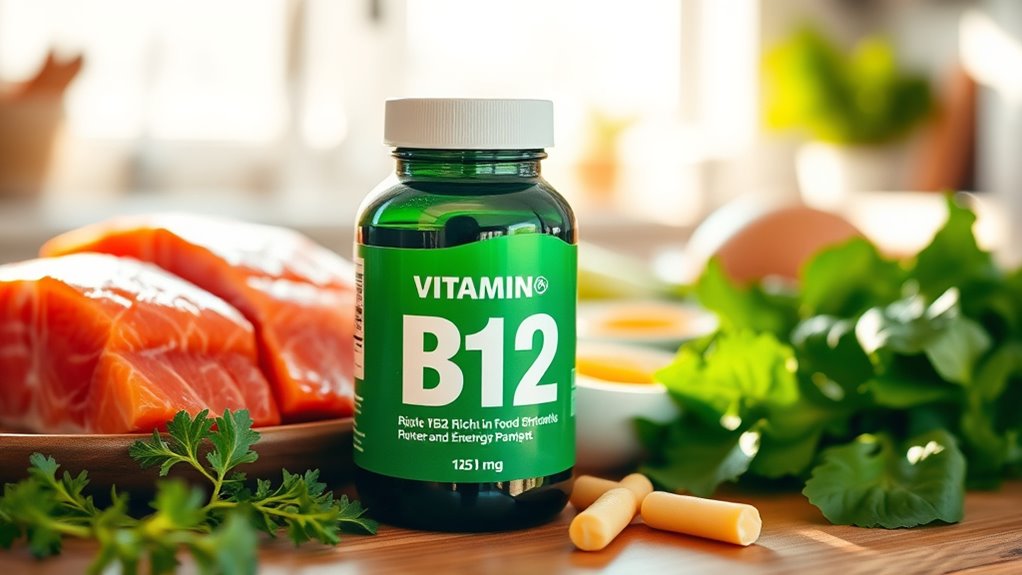
Although you might not think about it daily, vitamin B12 is essential for keeping your red blood cells healthy and your nerves functioning properly. This vitamin plays a vital role in DNA synthesis and energy metabolism, supporting the nervous system’s overall health. Without enough vitamin B12, you risk a deficiency that can lead to anemia and nerve damage.
It also helps lower homocysteine levels, which, if elevated, increase the risk of cardiovascular problems and cognitive decline. Since your body can’t produce vitamin B12, you rely on absorbing vitamin B from animal-based foods. Ensuring adequate intake prevents complications like nerve damage and anemia, keeping both your blood and nervous system in prime condition.
Understanding its importance can help you maintain long-term health.
Who Might Need a Vitamin B12 Supplement?
If you follow a vegetarian or vegan diet, you might need a B12 supplement since plant-based foods don’t naturally contain much B12. Older adults and those with certain digestive conditions may also struggle to absorb enough of this vitamin.
Understanding your diet and health risks can help you decide if supplementation is necessary.
At-Risk Populations
Because your body’s ability to absorb vitamin B12 can decline with age or certain health conditions, some people are more likely to need supplements. Older adults are at risk of vitamin B-12 deficiency due to reduced stomach acid, which causes absorption issues. Vegans also fall into at-risk populations since most dietary sources of B12 come from animal products.
If you have pernicious anemia or have had stomach surgery, your ability to absorb B12 might be impaired, making supplements essential. Additionally, certain medications can interfere with B12 absorption, increasing your risk. Being aware of these factors helps you determine whether you might benefit from B12 supplements to maintain healthy levels and avoid complications related to deficiency.
Dietary Considerations
When your diet lacks sufficient animal products, you might need a vitamin B12 supplement to maintain healthy levels. Vegetarians and vegans often face a higher risk of deficiency since plant-based foods don’t provide enough B12. Additionally, as you age, your ability to absorb vitamin B12 from food may decline due to decreased stomach acid.
Certain gastrointestinal conditions, like pernicious anemia or Crohn’s disease, can cause malabsorption, making supplementation necessary. If you’ve had stomach or intestinal surgery, your body might not absorb enough B12 either. Pregnant women, especially those following restricted diets, should also consider a supplement to support fetal development.
Considering these dietary considerations can help you prevent deficiency and maintain ideal health by ensuring you get enough vitamin B12.
Recognizing Symptoms of Vitamin B12 Deficiency
Although vitamin B12 deficiency can develop gradually, you might notice early signs like muscle weakness and irritability that shouldn’t be overlooked. The symptoms often start subtly with fatigue and weakness caused by anemia, making everyday tasks more challenging.
As the deficiency progresses, nerve damage might lead to numbness or tingling in your hands and feet, along with balance problems. Cognitive issues, including memory loss, confusion, and mood changes such as depression, can also surface. In some cases, visual disturbances may occur due to optic nerve involvement.
Recognizing these symptoms early is essential because untreated vitamin B12 deficiency can lead to serious complications. Paying attention to these early signs can help you seek timely advice and manage your health effectively.
When Should You Get Your Vitamin B12 Levels Tested?
If you’re over 65 or have symptoms like fatigue, numbness, or memory problems, it’s a good idea to get your vitamin B12 levels checked. Deficiency risk increases with age, so testing can help catch issues early. Blood tests, including those for methylmalonic acid (MMA), provide accurate insight into your B12 status.
You should also consider testing if you follow a vegan diet, have absorption issues due to gastrointestinal surgeries, or autoimmune conditions. Even without symptoms, regular screening every 3-4 years is recommended if you have these risk factors. Early testing guarantees timely supplementation to prevent complications.
Don’t wait for symptoms to worsen—testing helps maintain your health and energy.
Types of Vitamin B12 Supplements and How to Choose
Since vitamin B12 supplements come in various forms, choosing the right one depends on your specific needs and preferences. You’ll find supplement forms like oral tablets, sublingual lozenges, nasal sprays, and injections. Oral tablets usually contain 500 to 1,000 mcg, doses well above daily needs but safe due to good absorption.
If you have a deficiency caused by malabsorption or pernicious anemia, injections might be better since they bypass the digestive system. When selecting a supplement, consider whether it contains methylcobalamin, a natural and preferred form, or cyanocobalamin, a common synthetic type. Dosage and how your body absorbs B12 matter, so it’s wise to consult a healthcare professional to find the best option tailored to your situation.
How to Take Vitamin B12 Safely
When you start taking vitamin B12 supplements, it’s important to stick to the recommended dosage and form that suits your needs. The recommended daily amount for adults is about 2.4 micrograms, but higher doses, like 1,000 micrograms, may be used safely to treat deficiency. Choose a supplement form that matches your absorption ability—oral tablets or sublingual lozenges work for most, but injections might be necessary if you have absorption issues.
Always follow the dosage instructions provided by your healthcare provider or the product label to stay safe and avoid excessive intake. Regular monitoring of your vitamin B12 levels is essential, especially if you take supplements long-term, to ensure the dosage remains appropriate and to prevent masking any ongoing deficiency symptoms.
Questions to Ask Your Doctor About Vitamin B12
Why should you talk to your doctor about vitamin B12? If you’re experiencing symptoms like fatigue, numbness, or memory problems, it’s important to have your blood levels checked to rule out a deficiency. Ask if you’re at risk based on your age, diet, medical history, or medications such as acid reducers or metformin.
Discuss how well your body absorbs vitamin B12 and whether supplements are necessary, especially if you’re vegetarian, vegan, pregnant, or have absorption issues. Be sure to clarify the best form and recommended dose of supplements for your needs, whether oral, injectable, or nasal spray.
Finally, check for possible interactions between vitamin B12 supplements and any medications you’re currently taking to ensure safe use.
Frequently Asked Questions
Is It Good to Take Vitamin B12 Daily?
Yes, it can be good to take vitamin B12 daily, especially if you’re older, follow a vegetarian or vegan diet, or have absorption issues. Your body needs B12 for energy and nerve function, and a daily supplement helps prevent deficiency.
However, if you’re healthy and eat a balanced diet, you might not need it every day. It’s best to check with a healthcare professional before starting any supplement routine.
How Do I Know if I Need to Take B12?
You might wonder if you really need B12 supplements, especially since many think just eating well is enough. To know for sure, get a blood test; levels under 200 pg/mL usually mean you should supplement.
Also, if you’re feeling unusually tired, numb, or forgetful, it’s worth checking. Being older, vegan, or on certain medications can increase your need.
Can I Take B12 Even if I Don’t Need It?
Yes, you can take B12 even if you don’t need it, since it’s water-soluble and excess amounts get flushed out in your urine. However, it probably won’t give you any extra benefits if your levels are already adequate.
Also, if you have certain medical conditions or take specific medications, it’s best to check with your doctor first. Otherwise, routine supplementation might just mask underlying issues instead of helping.
Does Taking Vitamin B12 Actually Help?
You might think B12 is a magic energy booster, but does it really help? If your levels are normal, taking extra B12 won’t give you a noticeable boost or prevent diseases.
However, if you’re deficient or have trouble absorbing it, B12 supplements can be a game-changer, easing fatigue and nerve problems.
Conclusion
If you’ve been feeling tired or forgetful like Sarah, who discovered her low B12 was behind her fatigue, it might be worth considering a supplement. Since B12 deficiency can sneak up on you, especially if you’re vegan, older, or have absorption issues, getting tested is key. Talk to your doctor about your symptoms and the right type of supplement.
Taking B12 wisely can help you feel energized and keep your brain sharp. A B12 supplement may be essential for maintaining your overall health and preventing further complications. Remember, understanding whether you should take a B12 supplement is the first step toward better energy and cognitive function.