Is the Concussion911 Supplement HSA Eligible?
You can use HSA funds for Concussion911 only if a healthcare provider has given you a documented recommendation linked to a diagnosed concussion. This supplement may be HSA eligible under specific medical guidance. Without a Letter of Medical Necessity proving the supplement is part of your treatment, it’s generally not eligible.
Most supplements like Concussion911 are considered health maintenance and won’t qualify otherwise. To use HSA funds for such products, proper documentation is essential.
If you want to understand when supplements become HSA-eligible and how to get proper documentation, keep exploring for helpful details.
Key Takeaways
- Concussion911 is only HSA eligible if prescribed by a healthcare provider for a diagnosed concussion or brain injury.
- A Letter of Medical Necessity linking Concussion911 to concussion treatment is required for HSA reimbursement.
- Without documented medical necessity, Concussion911 is generally considered a non-eligible supplement for HSA use.
- Over-the-counter supplements like Concussion911 typically do not qualify for HSA unless tied to specific medical treatment.
- Proper documentation, including provider credentials and diagnosis, is essential to support Concussion911’s HSA eligibility.
What Is the Concussion911 Supplement and How Is It Used?
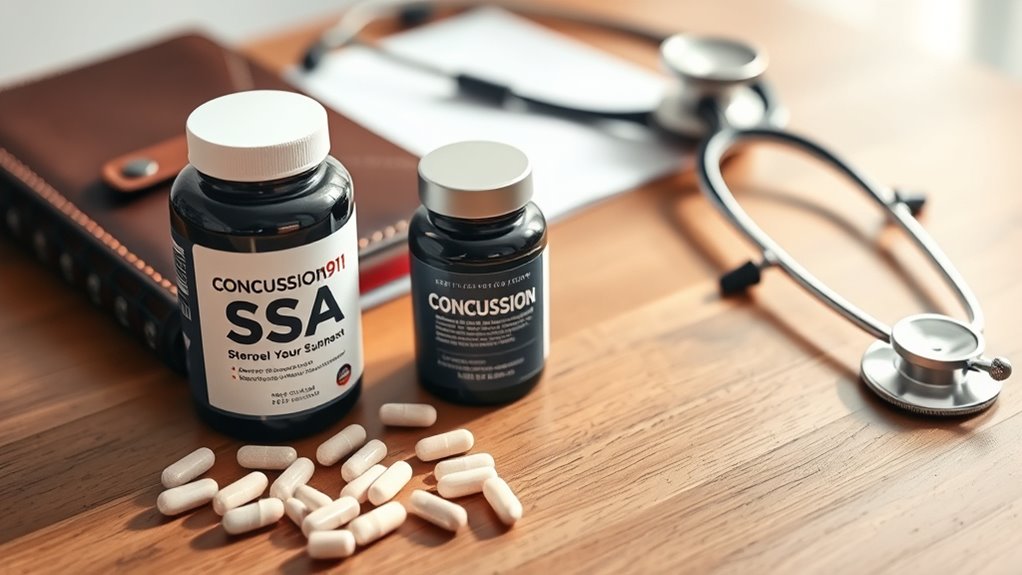
What exactly is the Concussion911 supplement, and how might it fit into your recovery? This nutritional product is designed to support brain health after you’ve been diagnosed with a concussion or head injury. Often recommended by a healthcare provider, it contains ingredients like omega-3 fatty acids and antioxidants to reduce inflammation and promote neural repair.
Using it regularly as part of your treatment plan can help improve cognitive function and ease symptoms. Regarding medical expenses, whether Concussion911 is eligible for coverage often depends on proving its medical necessity. If your healthcare provider has diagnosed you with a concussion and prescribed this supplement, you might be able to include it under certain health spending accounts.
Always check eligibility rules before assuming it qualifies for reimbursement.
How Does the IRS Define HSA Eligibility for Supplements?
When it comes to HSA eligibility, the IRS requires that supplements be recommended by a healthcare provider for a specific medical condition. You’ll need proper documentation, like a Letter of Medical Necessity, to prove the supplement is medically required.
Keep in mind, general wellness supplements without a diagnosis usually won’t qualify.
IRS Criteria Overview
Although many supplements are popular for general wellness, the IRS only considers those prescribed or recommended by a healthcare professional for a specific medical condition as HSA-eligible. To qualify as HSA medical expenses, supplements must meet strict IRS guidelines, including being tied to a diagnosed condition.
You’ll need proper documentation, like a Letter of Medical Necessity, to prove supplement eligibility. Vitamins taken for general health won’t qualify. Here’s a quick overview:
| Criteria | Requirement | Example |
|---|---|---|
| Medical Condition | Must be diagnosed | Concussion, migraine |
| Professional Recommendation | Required for supplement eligibility | Doctor’s prescription |
| IRS Guidelines | Defines HSA-eligible expenses | Treatment or prevention based |
| Documentation | Letter of Medical Necessity needed | From licensed healthcare provider |
| General Wellness | Not eligible unless prescribed | Daily vitamins not covered |
Medical Necessity Requirement
Meeting the IRS criteria for HSA eligibility means you’ll need more than just a prescription or recommendation. The supplement must be recommended by a healthcare provider for a diagnosed medical condition, and its use has to demonstrate medical necessity.
To meet these standards, you’ll need proper medical documentation, including a Letter of Medical Necessity (LMN). This letter should clearly state the diagnosed condition and explain why the supplement is essential for treatment. Supplements taken solely for general wellness or health maintenance usually don’t qualify.
Without this specific documentation, the IRS generally won’t consider products like Concussion911 HSA eligible. So, to ensure HSA eligibility, make sure your healthcare provider provides a detailed LMN supporting the medical necessity of the supplement for your diagnosed condition.
Is the Concussion911 Supplement HSA Eligible?
You might wonder if Concussion911 qualifies for HSA spending. To use HSA funds, you’ll typically need a Letter of Medical Necessity from your healthcare provider confirming its use for a diagnosed condition.
Without this documentation, it’s unlikely your plan will approve it as an eligible expense.
Medical Necessity Requirements
If your healthcare provider recommends the Concussion911 supplement to treat a diagnosed concussion, it may be eligible for HSA use. To qualify, there must be clear medical necessity tied to a diagnosed medical condition. Here’s what you need to know:
- The supplement must be prescribed or recommended for concussion recovery, not just general wellness.
- A Letter of Medical Necessity from a licensed provider is essential to prove the recommendation and diagnosis.
- The medical necessity should directly relate to treating or preventing concussion symptoms.
- Without a documented medical condition and proper recommendation, the supplement won’t meet health savings account eligibility.
Documentation and Eligibility
Although the Concussion911 supplement isn’t automatically eligible for HSA reimbursement, it can qualify when prescribed or recommended by a healthcare provider for a diagnosed concussion-related condition.
To guarantee eligibility, you’ll need proper documentation, including a Letter of Medical Necessity (LMN) from your healthcare provider. This letter must clearly state the medical necessity of the supplement, linking it to your concussion or brain health diagnosis.
Without this documentation and a healthcare provider recommendation, the supplement typically won’t count as eligible medical expenses under your HSA. Keep in mind, over-the-counter use without such proof usually disqualifies you from HSA reimbursement.
Why Most Supplements Like Concussion911 Are Not HSA Eligible
Since most dietary supplements like Concussion911 are considered health maintenance products, they usually aren’t eligible for HSA reimbursement. The IRS views these supplements as wellness aids rather than treatments, which excludes them from qualified medical expenses.
Here’s why you might face challenges with HSA eligibility:
- Supplements like Concussion911 are generally over-the-counter and not prescribed by a healthcare provider.
- Without a Letter of Medical Necessity linking the supplement to a diagnosed condition, HSA funds can’t be used.
- The IRS explicitly disallows supplements used for general health maintenance or prevention.
- Only supplements prescribed for a specific medical condition, showing clear medical necessity, qualify for HSA reimbursement.
When Can Supplements Become HSA Eligible? Understanding Medical Necessity
When you want to use your HSA funds for supplements like Concussion911, you’ll need more than just a desire to improve your general health. Supplements become HSA eligible only when there’s a clear medical necessity tied to a diagnosed condition. That means your healthcare provider must recommend or prescribe the supplement based on a medical diagnosis.
Simply taking supplements for general wellness won’t qualify for HSA reimbursement. To confirm HSA eligibility, proper documentation linking the supplement to your diagnosed condition is essential. This typically involves a Letter of Medical Necessity that validates why the supplement is required for treatment, diagnosis, or prevention of a recognized medical issue.
Without this proof of medical necessity, supplements won’t meet HSA eligibility standards.
How a Letter of Medical Necessity Can Help You Use HSA Funds
To use your HSA funds for Concussion911 supplements, you’ll need more than just a doctor’s recommendation—you’ll want a Letter of Medical Necessity (LMN). This official document from your healthcare provider confirms the medical necessity of the supplement, helping it qualify as a qualified medical expense for HSA reimbursement.
An LMN typically includes your name and specific medical diagnosis, details on why Concussion911 is essential for treatment, and the healthcare provider’s credentials and signature. It also contains documentation to support the supplement purchase.
Submitting an LMN with your receipts strengthens your case, especially if your HSA administrator questions the claim. It demonstrates that the Concussion911 supplement is a legitimate medical expense, improving your chances of successful reimbursement while ensuring compliance with IRS guidelines.
Steps to Get Documentation for HSA Reimbursement
To get your HSA reimbursement for Concussion911, you’ll need a medical letter from a licensed healthcare provider confirming your concussion diagnosis and the supplement’s necessity.
Make sure to consult your provider and request a detailed Letter of Medical Necessity that links the supplement to your treatment.
Keeping all documents and receipts organized will help support your claim.
Obtaining a Medical Letter
Although obtaining a Letter of Medical Necessity (LMN) might seem formidable, it’s essential for documenting your need for the Concussion911 supplement to qualify for HSA reimbursement. Here’s how to secure the right documentation:
- Contact your medical provider to discuss your diagnosis and request a Letter of Medical Necessity explaining why the supplement is needed. Ensure the letter includes your diagnosis, how Concussion911 supports your treatment, and the provider’s credentials. Obtain the LMN on official letterhead, signed and dated, confirming the supplement’s medical necessity.
- Verify with your health savings account (HSA) administrator if specific formatting or additional details are required for reimbursement purposes.
This documentation clearly establishes medical necessity, making your HSA claim smoother and compliant.
Consulting Healthcare Providers
When you’re seeking HSA reimbursement for Concussion911, you’ll need a written recommendation from a licensed healthcare provider that clearly states the medical necessity of the supplement. Start by consulting your healthcare provider to discuss your diagnosis and why Concussion911 is essential for your treatment.
Request a formal Letter of Medical Necessity (LMN) that includes your diagnosis, the recommended supplement, and the treatment duration. Make sure the provider signs and dates the documentation, preferably on official letterhead with credentials, to strengthen your claim.
Keep all documentation, including the LMN, receipts, and medical records, well-organized. This thorough documentation is vital for a smooth reimbursement review and can protect you during an IRS audit. Taking these steps ensures your eligibility for HSA reimbursement.
Supplements Commonly Accepted for HSA Reimbursement
Many supplements are accepted for HSA reimbursement because they’re prescribed or recommended by healthcare providers to treat specific medical conditions. To qualify as eligible medical expenses, these supplements must have documented medical necessity.
Supplements prescribed by healthcare providers with documented medical necessity often qualify for HSA reimbursement.
Commonly accepted supplements include:
- Prescription vitamins for diagnosed deficiencies
- Supplements used to manage chronic conditions (e.g., iron for anemia)
- Nutritional formulas prescribed for specific illnesses
- Medically necessary supplements with a Letter of Medical Necessity
While general wellness supplements like Concussion911 typically aren’t covered without medical documentation, if your healthcare provider prescribes them for a diagnosed condition and provides proper paperwork, you may qualify for reimbursement.
Always remember that HSA eligibility depends on both IRS guidelines and your individual plan’s rules regarding supplements and medical expenses.
How to Check Your HSA Plan’s Rules on Supplement Coverage
Before using your HSA funds for supplements like Concussion911, you’ll want to carefully review your plan’s rules on coverage. Start by checking your HSA plan’s official documentation or contacting the plan administrator to understand if Concussion911 is considered a qualified medical expense. Some plans require a Letter of Medical Necessity (LMN) or a specific medical diagnosis to approve supplement coverage.
It’s also important to verify whether the supplement is prescribed or recommended by a healthcare professional, as this can affect eligibility. Additionally, consult IRS Publication 502, which outlines what counts as qualified medical expenses. Since HSA rules can vary, confirming your plan’s terms ensures you use your HSA funds correctly and avoid unexpected denials for supplement coverage.
Alternatives to Using HSA Funds for Concussion911 and Similar Supplements
Since Concussion911 is usually seen as a dietary supplement, using your HSA funds for it might not be straightforward unless you have proper medical documentation. To avoid penalties, consider these alternatives to cover concussion-related care with your HSA:
- Consult a healthcare provider to get treatments or supplements specifically recommended for your diagnosed medical condition.
- Obtain a Letter of Medical Necessity if Concussion911 or similar supplements are essential for your treatment.
- Explore other HSA-eligible expenses like approved OTC medications or therapies for concussion symptoms.
- Check with your health plan about covered medical therapies that qualify as eligible expenses to manage brain health.
This way, you ensure your HSA funds are used properly and aligned with IRS rules on medical necessity.
Frequently Asked Questions
How Do I Know if My Supplement Is HSA Approved?
You can know if your supplement is HSA approved by checking if you have a prescription or a Letter of Medical Necessity from a healthcare professional stating it’s for a specific medical condition. Without this documentation, most supplements aren’t eligible.
You should also contact your HSA administrator to confirm. They can clarify whether your supplement qualifies under IRS rules, so you don’t risk using non-reimbursable expenses.
Are My Supplements HSA Eligible?
Think of your supplements like a key that only fits certain locks—your HSA will only cover those prescribed or recommended by a healthcare provider for a medical condition.
So, unless your doctor specifically advises your supplements to treat or prevent a diagnosed issue, they probably aren’t HSA eligible.
If you want to use your HSA funds, get a Letter of Medical Necessity to access that benefit. Otherwise, you’re likely on your own.
Conclusion
So, while it’s super tempting to think Concussion911 would be HSA eligible, it usually isn’t because most supplements don’t make the cut without strict medical necessity. Don’t worry—you’re not alone in this confusing maze!
Just double-check your HSA plan’s rules and get proper documentation if you want a shot at reimbursement. Otherwise, you might have to explore other payment options.
Remember, steering through HSAs can feel like solving the world’s biggest puzzle! When considering the Concussion911 supplement HSA eligibility, always verify with your plan provider to ensure you understand the requirements and possibilities.