How to Take Creatine Supplement Step by Step
To take creatine supplement effectively, start by choosing a daily dose of 3-5 grams without a loading phase.
Alternatively, you can opt for a 5-7 day loading phase of 20 grams split into 4 doses to speed up muscle saturation.
Taking creatine consistently every day is essential for best results.
Ideally, consume creatine post-workout with carbs and protein to enhance absorption.
Mix your creatine with water or juice and drink it immediately for maximum benefit.
Keep your routine steady, even on rest days, to maintain muscle creatine levels.
Stick with this plan to see noticeable improvements in strength and performance.
If you want to learn more about timing, dosage adjustments, or how to stop safely, additional guidance is available.
Key Takeaways
- Start with 5 grams daily, optionally do a 5–7 day loading phase of 20 grams split into 4 doses for faster muscle saturation.
- Take creatine consistently every day, ideally at the same time, with meals or post-workout for better absorption and routine adherence.
- Mix 5 grams of creatine in 8–12 ounces of cold water or juice and consume immediately after stirring for optimal uptake.
- Continue daily intake even on rest days to maintain muscle saturation and maximize long-term strength and recovery benefits.
- When stopping, taper dose gradually and maintain resistance training and balanced nutrition to preserve muscle gains and minimize loss.
What Is Creatine?
Creatine is a compound naturally found in red meat and your muscles, essential for producing energy. It plays a critical role in energy synthesis by helping regenerate ATP, the primary energy source your cells use during physical activity. Most creatine—about 95%—is stored in your skeletal muscle, where it supports strength and performance.
Your body naturally synthesizes creatine in the liver, kidneys, and pancreas, but sometimes levels in muscle tissue aren’t enough to maximize performance. That’s where a creatine supplement comes in. By increasing muscle creatine stores, supplements can boost your ability to produce quick energy, improving strength and power during workouts.
Understanding what creatine is helps you appreciate why it’s one of the most popular supplements for enhancing muscle growth and athletic performance.
How Creatine Works in Your Body
When you take creatine, most of it gets stored in your muscles as phosphocreatine, ready to fuel quick bursts of energy by helping regenerate ATP. This process powers your high-intensity workouts and supports muscle recovery by activating repair cells.
Understanding these roles will help you see why creatine is so effective for boosting performance and growth.
Creatine Storage Locations
Although most of the creatine in your body is stored in skeletal muscles, smaller amounts are found in the brain, kidneys, and liver. About 95% of your creatine storage is in skeletal muscles, where it exists primarily as phosphocreatine. Inside muscle cells, this phosphocreatine pool plays a vital role by enabling rapid ATP regeneration during high-intensity activity.
The creatine location within muscle tissue—specifically in the cytoplasm—ensures it’s readily available to support your muscles when you need quick energy bursts. Your body synthesizes creatine in organs like the liver and kidneys, then transports it through the bloodstream to your muscle tissue. Understanding these creatine storage locations helps you appreciate how creatine supplements target muscle cells to enhance your workout performance effectively.
Energy Production Role
Since your muscles rely heavily on quick energy during intense activity, having a rapid way to regenerate ATP—the primary energy molecule—is essential. Creatine plays a vital role here by converting into phosphocreatine within your muscle cells.
During high-intensity exercise, phosphocreatine donates a phosphate group to ADP, rapidly replenishing ATP levels. This quick energy production lets your muscles sustain maximum effort for a few extra seconds before fatigue kicks in.
When you use creatine supplementation, it boosts phosphocreatine stores in your muscles, enhancing your body’s capacity to regenerate ATP during short bursts of activity. This means improved strength, power, and overall performance during workouts that demand quick, explosive energy.
Understanding this energy production role helps you appreciate how creatine supports your training.
Muscle Recovery Support
How exactly does creatine help your muscles recover after tough workouts? When you take creatine supplementation, it converts in your muscles to phosphocreatine, which rapidly regenerates ATP—the key energy molecule used during muscle contractions. This energy replenishment supports faster muscle recovery by restoring energy levels after intense exercise.
Additionally, creatine activates satellite cells that aid muscle repair by healing micro-tears, promoting growth during recovery. Creatine also enhances muscle cell hydration, which reduces cramps and micro-injuries, further supporting recovery. Together, these effects decrease muscle soreness and improve recovery times, allowing you to train harder and more frequently.
How Much Creatine Should You Take Daily
When you start taking creatine, you’ll typically stick to 5 grams per day for maintenance to keep your muscles saturated. This daily dose of creatine monohydrate is effective for most people, ensuring consistent supplementation without complications. Some choose a loading phase, taking about 20 grams divided into smaller doses over 5–7 days, but it’s not necessary to achieve muscle saturation.
If you skip loading, your muscles will gradually saturate over roughly four weeks with a maintenance dose of 3–5 grams daily. To optimize your intake, adjust the dose based on your body weight, aiming for approximately 0.3 grams per kilogram. Staying consistent with your daily dose is key to maintaining the benefits of creatine supplementation and supporting your muscle performance effectively.
Is Creatine Loading Necessary?
Although creatine loading can speed up the process of saturating your muscles, it’s not strictly necessary to see benefits. Creatine loading typically involves taking about 20 grams daily, split into four doses, for 5–7 days to quickly boost muscle saturation.
However, you can skip this phase and simply use a daily dosing of 3–5 grams. This gradual approach still leads to full muscle saturation and comparable performance benefits, though it may take around four weeks.
Some people experience minor water retention or gastrointestinal discomfort during loading, which can be avoided by steady daily dosing. Long-term use without loading remains effective, so whether to load depends on your personal preference and how quickly you want results.
Either way, consistent dosage is key for ideal performance benefits.
When to Take Creatine for Best Results
You might wonder if taking creatine before or after your workout makes a difference. While both times can be effective, the key is to be consistent with your daily intake.
Choosing a time that fits your routine will help you get the best results over time.
Optimal Timing Options
Since your body’s insulin sensitivity is heightened after exercise, taking creatine post-workout with a carbohydrate-rich meal can enhance muscle uptake. This timing supports better glycogen replenishment and recovery, making it a popular choice among athletes. However, creatine timing isn’t solely about immediate post-workout intake.
Taking creatine consistently at the same time each day—whether morning, pre-, intra-, or post-workout—is key to maximizing its benefits. Combining creatine with meal intake or protein shakes can also improve absorption and minimize digestive discomfort. Ultimately, your focus should be on maintaining daily consistency rather than stressing over the exact timing.
Pre Vs Post Workout
Deciding whether to take creatine before or after your workout can impact how your muscles absorb and use it. Here’s what you should consider:
- Taking creatine post-workout with carbs and protein boosts absorption due to increased insulin sensitivity.
- Pre-workout creatine may support immediate energy and performance but offers primary benefits over time.
- Research suggests post-workout timing slightly enhances muscle mass and strength gains more than pre-workout intake.
- Combining creatine with your post-workout meal optimizes absorption and maximizes performance benefits.
While timing matters, remember that daily consistency is key for creatine’s effectiveness. Whether you choose pre-workout or post-workout, sticking to a routine will help you see the best results in muscle mass and overall performance.
Consistency Over Timing
Although the exact time you take creatine can have some impact, what really matters is staying consistent with your daily intake. Consistency ensures steady muscle saturation, which is key for maximizing creatine’s benefits. Whether you choose to take it in the morning, post-workout, or with meals, maintaining a routine helps optimize absorption and effectiveness.
Skipping doses or varying your timing too much can delay muscle gains and reduce performance improvements. To improve adherence, pick a time that fits smoothly into your daily schedule—like with breakfast or right after training. By focusing on regularity rather than perfect timing, you’ll guarantee your muscles stay saturated, unlocking creatine’s full potential over time.
How to Mix and Consume Creatine Properly
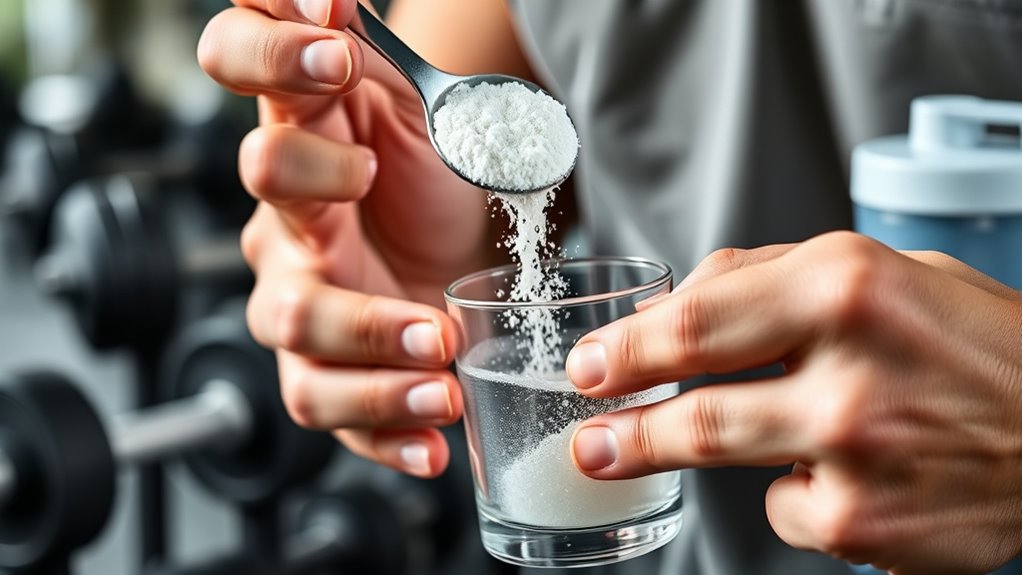
When you mix creatine, it’s important to dissolve 5 grams of the powder in 8-12 ounces of water, juice, or another cold beverage, stirring well to avoid clumps. Proper mixing improves creatine’s solubility and absorption.
Dissolve 5 grams of creatine in 8-12 ounces of cold liquid, stirring well to prevent clumps.
Here’s how to consume it properly:
- Use a spoon or shaker bottle to mix thoroughly, preventing any powder from settling.
- Drink it immediately after mixing to maximize uptake.
- For the loading phase, split your total daily dose into 4-5 smaller servings to improve solubility and reduce stomach discomfort.
- Take creatine post-workout or with your recovery shake for better absorption.
How Long Does Creatine Take to Work?
Now that you know how to mix and consume creatine properly, you might wonder how long it takes before you start seeing results. If you follow a loading phase, creatine quickly saturates your muscles, and you can notice improvements in performance within about 7 days.
Without loading, it takes more time—usually around 4 weeks of consistent daily intake—to reach full muscle saturation. This gradual buildup is essential for creatine to support muscle growth and enhance strength effectively.
Regardless of your approach, regular use over time is key. The speed at which creatine works depends on your dosing strategy, but once your muscles are saturated, you’ll experience better performance and muscle gains. Patience and consistency are your best allies here.
What to Expect When You Start Taking Creatine
When you start taking creatine, you might notice a quick increase in muscle fullness and a small weight gain from water retention. Within the first couple of weeks, many people see improvements in strength and faster recovery after workouts.
You may also experience mild stomach discomfort at first, but that usually fades as your body adjusts.
Initial Physical Effects
Although you might not notice dramatic changes right away, your muscle creatine stores start to increase within the first week, especially if you use a loading dose. Here’s what you can expect as initial effects of creatine use:
- Slight weight gain – typically 1-2 pounds due to water retention in muscle cells.
- Muscle saturation – your muscles gradually hold more creatine, boosting energy production.
- Mild bloating or gastrointestinal discomfort – some people experience this as their body adjusts.
- Improved energy availability – as ATP production ramps up, your muscles get more fuel for short, intense efforts.
These changes are normal and show creatine is working to enhance your muscle cells’ capacity to generate energy.
Performance And Recovery Changes
As your muscles become saturated with creatine and energy availability improves, you’ll start noticing more tangible changes in your performance and recovery. Within 1-2 weeks of consistent creatine supplementation, your strength, power, and endurance often get a noticeable boost. You might also experience enhanced energy levels and reduced fatigue during high-intensity workouts.
Muscle recovery times tend to shorten, meaning less soreness and a quicker return to peak exercise performance after tough sessions. After 2-4 weeks, increased muscle mass becomes apparent, mainly due to water retention in muscle cells. Long-term use supports sustained improvements in training capacity, helping you maintain higher performance levels over time.
How to Adjust Creatine to Fit Your Daily Routine
Since consistency is key to reaping creatine’s benefits, fitting it into your daily routine at a set time—whether in the morning, after workouts, or with meals—makes it easier to remember and maintain.
To adjust creatine supplementation for your lifestyle, consider these tips:
- Choose a convenient form like capsules or tablets to simplify your intake schedule.
- Align your dosage timing with workout days, taking creatine closer to exercise for better performance.
- Start with 3-5 grams daily if you prefer a gradual approach without a loading phase.
- Carry portable sachets or bottles when traveling to keep your routine uninterrupted.
How to Stop Creatine Supplementation Safely and Maintain Gains
When you decide to stop taking creatine, it’s important to taper your intake gradually rather than quitting abruptly to avoid sudden muscle weight loss. Begin dosage reduction by decreasing your daily creatine by about 1 gram every few days over 2-4 weeks. This controlled approach eases creatine withdrawal symptoms.
Throughout supplement discontinuation, continue consistent resistance training to support muscle maintenance and preserve muscle gains. Also, maintain a balanced diet rich in protein and nutrients to aid recovery. Expect temporary drops in muscle fullness and energy, but these usually stabilize soon after stopping.
During this period, prioritize health monitoring and seek medical advice if you experience unusual fatigue or muscle loss. Following these steps helps you safely stop creatine while maintaining your hard-earned results.
Frequently Asked Questions
How to Take Creatine Correctly?
To take creatine correctly, you’ll want to stick to a daily dose, usually around 3–5 grams. You can start with a loading phase if you like, but it’s not required.
Mix it with water or juice and take it consistently at the same time each day, like after your workout or with a meal. Don’t forget to stay hydrated and pair it with carbs or protein for better absorption.
How Should Beginners Take Creatine?
Getting started with creatine is like planting a seed—you want to nurture it gently. For beginners, take 3-5 grams daily without rushing into a loading phase. Mix it with a carb-rich drink to help your body welcome it warmly.
Keep it consistent, ideally post-workout or in the morning, and drink plenty of water to stay comfortable. This steady approach lets your muscles gradually soak up the benefits.
Can Creatine Help Headaches?
Yes, creatine might help with headaches, especially if they’re linked to energy metabolism issues in your brain. Some people find that it reduces the frequency and severity of their migraines or exercise-induced headaches by boosting energy reserves.
However, results vary, so it’s important you don’t rely on it solely. Always check with your healthcare provider before starting creatine, particularly if you have other health concerns or take medications.
How to Get the Best Results From Taking Creatine?
Did you know that creatine can increase muscle strength by up to 15%? To get the best results, you’ll want to take 3-5 grams daily, ideally after workouts or with meals to boost absorption. Don’t skip hydration—it’s key to avoid cramps.
Pairing creatine with carbs or protein helps your muscles soak it up better. Stay consistent, even on rest days, to keep your muscles fully saturated and maximize gains.
Conclusion
Now that you know how to take creatine step by step, remember, slow and steady wins the race. Don’t rush loading phases if you’re unsure, and find the timing that fits your routine best.
Consistency is key to seeing results, so stick with it and be patient. When you’re ready to stop, do it gradually to keep your gains.
Keep at it, and you’ll reap the benefits of creatine supplementation in no time! Following the proper creatine supplement steps ensures you maximize your results safely and effectively.