How to Make Protein Supplement in 10 Easy Steps
Making your own protein supplement is a great way to ensure quality and tailor it to your nutritional needs. Start by selecting high-quality ingredients such as nuts, seeds, and either whey or plant-based protein powders. These components provide a balanced mix of protein, healthy fats, and essential nutrients for your diet.
Lightly roast the seeds and nuts at 160°C for 4-5 minutes to enhance their flavor and nutrient profile.
Next, grind all ingredients in small batches using a spice grinder or blender, being careful not to over-process to maintain texture and nutrition.
Store your homemade powder in an airtight container placed in a cool, dry area to preserve freshness. Use about 2 tablespoons per serving, adding it to smoothies, oatmeal, or your favorite recipes.
Keep following for more tips on perfecting texture and flavor.
Key Takeaways
- Roast seeds and nuts at 160°C for 4-5 minutes until lightly golden to enhance flavor and nutrient absorption.
- Grind ingredients in small batches using a spice grinder or high-speed blender with short pulses to avoid seed butter formation.
- Mix ground ingredients thoroughly and add flavorings like cocoa, cinnamon, or vanilla for a customized taste.
- Store the finished protein powder in an airtight container in a cool, dark place or refrigerator to maintain freshness.
- Use about 2 tablespoons per serving, mixing gradually into smoothies, oatmeal, or baked goods for easy consumption.
Why Make Homemade Protein Powder?
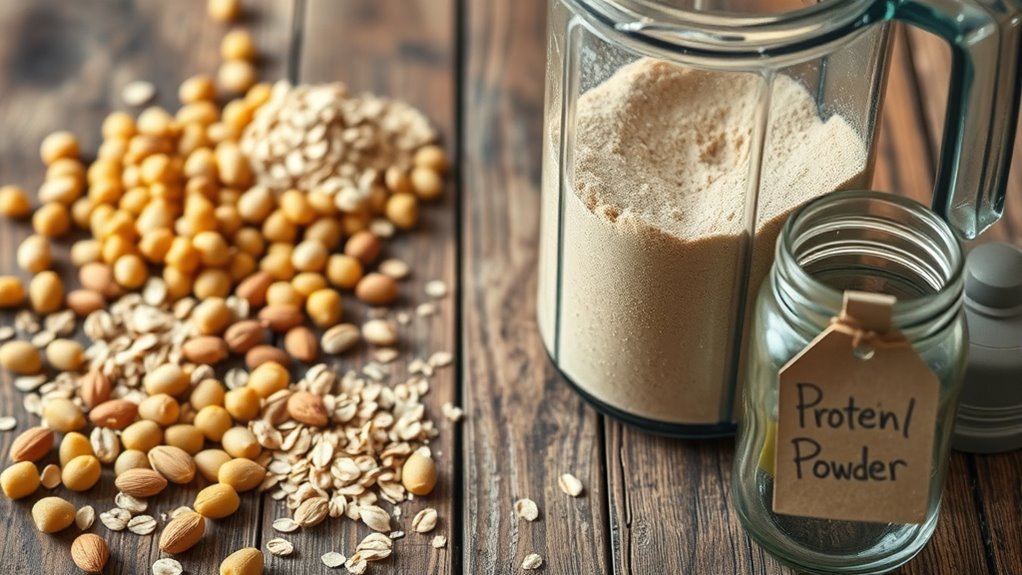
While store-bought protein powders are convenient, making your own lets you control exactly what goes into it, tailoring ingredient ratios to meet your unique nutritional needs and flavor preferences. By creating homemade protein powder, you gain complete ingredient control, avoiding fillers, preservatives, and artificial additives commonly found in commercial blends. This means you get customized nutrition that fits your dietary goals, whether that’s high-protein, low-sugar, or vegan.
Using a food processor, you can easily blend quality ingredients, ensuring freshness and quality while reducing allergens and contaminants. Plus, homemade protein powder offers significant cost savings, as it’s generally cheaper per serving than store-bought options. Overall, making your own supplement is a smart way to boost nutrition while staying budget-friendly and ingredient-savvy.
Pick Your Protein Powder Ingredients
Since your homemade protein powder should fit your nutritional goals and taste preferences, choosing the right ingredients is essential. You can combine plant-based protein sources like seeds and nuts to maximize nutritional benefits. Seeds such as chia, hemp, pumpkin, and flax provide fiber and healthy fats, while nuts and nut flours add protein and texture.
For complete proteins, consider adding whey or sprouted legume powders. Flavorings like cocoa or cinnamon can personalize your mix. Here’s a quick guide:
| Ingredient Type | Examples |
|---|---|
| Seeds | Chia, Hemp, Pumpkin, Flax |
| Nuts & Nut Flours | Almonds, Cashews |
| Complete Proteins | Whey, Sprouted Legume Powders |
| Flavorings | Cocoa, Cinnamon, Dried Fruit |
Mixing these lets you create homemade protein powders tailored to your needs.
Choose the Right Grinding Equipment
If you want a fine, smooth powder for your protein supplement, choosing the right grinding equipment is key. A spice grinder works great for small batches, giving you a fine, consistent seed powder that improves texture.
For slightly larger quantities, try a high-speed blender with pulse settings, but blend in short bursts to avoid turning your seeds into butter. If you’re working with bigger amounts, consider a dedicated coffee grinder to save time and ensure consistent results.
Always clean your grinding equipment thoroughly after use to prevent flavor transfer and maintain the quality of your protein powder. Remember, controlling the grinding time helps keep the consistency just right without over-blending into a paste.
Roast and Dry Seeds and Nuts for Protein Powder
Before grinding your seeds and nuts, roasting them at the right temperature can markedly boost their flavor and nutrient absorption. Roast seeds and dry nuts at 160°C (320°F) for 4-5 minutes or until they’re lightly golden. Use a dry skillet on low heat, stirring frequently to avoid burning, or spread them in a single layer on a baking sheet for even roasting.
Once roasted, let them cool completely to maintain texture and prevent moisture buildup. Properly roasted seeds and nuts not only enhance your protein powder’s taste but also improve nutrient absorption. After cooling, store them in an airtight container in the refrigerator or freezer to keep them fresh and prevent rancidity.
This step guarantees your homemade protein powder stays flavorful and nutritious longer.
Grind Protein Powder Ingredients in Small Batches
When you grind protein powder ingredients in small batches, you keep the texture smooth and avoid turning seeds into butter. This approach gives you better control over consistency and helps maintain freshness.
Plus, it lets you customize flavors without risking the whole batch.
Small Batch Benefits
Although grinding protein ingredients in large quantities might seem efficient, processing them in small batches offers distinct advantages. When you make homemade protein powder in small batch amounts, you gain better texture control and ensure nutrient preservation. This approach helps you customize the flavor and ingredient ratios to match your needs perfectly.
Here are key small batch benefits:
- Achieve a finer, smoother powder by preventing seed butter formation
- Maintain ideal nutrient levels by avoiding overheating
- Extend freshness by reducing residual seed oils and rancidity
- Easily tweak flavors and ingredient combinations for personalization
Preventing Seed Butter
Grinding your protein powder ingredients in small batches helps you avoid turning them into seed butter. When grinding seeds, working with small batches minimizes heat buildup, which is key to preventing oil release that causes stickiness. To keep the powder dry and fine, pulse your spice grinder in short bursts instead of running it continuously.
This method controls the temperature and texture, ensuring you don’t over-process and end up with seed butter. Pausing frequently and scraping down the grinder’s sides also helps maintain an even consistency. By carefully managing the grinding seeds process in small batches, you’ll avoid clumping and excessive oil release, resulting in a smooth, powdery protein supplement every time.
Optimizing Powder Texture
To get the best texture for your protein supplement, you’ll want to process the ingredients in small batches. Small batch grinding helps you avoid seed butter formation by preventing over-processing and ensures a fine, uniform particle size. By controlling processing time carefully, you maintain ideal texture control and reduce clumping.
Keep these tips in mind:
- Use short pulses with a spice grinder to avoid overheating and seed butter formation.
- Limit grinding seeds to 10-15 seconds per batch to prevent paste formation.
- Process multiple small batches to improve overall consistency.
- Monitor particle size frequently to achieve the desired powder smoothness.
This approach maximizes texture quality and storage stability, making your protein supplement smooth and easy to mix.
Mix Ground Protein Powder Ingredients and Add Flavors
Now that you’ve ground your protein ingredients, it’s time to mix them together for a consistent texture. You can add flavors like cocoa, cinnamon, or vanilla to make your supplement taste great. Adjust the ratios to suit your preferences and guarantee everything blends smoothly.
Flavoring Your Protein Powder
How can you make your homemade protein powder taste better? Flavoring your protein powder is key to taste enhancement and customization. After grinding your ingredients finely, mix in natural sweeteners and spices to mask bitterness and boost flavor.
You can experiment with:
- Cocoa powder or cacao nibs for a rich chocolate taste
- Vanilla extract or cinnamon for warmth and aroma
- Dried fruit powder, honey, or maple syrup as natural sweeteners
- Turmeric, ginger, or nutmeg to add health benefits and unique flavor profiles
Make sure to blend these flavorings thoroughly into your ground protein powder to ensure a consistent, delicious taste in every scoop. This way, you’ll enjoy your supplement while benefiting from personalized flavor customization.
Achieving Consistent Texture
What’s the best way to guarantee your homemade protein powder has a smooth, consistent texture? Start by thoroughly mixing your ground seeds, nuts, and grains in a bowl to ensure even distribution. Use a spice grinder or high-speed blender in small batches to achieve a fine powder without turning ingredients into seed butter.
After grinding, add flavorings like cocoa powder or cinnamon; this prevents clumping and helps maintain a uniform texture. To enhance consistency, incorporate natural thickeners such as chia seeds or flaxseed meal during blending. Finally, store your mixture in an airtight container and give it a good shake or stir before each use.
Proper blending and storage are key to enjoying a protein supplement with a consistent, smooth texture every time.
How Much Protein Powder to Use Per Serving
Since your protein needs can vary based on your activity level and goals, it’s important to tailor the amount of protein powder you use per serving. Typically, a serving size of homemade seed-based protein powder is about 2 tablespoons, providing roughly 7 grams of protein per serving. To meet muscle repair and growth demands, you might need 3-4 tablespoons per meal.
Keep these points in mind:
- Protein content per 2 tablespoons generally ranges from 6 to 9 grams.
- Use 1 to 3 servings per meal depending on your daily protein goals.
- Aim for 20-30 grams of protein per meal for effective muscle repair.
- Adjust portion size based on your diet and activity level.
Balancing protein powder with food ensures you hit your protein targets efficiently.
Store Your Protein Powder Properly
Once you’ve measured out the right amount of protein powder for your needs, it’s important to keep it fresh and effective. Your best storage method is to transfer the powder into an airtight container to prevent moisture and spoilage. Store this container in a cool dark place, like a pantry or cupboard, to maintain nutrient quality and avoid clumping caused by sunlight and humidity.
For an extended shelf life, consider refrigerating your protein powder, where it can last up to two months. Always label the container with the date you stored it so you can track its freshness and use it within the recommended timeframes. By following these simple steps, you’ll ensure your protein supplement stays potent and ready whenever you need it.
Incorporate Protein Powder Into Recipes
When you want to boost your meals with extra protein, adding homemade protein powder is a simple and effective way to do it. You can easily incorporate plant-based protein powder into a variety of recipes to enhance nutrition without much effort. Here’s how to get started:
Boost your meals easily by adding homemade plant-based protein powder for extra nutrition.
- Add 2 tablespoons of seed-based protein powder to smoothies or oatmeal for about 7 grams of protein per serving.
- Gradually mix the powder into liquids while stirring or use a blender to avoid clumps.
- Adjust liquid amounts in baked goods like pancakes or muffins to keep the right texture.
- Customize flavor by mixing in cocoa powder or cinnamon after grinding for extra taste.
With these tips, you’ll seamlessly incorporate protein powder into your favorite recipes.
Fix Texture and Flavor Problems
Although homemade protein powder is nutritious, you might notice some texture or flavor issues that need fixing. To improve texture, try grinding your seeds finer with a spice grinder; this reduces grittiness and creates a smoother, more uniform powder. Toasting seeds lightly before grinding can also enhance flavor and minimize raw, earthy notes.
For flavor, adding natural flavorings like cocoa powder or cinnamon after grinding helps mask any seed bitterness. You can also mix in small amounts of dried fruit powder or vanilla sugar to boost sweetness and flavor complexity. When using your protein powder in smoothies or puddings, adjust the liquid-to-powder ratio to achieve a creamier, more enjoyable texture.
These simple tweaks will help you fix texture and flavor problems effectively.
Frequently Asked Questions
What Is the 10 Rule for Protein?
The 10 rule for protein means you should aim to eat at least 10 grams of protein in each meal. This helps your body repair muscles and keeps you healthy by stimulating muscle protein synthesis.
By spreading out your protein intake throughout the day in multiple 10-gram servings, you make sure you’re supporting lean muscle maintenance and overall wellness.
It’s a simple way to track and balance your protein needs easily.
How to Create Homemade Protein Powder?
To create homemade protein powder, you’ll want to roast seeds like chia, flax, or pumpkin at low heat to boost flavor, then grind them finely using a spice grinder or blender.
Mix your ground seeds with almond flour, cocoa powder, or spices for taste and nutrition. Store your blend in an airtight container, keeping it in the fridge or at room temperature for freshness.
Feel free to customize with cinnamon or cocoa to suit your taste.
How to Get Protein Quick and Easy?
For fast, fuss-free fuel, focus on filling foods like Greek yogurt, grilled chicken, or canned tuna. You can quickly whip up whey or plant-based powders into smoothies for speedy sustenance.
Stock up on snacks such as boiled eggs, nuts, or cheese cubes for grab-and-go goodness. Sprinkle seeds like chia or hemp into your meals to power up protein. Keep protein bars or jerky handy, so you’re never caught craving.
What Is the Best Homemade Protein Powder?
The best homemade protein powder combines chia, hemp, and pumpkin seeds for complete plant-based protein and healthy fats. You’ll want to grind them finely using a spice grinder for a smooth texture. Adding almond flour, cacao, or cinnamon boosts flavor and nutrition.
Store your blend airtight in the fridge to keep it fresh for up to a month. Customize it with sprouted seeds or plant proteins to meet your needs perfectly.
Conclusion
Making your own protein powder lets you control quality and flavor, saving money while boosting nutrition. Remember, “Rome wasn’t built in a day,” so don’t rush the process—take your time roasting, grinding, and storing your ingredients properly.
Once you’ve got your homemade mix, you’ll enjoy customizing recipes and fixing any texture or taste issues with ease. With these simple steps, you’ll be crafting your perfect protein supplement in no time!
By following these 10 easy steps, you can create a high-quality protein supplement tailored to your needs. This DIY approach ensures you get the best nutrition and flavor. Start making your own protein powder today and enjoy all the benefits of a homemade protein supplement!