How to Determine How Much Garlic Supplement to Take Per Day
To determine how much garlic supplement to take per day, start by checking the supplement’s form and standardized potency, such as allicin content. Garlic supplements come in various forms, including powders, oils, and extracts, each with different concentrations. Understanding the allicin level helps ensure you get an effective dose tailored to your needs.
Consider your specific health goals—whether it’s managing blood pressure, lowering cholesterol, or boosting immunity—as typical doses range from 300 to 2,400 mg daily. Begin with a moderate dose around 600 mg to assess how your body responds. Always follow the product guidelines provided on the label for safety.
If you have existing health conditions or are taking medications, consult a healthcare provider before adjusting your dosage. Proper timing and safety precautions are also important to maximize benefits and minimize side effects. You’ll find more details about timing, safety, and specific supplements ahead.
Key Takeaways
- Start with about 600 mg daily of garlic supplement and adjust based on your body’s response and health goals.
- Choose the garlic form and potency (aged, powder, oil) and follow the manufacturer’s recommended dosage.
- For cardiovascular benefits, typical doses range from 900 to 1,380 mg daily; do not exceed 5 grams to avoid side effects.
- Take supplements consistently, preferably split doses with meals to improve absorption and reduce stomach upset.
- Consult a healthcare provider before starting, especially if on medications or with health conditions, to ensure safe dosing.
How Garlic Supplements Can Help Your Health
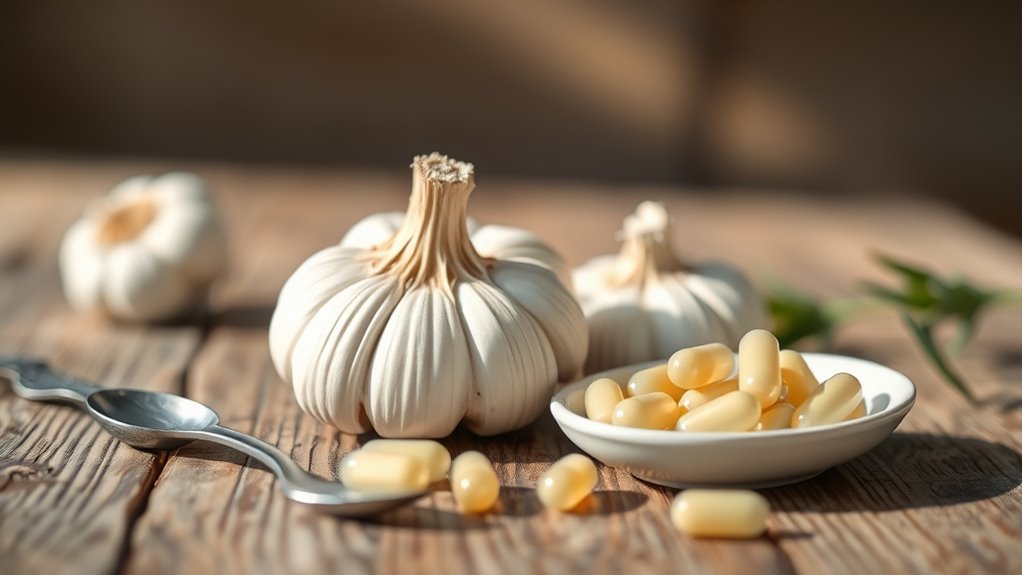
Although you might be familiar with garlic as a flavorful ingredient, its supplements offer powerful health benefits, especially for heart and immune support. Garlic supplements, particularly aged garlic extract, have been shown to lower blood pressure effectively in people with hypertension. By taking between 400 to 2,400 mg daily, you can help reduce your blood pressure and improve cardiovascular health.
Regular use also lowers LDL cholesterol and enhances your lipid profile, which supports heart function and reduces artery hardening. The bioactive compounds in garlic, like allicin and S-Allyl cysteine, provide antioxidant and anti-inflammatory effects that boost your immune system. Consistent supplementation can help protect against heart disease and manage metabolic issues, making garlic supplements a smart addition to your health routine.
Which Garlic Supplement Form Is Right for You
Deciding between fresh and aged garlic depends on your preference for taste and potency. Powdered garlic offers convenience and a consistent dosage, while garlic oil provides concentrated benefits but requires careful dosing.
Think about your health goals and how you handle garlic’s flavor when choosing the right form for you.
Fresh Versus Aged Garlic
When choosing between fresh and aged garlic supplements, it helps to contemplate how each form delivers its health benefits. Fresh garlic contains alliin and allicin, activated when crushed, offering potent, immediate effects but losing potency with heat and time.
In contrast, aged garlic undergoes fermentation, reducing allicin but boosting bioavailable antioxidants like S-Allyl cysteine, providing more stable, long-term benefits. Aged garlic’s milder flavor and less odor might suit you if you’re sensitive to raw garlic’s pungency.
Your garlic dosage can vary depending on whether you prefer the sharp, immediate impact of fresh garlic or the subtler, antioxidant-rich effects of aged garlic. Ultimately, your choice should align with your taste preferences and health goals to maximize benefits effectively.
Powdered Garlic Benefits
If you’re weighing your garlic supplement options, powdered garlic offers a convenient and effective choice. It retains key compounds like alliin and allicin precursors, essential for garlic’s health benefits.
Here’s why garlic powder might be right for you:
- Precise Dosage: Standardized capsules usually contain 600-900 mg, making it easy to manage your daily intake.
- Flexible Amounts: Studies recommend doses from 600 to 2,400 mg daily, so you can adjust based on your needs.
- Consistent Quality: Check labels to ensure active ingredient concentration for ideal health effects.
With garlic powder, you get a reliable, measurable supplement that supports heart health, immunity, and more without the hassle of fresh garlic preparation.
Garlic Oil Considerations
Although garlic oil supplements usually contain smaller amounts per capsule compared to powdered forms, their concentrated bioactive compounds make them a powerful option for targeted health benefits. When choosing garlic oil, it’s important to check the levels of active sulfur compounds like allicin, as these determine the supplement’s potency and effectiveness.
Dosage typically ranges from 300 mg to 1,000 mg daily, depending on your health goals and the product’s concentration. Since garlic oil capsules often contain only 2-5 mg of oil per dose, you may need multiple capsules to reach the desired intake. Always follow the manufacturer’s instructions and consult a healthcare professional to tailor the dosage to your specific needs, ensuring you get the maximum benefit without overdoing it.
How to Read Garlic Supplement Labels and Potency
Understanding how to read garlic supplement labels is essential for choosing the right product and dosage. When you examine garlic supplement labels, focus on the potency and active ingredient to guarantee you get the benefits you want.
Here’s what to look for:
- Total Milligrams per Serving: Check the amount of garlic extract or powder to gauge potency.
- Standardized Active Ingredient: Look for allicin equivalents or similar markers to compare products accurately.
- Garlic Form: Note if it’s aged garlic extract, garlic oil, or powder, as this affects the concentration of active compounds.
Also, follow the manufacturer’s recommended serving size to avoid under- or overdosing. Higher potency supplements might need smaller doses to be effective.
Recommended Daily Garlic Doses for Blood Pressure, Cholesterol, and Immunity
Since garlic supplements come in various forms and potencies, knowing the recommended daily doses for specific health goals can help you use them effectively. For managing blood pressure, a garlic dosage of 400-900 mg of aged garlic extract daily has shown significant benefits within about 12 weeks.
If you’re focusing on cholesterol, clinical trials suggest taking between 600 and 2,400 mg of garlic powder daily to see improvements. To boost your immunity during cold and flu seasons, a lower dose of 100-400 mg daily is common.
Generally, total garlic supplement intake ranges from 600 to 1,200 mg daily, depending on your needs. Always follow the product instructions and consult your healthcare provider to tailor the garlic dosage to your individual health goals.
How to Start Taking Garlic Supplements Safely
Before you start taking garlic supplements, it’s important to begin with a low dose—around 600 mg daily—to see how your body reacts. When starting garlic supplements, prioritizing safety guarantees you avoid unwanted side effects.
Here’s how to start safely:
1. Consult your healthcare provider, especially if you take blood thinners or have health conditions. 2. Follow the garlic dosage instructions on the product label carefully. 3. Monitor your body for any side effects like stomach discomfort or allergies.
How to Adjust Your Garlic Supplement Dose Based on How You Feel
Although you’ve started with a low dose of garlic supplement, adjusting it based on how you feel is key to finding the right balance. Begin with about 600 mg daily and monitor your body’s response closely. If you notice side effects like gastrointestinal discomfort, it’s wise to decrease your dose.
Pay attention to changes in energy, digestion, or any unusual symptoms—these clues help guide your dose adjustment. Improved health markers or fewer side effects might mean you’re on the right track and can maintain or slightly increase your dose. Always consult your healthcare provider to ensure your dosage aligns with your health goals and tolerance, making dose adjustments safely and effectively.
Does Your Weight or Age Change Your Garlic Supplement Dose?
Adjusting your garlic supplement dose based on how you feel is a good start, but other factors like your weight and age can also play a significant role. Your body weight often influences the right dosage—heavier individuals might need higher amounts for the supplement to be effective. Age matters too, since metabolism and tolerance can change over time, especially in older adults who may require dose adjustments under medical guidance.
Here’s what to keep in mind:
- Dosage may be calculated per kilogram of body weight to optimize benefits and minimize side effects.
- Children usually need lower doses than adults due to differences in body weight and metabolism.
- Older adults should consult healthcare providers to tailor their dosage safely.
Always consider body weight and age for the safest, most effective garlic supplement dose.
Timing Your Garlic Doses Throughout the Day for Best Effect
To get the most from your garlic supplements, it’s important to space your doses evenly throughout the day. Taking higher amounts in the morning can support blood pressure, while evening doses might focus on immune benefits.
Staying consistent with your timing helps maintain steady levels and boosts effectiveness.
Optimal Dose Frequency
When you take garlic supplements, spreading your doses evenly throughout the day helps keep steady levels of active compounds in your system. Optimizing dose frequency is key to maximizing garlic supplementation benefits, especially for blood pressure management.
To get the most from your garlic doses, consider these tips:
- Take garlic supplements with meals to boost absorption and minimize stomach upset.
- Space doses at regular intervals—commonly twice daily—to maintain consistent bioactive compound levels.
- Follow specific product guidelines or your healthcare provider’s advice to tailor dose frequency to your health needs.
Morning Versus Evening
Although garlic supplements can be taken at any time, choosing morning or evening doses can influence how you feel and the benefits you get. If you take garlic in the morning, it may boost your energy and metabolism throughout the day. Evening garlic intake, on the other hand, might help improve sleep quality due to its calming and antioxidant effects.
Timing also affects absorption—consistently taking your garlic supplement at the same time daily supports steady levels of active compounds. Some prefer splitting doses between morning and evening to maintain these levels. Ultimately, you can tailor your garlic intake timing based on your personal goals, like blood pressure control or immune support, to get the most from your supplement.
Consistency And Timing
Getting consistent with your garlic supplement timing can make a big difference in how well it works. Establishing a steady routine guarantees that the active compounds like allicin stay at effective levels in your bloodstream.
To optimize your dosage and timing, consider these tips:
- Spread your garlic doses evenly—morning, afternoon, and evening—to maintain steady absorption.
- Take supplements with meals to improve uptake and reduce any stomach discomfort.
- Space doses 8-12 hours apart to maximize garlic’s cumulative benefits.
Maximum Safe Garlic Supplement Dosage
Since garlic supplements vary widely in concentration and individual health factors, it’s important to stick within safe dosage limits to prevent side effects. The maximum safe dosage generally recommended for garlic powder is between 900 and 1380 mg daily, especially for cardiovascular benefits. Typical garlic supplement doses range from 300 mg up to 2,400 mg, but exceeding 5 grams of fresh garlic or its equivalent can increase the risk of adverse effects like bleeding and digestive discomfort.
Your personal health status and medications can affect your tolerance, so it’s essential to avoid going beyond recommended amounts without consulting your healthcare provider. Staying within the maximum safe dosage helps you gain benefits while minimizing the chance of adverse effects from garlic supplements.
Common Side Effects of Garlic Supplements and When to Lower Your Dose
You might notice side effects like garlic breath, stomach discomfort, or headaches when taking garlic supplements. If you experience unusual bleeding, dizziness, or allergic reactions, it’s a sign to lower your dose or stop altogether.
Paying attention to these symptoms and adjusting your intake can help you manage any garlic intolerance safely.
Typical Garlic Side Effects
Although garlic supplements offer many health benefits, they can also cause side effects that you should watch for. It’s important to pay attention to your body’s response and adjust your dosage accordingly to avoid adverse reactions. Common side effects include:
- Bad breath, body odor, stomach upset, and bloating.
- Headaches, dizziness, or skin irritation due to allergic reactions.
- Increased risk of gastrointestinal discomfort and bleeding when exceeding 1,200 mg daily.
If you experience significant gastrointestinal symptoms or unusual bleeding, it’s wise to reconsider your dosage. Monitoring side effects closely helps make certain you get the benefits of garlic without unnecessary discomfort. Always consult a healthcare professional if side effects persist or worsen to safely manage your supplement intake.
Signs To Reduce Dose
When you notice persistent gastrointestinal discomfort, bad breath, or unusual skin reactions after taking garlic supplements, it’s a clear sign you should consider lowering your dose. These common side effects signal that your current dosage may be affecting your health adversely.
Pay close attention to symptoms like skin rash, increased bruising, or headaches, as they often indicate the need to reduce intake or consult a healthcare provider.
| Side Effect | Possible Cause | Action to Take |
|---|---|---|
| Stomach pain, bloating | High dosage | Lower dose |
| Bad breath, body odor | Excess garlic compounds | Reduce intake |
| Skin rash, itching | Allergic reaction | Stop or decrease dose |
| Easy bruising | Blood thinning effects | Consult doctor, reduce dose |
| Headache, dizziness | Overconsumption | Decrease dosage |
Recognizing these signs helps maintain your health while benefiting from garlic supplements.
Managing Garlic Intolerance
Since garlic supplements can cause side effects like bad breath, stomach upset, or allergic reactions, it’s important to recognize these signs early and adjust your dose accordingly. Managing garlic intolerance involves monitoring how your body reacts and making necessary dosage adjustments to avoid discomfort or allergic responses.
Here’s what you should watch for:
- Mild side effects such as bad breath, body odor, or gastrointestinal discomfort.
- Allergic reactions like skin rash or contact dermatitis.
- Severe symptoms including dizziness or headaches.
If you notice any of these, lower your garlic supplement dosage or stop taking it. People with gastrointestinal sensitivity should start with a low dose and increase gradually. Always consult a healthcare professional if side effects persist or worsen to ensure safe and effective garlic intolerance management.
How Garlic Supplements Interact With Medications
Because garlic supplements can affect how your body processes certain medications, it’s important to understand their potential interactions. Garlic interactions may enhance blood-thinning drugs like warfarin and aspirin, increasing bleeding risk. They can also alter the metabolism of medications by impacting cytochrome P450 enzymes, which might change drug levels in your system.
This can affect drug efficacy, especially with protease inhibitors used in HIV treatment, where garlic may reduce their effectiveness. Additionally, garlic can boost the blood sugar-lowering effects of antidiabetic drugs, possibly causing hypoglycemia. For medication safety, always consult your healthcare provider before starting garlic supplements, especially if you’re on prescription meds.
Being aware of these interactions helps you use garlic supplements safely and ensures your medications work as intended.
Choosing Odorless or Aged Garlic Supplements to Minimize Smell
If you’re concerned about the strong smell of garlic supplements, odorless options remove the sulfur compounds that cause it while still offering health benefits.
Aged garlic supplements, on the other hand, contain antioxidants like S-Allyl cysteine and have a much milder odor.
Choosing between these types depends on how sensitive you are to garlic’s smell and the specific benefits you want.
Odorless Garlic Benefits
While garlic supplements offer numerous health benefits, their strong smell can be off-putting for many people. That’s where odorless garlic comes in—it’s specially processed to reduce allicin, the compound causing odor, while retaining key health benefits.
When choosing an odorless garlic supplement, here’s what you should know:
- Odorless garlic contains bioavailable compounds like S-Allyl cysteine, supporting heart and immune health without the typical garlic breath.
- The typical dosage ranges from 300 to 1,200 mg daily, depending on your health goals and the product’s formulation.
- Using odorless garlic improves comfort and compliance, especially if you’re sensitive to smell or need a discreet option.
Aged Garlic Advantages
Though fresh garlic is known for its pungent smell, aged garlic supplements offer a milder alternative by undergoing fermentation to reduce allicin levels. This process not only lessens the strong odor but also boosts the bioavailability of beneficial compounds, making the antioxidants in aged garlic, like S-Allyl cysteine, more accessible to your body.
If you want to enjoy garlic’s health benefits without the typical garlic breath or body odor, opting for odorless aged garlic capsules is a smart choice. These supplements provide powerful antioxidant support and may offer equal or greater health effects compared to fresh garlic.
Using Garlic Supplements During Pregnancy and Breastfeeding
Because the safety of garlic supplements during pregnancy and breastfeeding isn’t well-established, you should always check with your healthcare provider before using them. While moderate garlic intake during pregnancy might be safe, high doses could increase risks like bleeding or gastrointestinal discomfort.
During breastfeeding, garlic can pass into breast milk, potentially affecting your infant’s behavior or causing digestive issues. Here are key points to contemplate:
- Avoid high-dose garlic supplements unless your healthcare provider approves them.
- Be aware that garlic’s effects on infants through breast milk aren’t well-documented and may vary.
- Monitor for any unusual reactions in yourself or your baby when using garlic supplements.
Your healthcare provider can guide you on the safest approach regarding garlic supplements, pregnancy, and breastfeeding safety.
Combining Garlic Supplements With Diet and Lifestyle
After considering safety during pregnancy and breastfeeding, it’s important to look at how garlic supplements fit into your overall diet and lifestyle. Combining garlic supplements with a balanced diet rich in fruits, vegetables, and whole grains can boost cardiovascular benefits and support your health. Adding fresh minced garlic to meals like salads or stir-fries improves nutrient absorption and enhances its effects.
Regular exercise and maintaining a healthy weight work well with garlic supplements to better manage blood pressure and cholesterol. Eating garlic alongside other natural antihypertensive foods, such as berries and nuts, may provide added benefits in reducing cardiovascular risk. Monitoring your total intake and aligning garlic supplements with your diet helps optimize results and minimize potential interactions.
When to Consult a Healthcare Professional About Garlic Dosing
If you have existing health conditions or take medications, you should always talk to a healthcare professional before starting garlic supplements. They can help determine the right dosage tailored to your age, health status, and goals. Consult a healthcare professional in these situations:
- Before combining garlic with medications like blood thinners or antidiabetics to avoid harmful interactions.
- If you experience adverse effects such as stomach upset, allergic reactions, or unusual bleeding.
- To regularly review and adjust your garlic supplement dosage for ongoing safety and effectiveness.
Getting professional advice ensures you use garlic supplements safely and benefit without risking negative side effects or drug interactions.
Don’t hesitate to seek guidance to optimize your supplement plan.
Frequently Asked Questions
How Much Garlic Supplement Should I Take Daily?
You should typically take between 600 to 1,200 mg of garlic supplement daily, often split into two or three doses. For general health, aiming around 900 to 1,380 mg of garlic powder is common.
However, always check the label and consult your healthcare provider, especially if you have specific health concerns. They can help modify the dose based on your needs and ensure it’s safe and effective for you.
Is 5000 Mg of Garlic Supplement Too Much?
Five thousand milligrams feels far too formidable for daily garlic doses. You shouldn’t sneak in such a significant supplement without serious scrutiny. That amount might magnify mild side effects into major messes like stomach upset or bleeding.
It’s smarter to stick to safer, smaller servings and seek your doctor’s advice before ramping up. Remember, more isn’t always better—moderation matters when managing your health with garlic supplements.
Is 1000 Mg of Garlic Enough?
Yes, 1000 mg of garlic is generally enough for most people to experience health benefits like improved blood pressure and cholesterol. It falls within the effective dosage range used in many studies.
However, you should always follow the specific product’s instructions and check with your healthcare provider to make sure this amount suits your individual health needs, especially if you have any medical conditions or are on medications.
What Happens if I Take Too Much Garlic Supplement?
If you take too much garlic supplement, you might experience increased bleeding risk since garlic thins your blood. You could also get stomach issues like nausea, bloating, or pain. High doses may cause headaches, dizziness, and fatigue, signaling toxicity.
Some people get skin irritation or allergic reactions. Taking extremely high amounts can interfere with medications and harm your liver, so it’s best to stick to a safe dosage and consult your doctor.
Conclusion
When it comes to garlic supplements, remember that “too much of a good thing can be harmful.” Start with the recommended doses for your health goals, and choose the form that suits you best. Always read labels carefully and consider odorless options if smell’s a concern.
If you’re pregnant, breastfeeding, or on medication, check with your healthcare provider first. With the right approach, garlic can be a powerful ally in your wellness journey. Determining how much garlic supplement to take per day is essential to maximize benefits while minimizing risks.