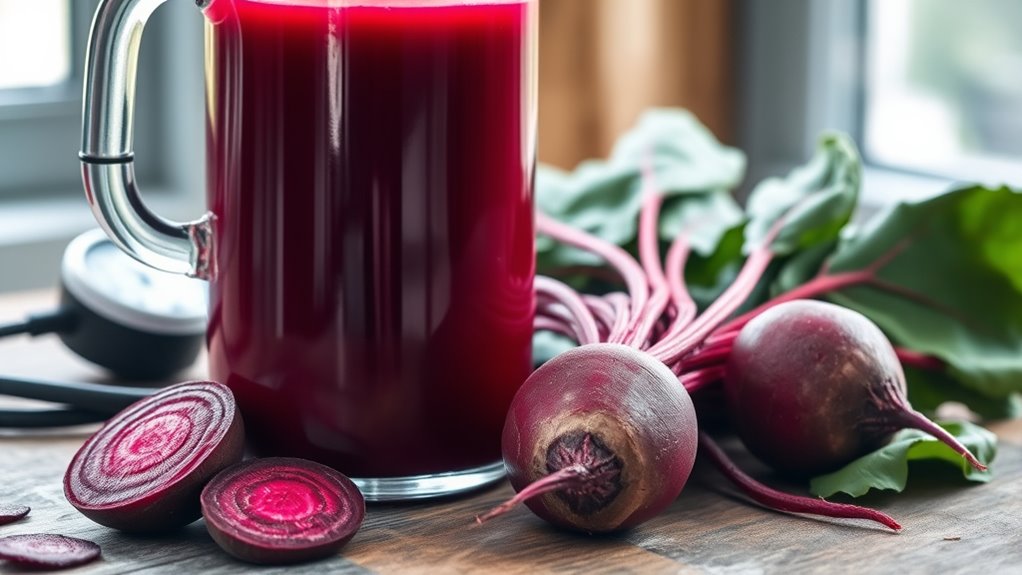
Does Beetroot Supplement Lower Blood Pressure?
Yes, beetroot supplements can lower your blood pressure, but their effectiveness largely depends on the nitrate content they provide. Beetroot juice typically contains higher levels of nitrates compared to most supplements, making it more beneficial for cardiovascular health.
This is especially true for older adults or individuals with high blood pressure.
Taking about 150 mL of beetroot juice daily for several weeks tends to show noticeable benefits in blood pressure reduction.
In contrast, many beetroot capsules contain too little nitrate to offer significant effects.
To maximize heart health benefits, it’s important to choose the right form and dosage of beetroot.
Keep reading to discover the best ways to use beetroot for improving your heart health and managing blood pressure effectively.
Key Takeaways
- Beetroot supplements with low nitrate content (5-10 mg) generally have minimal effect on lowering blood pressure.
- Beetroot juice, rich in nitrates (230-1,000 mg), is more effective in reducing systolic blood pressure by about 4-7 mm Hg.
- Consistent intake of 70-140 mL beetroot juice daily for 1-3 weeks shows the most reliable blood pressure benefits.
- Blood pressure reduction effects tend to fade within a week after stopping beetroot supplementation.
- Whole beetroot or fresh juice is preferable over capsules due to higher nitrate levels and better cost-effectiveness.
Can Beetroot Lower Blood Pressure?
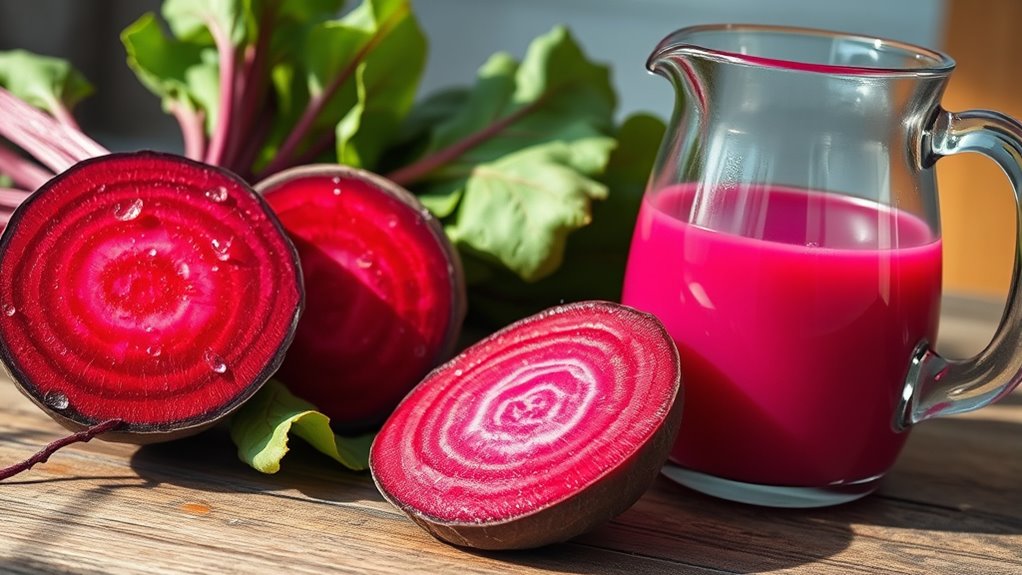
How exactly does beetroot affect your blood pressure? Beetroot contains nitrates that your body converts into nitric oxide, a compound that relaxes blood vessels, helping to lower blood pressure. Studies show that drinking beetroot juice can reduce systolic blood pressure by about 4 mm Hg in some adults.
When you use beetroot supplementation short-term, it can lead to noticeable decreases in daily systolic blood pressure, especially if you’re older, overweight, or have hypertension. However, these effects might not last once you stop supplementation. The nitrate content is key to beetroot’s blood pressure benefits, but keep in mind that supplement doses vary and might be less effective than consuming whole or fresh beetroot.
Beetroot Juice vs. Supplements: Which Works Better?
When it comes to lowering blood pressure, beetroot juice usually packs a stronger punch than supplements because it contains much higher nitrate levels. You’ll find most capsules or powders offer only tiny amounts, often too low to make a real difference.
Plus, fresh juice tends to be more cost-effective and reliable for getting those heart-healthy benefits.
Juice Versus Capsules
Although both beetroot juice and supplements aim to lower blood pressure, you’ll find that juice generally delivers a much higher nitrate dose—often between 230 and 1,000 mg per serving—compared to supplements, which usually contain only 5 to 10 mg. This significant difference in nitrate content means beetroot juice tends to be more effective for blood pressure management.
Capsules vary widely in nitrate content and often don’t clearly label their dosage, making them less reliable. If you want a consistent, cost-effective way to boost your nitrate intake, fresh or homemade beetroot juice is your best bet.
While supplements offer convenience, their lower nitrate content means they might not provide the same blood pressure benefits as beetroot juice.
Effectiveness And Potency
Choosing between beetroot juice and supplements comes down to their effectiveness and potency in lowering blood pressure. Beetroot juice typically contains 230-1,000 mg of nitrate per serving, which research shows effectively reduces systolic pressure.
In contrast, many beetroot supplements offer only 5-10 mg of nitrate per dose, making them less potent for blood pressure management. If you want real benefits, beetroot juice or whole beets provide higher nitrate levels, enhancing supplementation results.
Commercial capsules often come at a premium price but deliver minimal nitrates, limiting their impact on pressure. So, if lowering your blood pressure is the goal, beetroot juice stands out as the stronger, more reliable option compared to most supplements on the market.
What Recent Studies Reveal About Beetroot and Blood Pressure
If you’re curious about how beetroot might affect your blood pressure, recent studies offer some insightful findings. Research shows that beetroot juice, rich in dietary nitrate, can lower systolic blood pressure, especially in overweight or hypertensive adults. For instance, a 2014 trial found a notable 7.3 mm Hg drop in daily systolic blood pressure with beetroot juice intake, although this effect faded after a break.
Meta-analyses support that dietary nitrate from beetroot contributes to blood pressure reduction, but results vary based on dosage, duration, and individual responsiveness. It’s noteworthy that beetroot’s impact appears less significant in healthy young adults and athletes, and some studies report no significant changes in clinic or ambulatory readings, highlighting variability in outcomes.
How Much Beetroot or Juice You Need for Results
To see blood pressure benefits, you’ll typically need about 150 mL of beetroot juice daily, providing 230-1,000 mg of nitrates, for at least 1 to 3 weeks.
Whole beets can work too, but nitrate levels vary more depending on size and preparation.
It’s important to stick to consistent, recommended amounts whether you choose juice or supplements for the best results.
Effective Dosage Range
Although individual responses can vary, most studies suggest that you’ll need about 70-140 mL of beetroot juice daily, providing roughly 230-1,000 mg of nitrates, to see meaningful reductions in blood pressure. This dosage range is considered effective because lower nitrate amounts—like those in many supplements delivering just 5-10 mg—often don’t produce significant effects. Taking more than 140 mL or exceeding 1,000 mg of nitrates usually doesn’t offer additional blood pressure benefits, as the effects tend to plateau.
To get the best results, consistent daily intake within this dosage range is key. Keep in mind, the ideal beetroot juice nitrate dosage might vary based on your individual health and how your body responds.
Duration For Benefits
Since the blood pressure-lowering effects of beetroot juice take time to develop, you’ll generally need to consume about 70-140 mL daily for at least 2 to 3 weeks before noticing significant changes. This duration of supplementation allows your body to respond to the nitrates in beetroot juice, helping reduce blood pressure.
Keep in mind, the benefits may fade within a week after stopping, so consistent intake is key. Here’s a quick summary:
| Duration | Beetroot Juice Amount | Blood Pressure Effect |
|---|---|---|
| 2-3 weeks | 70-140 mL daily | Noticeable reduction |
| After stopping 1 wk | None | Benefits diminish |
| Longer than 3 weeks | Not well studied | Effects likely maintained |
Stick to this duration for the best blood pressure results from beetroot supplementation.
Juice Versus Whole Beetroot
How much beetroot or juice do you really need to lower your blood pressure? To see benefits, aim for about 150 ml of beetroot juice daily, as it typically contains 230 to 1,000 mg of nitrates, the compounds responsible for lowering blood pressure. Whole beets offer similar nitrate levels and can be a cost-effective option if you prefer eating them over juicing.
Beetroot supplements, however, generally provide far fewer nitrates—around 5 to 10 mg per dose—making them less effective for blood pressure control. If you prepare homemade beetroot juice, store it refrigerated to preserve nitrate content, since room temperature storage reduces it considerably.
Blood Pressure Medications and Beetroot: What You Should Know
If you’re taking blood pressure medications, you should be cautious about adding beetroot supplements to your routine. Beetroot supplements contain nitrate, which can enhance the effects of antihypertensive drugs, potentially lowering your blood pressure more than intended. While interactions are usually minor, high doses of beetroot nitrate may cause a significant drop in blood pressure, leading to dizziness or fainting.
Since supplements generally have lower nitrate levels than fresh beetroot juice, their impact is often minimal, but it’s still important to monitor your blood pressure closely. Before regularly consuming beetroot supplements, talk to your healthcare provider to avoid complications, especially if you have cardiovascular conditions or are on multiple medications. Your doctor can help ensure your blood pressure stays within a safe range.
Safe Ways to Add Beetroot to Your Heart-Healthy Diet
Adding beetroot to your diet can be a simple and effective way to support your heart health, especially when done thoughtfully. Aim for one serving of beetroot juice—about 150ml—daily to help manage blood pressure naturally. Choose nitrate-rich beetroot products without added salt or sugar, or cook fresh beets at home to preserve nutrients.
You can easily add cooked or raw beetroot slices to salads, sandwiches, or smoothies for a heart-healthy boost. If you prefer concentrates or powders, pick low-sodium options to avoid excess salt and sugar. Remember to store homemade beetroot juice in the fridge and drink it within 24-48 hours to maintain its nitrate content.
These simple steps make incorporating beetroot juice into your routine both safe and effective.
Frequently Asked Questions
Are Beetroot Capsules Good for Blood Pressure?
Beetroot capsules might help lower your blood pressure, but they usually contain much fewer nitrates than fresh beetroot juice, so their effect is often modest.
If you’re looking for noticeable benefits, fresh or homemade beetroot juice is a better choice. Capsules can be more convenient but might not provide enough nitrates to make a big difference.
What Is the Best Supplement for Lowering Blood Pressure?
If you’re looking for the best supplement to lower blood pressure, beetroot supplements with high nitrate content (around 70-140 mg daily) can help, but quality matters. Look for NSF Certified or USP Verified products to guarantee proper dosing and safety.
However, fresh beetroot juice or whole beets usually provide more effective nitrate doses and better results. Always combine supplements with a healthy lifestyle and consult your doctor before starting any new regimen.
How Long Does It Take for Beetroot Capsules to Lower Blood Pressure?
Think of beetroot capsules as a gentle river carving its path through your body’s pressure systems. Usually, you’ll start feeling the flow lower your blood pressure within 1 to 3 hours after taking them. The strongest effect often hits around 2 to 3 hours, but if you keep up daily use, the benefits can build like steady rainfall, creating lasting change.
How Much Beetroot Do You Need to Take to Lower Blood Pressure?
You’d typically need about 70 to 140 milliliters of beetroot juice daily to lower your blood pressure effectively. This amount provides roughly 230 to 300 milligrams of dietary nitrate, which is linked to noticeable reductions in systolic blood pressure.
Eating around 200 grams of cooked beets can give you a similar nitrate dose. Taking more than 140 mL daily usually doesn’t offer extra benefits and might lead to too much nitrate intake.
Conclusion
If you’re looking to lower your blood pressure, beetroot can be a helpful tool in your toolbox. Whether you choose juice or supplements, studies show promising results, but remember, it’s not a magic bullet. You’ll need the right amount and should always check with your doctor, especially if you’re on medication.
Adding beetroot safely to your diet can help keep your heart in tip-top shape. Incorporating beetroot supplements may contribute to better cardiovascular health and blood pressure management. After all, every little bit helps in the big picture when it comes to maintaining healthy blood pressure levels.