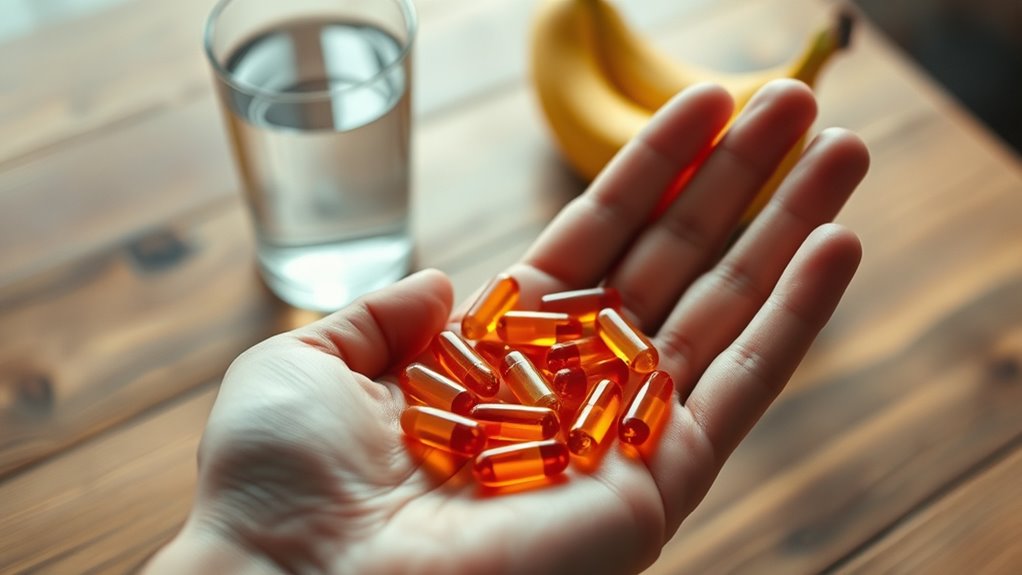
Should I Take a Potassium Supplement for Benefits?
You should only take potassium supplements if your diet lacks potassium-rich foods or if certain health conditions or medications affect your levels.
Potassium is essential for heart health, muscle function, and overall bodily processes. However, too much potassium can cause serious heart and muscle problems, especially if you have kidney issues.
It’s best to obtain potassium naturally from fruits and vegetables. Always consult your healthcare provider before starting supplements to ensure safety and correct dosing.
Keep exploring to understand how potassium impacts your health and how to manage it safely.
Key Takeaways
- Potassium supplements are beneficial if dietary intake of potassium-rich foods is insufficient or if a medical condition causes low potassium levels.
- Consult a healthcare provider before taking supplements to avoid risks like hyperkalemia or interactions with medications.
- Natural potassium sources like fruits and vegetables provide additional nutrients and are preferable for maintaining healthy potassium levels.
- Potassium supplements can help manage symptoms such as muscle cramps or fatigue under medical supervision.
- Regular blood tests are essential to monitor potassium levels and ensure safe supplementation, especially with existing health conditions.
Why Potassium Is Important for Your Body

Although you might not think about it often, potassium is essential for your body to function properly. This critical mineral plays a key role in maintaining your health by supporting muscle and nerve function. It helps regulate fluid balance within your cells and keeps your blood pressure at normal levels.
Without enough potassium, you might experience muscle weakness, irregular heartbeat, or fatigue. Ensuring your potassium levels stay balanced is indispensable for healthy heart rhythms and effective muscle contractions. Additionally, potassium helps reduce calcium loss from bones, promoting bone health.
To maintain proper potassium levels, it’s important to follow a balanced diet rich in potassium-containing foods. This approach supports your overall health and keeps your body working efficiently.
Who Needs a Potassium Supplement?
If you don’t get enough potassium from your diet or take certain medications, you might need a potassium supplement to maintain healthy levels. Potassium supplements can help those who have low potassium levels due to inadequate intake of potassium-rich foods like fruits and vegetables.
You might also need them if you have specific health conditions such as chronic kidney disease or suffer from gastrointestinal losses that affect potassium balance. Athletes or people engaging in intense physical activity might consider supplements if they experience muscle cramps or fatigue linked to potassium deficiency.
Since your potassium needs vary, it’s vital to consult with a healthcare provider before starting supplements, especially if you have underlying health conditions or are at risk of low potassium levels. This ensures safe and effective management of your potassium balance.
How Do Medications Affect Potassium Levels?
You might not realize that some medications can critically change your potassium levels, either lowering or raising them depending on the type. This means adding potassium supplements without medical guidance could put you at risk of imbalance.
It’s essential to monitor your potassium carefully if you’re on medications known to affect it.
Medication Types Impact
Because various medications influence potassium levels differently, it’s important to understand how they interact with your body. If you’re considering potassium supplements, knowing how medication types affect potassium levels helps you avoid complications. Here’s what you should know:
- ACE inhibitors (like lisinopril) increase potassium levels by blocking hormones that promote potassium excretion.
- Thiazide diuretics lower potassium by boosting urine output, which causes potassium loss.
- Potassium-sparing diuretics (such as spironolactone) raise potassium by helping your body retain it.
- NSAIDs, including ibuprofen, can impact kidney function and alter potassium balance.
Always monitor your potassium levels if you’re on these medications, since combining them with potassium supplements might lead to dangerous imbalances.
Supplementation Risks
Although potassium supplements can help maintain healthy levels, mixing them with certain medications can pose serious risks. Some medications, like ACE inhibitors, increase potassium levels, which can lead to hyperkalemia—a dangerous condition causing heart problems. On the other hand, diuretics often lower potassium, risking hypokalemia.
Painkillers such as NSAIDs may also affect kidney function, altering potassium balance. Because these medications impact how your body handles potassium, taking supplements without medical advice can push your levels too high or too low. Careful monitoring is *essential* if you’re on these drugs and considering potassium supplements.
Always consult your healthcare provider to adjust doses and avoid complications, ensuring your potassium levels stay safe and effective.
What Are the Risks of Potassium Supplements?
How dangerous can potassium supplements be if not taken carefully? Taking too much can lead to potassium overdose and hyperkalemia, a condition causing dangerous heart rhythm disturbances. You face significant supplement risks, especially if you have kidney problems or take certain medications.
Here are key risks to contemplate:
- Hyperkalemia from excessive potassium can cause irregular heartbeat and muscle paralysis.
- Kidney disease or impaired function raises the risk of potassium buildup.
- Symptoms like nausea, weakness, and irregular heartbeat signal adverse health effects.
- Combining supplements with ACE inhibitors or potassium-sparing diuretics can dangerously elevate potassium levels.
Always consult your healthcare provider before starting potassium supplements to avoid these serious risks.
Potassium-Rich Foods for Your Diet
You can boost your potassium intake by adding foods like bananas, spinach, and sweet potatoes to your meals. Aim for 7-9 servings of fruits and vegetables daily to naturally meet your potassium needs.
Choosing whole foods over processed ones not only gives you more potassium but also supports overall health.
Top Potassium Sources
Where can you find the best sources of potassium to boost your diet? Including potassium-rich foods is key to maintaining healthy potassium intake and achieving high potassium levels naturally.
Here are some top potassium sources you should consider:
- White beans – Over 1,000 mg of potassium per cup, perfect for a potassium boost.
- Avocados – Approximately 975 mg per fruit, great for heart health.
- Cooked spinach – About 839 mg per cup, a nutrient-dense leafy green.
- Bananas – A convenient snack with around 451 mg each.
Incorporating Potassium Daily
Although it can be challenging to consistently meet your potassium needs, including a variety of potassium-rich foods like bananas, spinach, and sweet potatoes in your daily meals makes it much easier. Focus on 7-9 servings of fruits and vegetables daily to support blood pressure and kidney health naturally.
While dietary supplements exist, getting potassium from whole foods is generally safer, especially if you have kidney concerns. Before adding supplements, consult a healthcare professional.
| Potassium-Rich Foods | Benefits |
|---|---|
| Bananas | Supports blood pressure |
| Spinach | Enhances nutrient density |
| Sweet Potatoes | Promotes kidney health |
| Beans & Nuts | Natural dietary boost |
Benefits Of Whole Foods
Why choose whole foods for your potassium intake? Whole foods provide potassium-rich foods from natural sources, delivering more than just potassium—they offer fiber, vitamins, and minerals essential for your health. Relying on these foods can boost your overall health benefits without needing supplements.
Here’s why you should focus on whole foods:
- Bananas, spinach, sweet potatoes, and beans supply ample potassium naturally.
- Whole foods include nuts and legumes, giving you potassium plus fiber.
- Potassium from natural sources helps manage blood pressure and lowers cardiovascular risks.
- Diets like DASH encourage whole, minimally processed foods for balanced potassium intake.
Choosing whole foods ensures you get extensive nutrition while safely meeting your potassium needs.
Types of Potassium Supplements
When you need to correct low potassium levels, you’ll find several types of supplements available, each suited to different health needs and dosages. The most common prescription formulation is potassium chloride, often used to treat hypokalemia and available in tablets, capsules, powders, and liquids. Over-the-counter supplements usually contain lower doses, like multivitamins offering around 80 mg per serving, while prescription supplements can range from 20 to 100 mEq daily.
Other formulations you might encounter include potassium gluconate, bicarbonate, and citrate, chosen based on specific health conditions such as kidney stone prevention or electrolyte balance. Since prescription potassium supplements come in higher doses, it’s important to use them under medical supervision to avoid complications like hyperkalemia. Your healthcare provider will guide you in selecting the right supplement formulation for your needs.
How to Take Potassium Supplements Safely
Since potassium supplements can affect your heart and muscle function, it’s crucial to take them exactly as your healthcare provider prescribes. Following the correct dosage minimizes health risks like hyperkalemia, a dangerous potassium excess.
Here’s how to take potassium supplements safely:
- Always follow your healthcare provider’s instructions and never self-administer supplements without medical guidance.
- Take supplements with food or as directed to reduce gastrointestinal discomfort and improve absorption.
- Use prescribed dosages measured in milliequivalents (mEq) precisely to avoid imbalances.
- Regularly monitor your potassium levels through blood tests if on supplements to ensure safe management.
When to Get Medical Help for Potassium Issues
If you notice symptoms like an irregular heartbeat, muscle weakness, or fainting, you should seek medical help immediately, as these signs could signal a serious potassium imbalance. It’s vital to get an urgent medical evaluation if you experience persistent nausea, vomiting, or chest pain, since these can also indicate dangerous potassium issues.
Be sure to contact a healthcare professional if blood tests reveal potassium levels below 3.5 mEq/L or above 5.0 mEq/L. If you’re on medications like diuretics, ACE inhibitors, or potassium supplements, regular monitoring is essential to avoid imbalances. Always consult your doctor before starting or stopping potassium supplements, especially if you have kidney disease or other chronic conditions, to guarantee your potassium levels stay safe and stable.
Monitoring Your Potassium Levels at Home
Although monitoring potassium levels at home can seem convenient, it usually requires specialized blood tests that aren’t easy to perform without medical equipment. Regular lab blood tests ordered by your healthcare provider remain the most accurate way to track potassium levels.
Home testing kits exist but are less common and may not give precise results. Instead, paying attention to symptoms like muscle cramps or irregular heartbeat is vital. Here’s how you can manage monitoring effectively:
- Schedule regular blood tests with your doctor.
- Use home testing kits cautiously, understanding their limitations.
- Keep a detailed record of any symptoms related to potassium imbalance.
- Always consult your healthcare provider before making changes based on home testing.
This approach ensures safe and accurate potassium level monitoring.
Frequently Asked Questions
Are Potassium Supplements a Good Idea?
Potassium supplements can be helpful if you have a deficiency or certain health conditions, but they’re not always a good idea for everyone. If you’re generally healthy and eat a balanced diet, you probably don’t need them. Taking too much can cause serious heart issues.
Before you start, it’s really important to check with your doctor, especially if you have kidney problems or take medications that affect potassium levels.
Can Potassium Cause Heartburn?
Imagine a gentle flame flickering in your stomach—that’s how heartburn feels. Potassium supplements don’t usually cause that fire, especially if you take them with food.
But if you gulp them down on an empty stomach or take high doses, you might feel some irritation or a burning sensation. If you notice heartburn after taking potassium, it’s best to chat with your doctor about adjusting the dose or trying a different form.
What Happens if You Take Potassium and You Don’t Need It?
If you take potassium when you don’t need it, you risk developing hyperkalemia, which can cause dangerous heart rhythm problems. You might feel nausea, weakness, or even muscle paralysis.
Since your kidneys usually manage potassium levels, adding extra can strain them, especially if you have kidney issues. Plus, too much potassium can interfere with certain medications and throw off your electrolyte balance, potentially leading to serious health complications.
How Do I Tell if I Need Potassium?
You can tell if you need potassium by paying attention to symptoms like muscle cramps, weakness, or irregular heartbeat. If you’re on medications like diuretics or have conditions causing vomiting or diarrhea, you might be at risk.
The best way to know for sure is to get a blood test and consult your healthcare provider. They’ll check your potassium levels and advise if supplementation is necessary for you.
Conclusion
Potassium plays a key role in keeping your body’s engine running smoothly, but it’s not always as simple as popping a supplement. If you’re considering one, weigh the benefits against the risks and remember that too much of a good thing can backfire.
Focus on getting potassium from foods first, and always chat with your doctor before starting supplements. After all, your health is the compass—don’t let it spin out of control. Taking potassium supplements without guidance can lead to complications, so proceed with caution and prioritize natural sources.