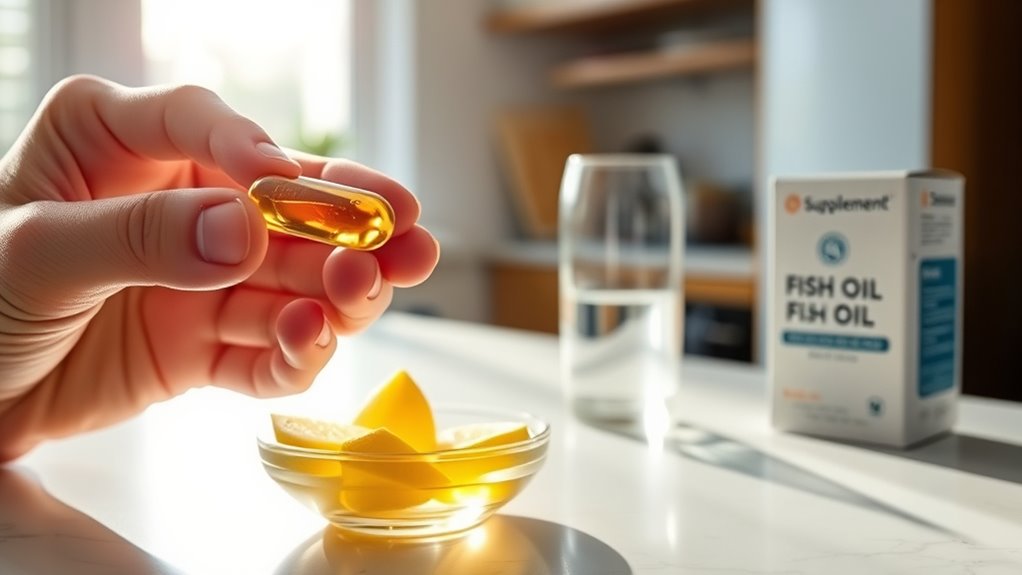
How to Safely Take Fish Oil Supplements If Expired
If your fish oil supplements are expired, it’s important to handle them with care to avoid health risks. Fish oil supplements can degrade over time, leading to a rancid smell and reduced effectiveness.
Before taking expired fish oil, check for common signs of spoilage such as a sour or rancid odor, capsule damage, discoloration, or cloudiness.
If any of these signs are present, discard the supplements immediately. Even past the expiration date, properly stored fish oil might still be safe if it shows no signs of spoilage.
To prevent stomach upset and other issues, always inspect your supplements before use.
Store your fish oil in a cool, dark place to keep it fresh longer. Following these tips can help you safely manage expired fish oil supplements.
You can find more helpful advice and alternatives ahead.
Key Takeaways
- Check the expiration date and inspect for spoilage signs like off odors, discoloration, or capsule damage before considering use.
- Avoid taking expired fish oil if it smells rancid, tastes bitter, or shows cloudiness or capsule transparency changes.
- Store fish oil properly in cool, dark, airtight containers to prevent spoilage and maintain potency before the expiration date.
- Do not consume expired fish oil that was stored improperly or shows any signs of oxidation to prevent gastrointestinal discomfort.
- Dispose of spoiled or expired fish oil capsules safely using take-back programs or sealing them with coffee grounds before trashing.
Is It Safe to Take Expired Fish Oil Supplements?

Is it safe to take expired fish oil supplements? While it’s unlikely to cause serious harm, consuming expired fish oil isn’t recommended. Over time, fish oil undergoes oxidation, which reduces its potency and effectiveness.
If you notice signs of rancidity—such as a foul smell or unpleasant taste—it’s best to discard the supplement to avoid potential gastrointestinal discomfort. Proper storage in a cool, dark place can help prolong its shelf life, but once the fish oil has expired, its safety can’t be guaranteed. Always be cautious and check for any spoilage before use.
Taking expired fish oil might mean you’re not getting the full benefits, and in some cases, it could lead to unwanted side effects. When in doubt, it’s safer to replace the supplement.
How to Check If Your Fish Oil Supplement Has Expired
First, check the expiration date printed on the bottle or packaging to see if it’s past due. Next, smell the oil for any strong fishy or rancid odors, which are clear signs it’s spoiled.
Finally, look for changes like discoloration, cloudiness, or damaged capsules that indicate the supplement isn’t safe to use.
Expiration Date Location
Although it might seem straightforward, locating the expiration date on your fish oil supplement can sometimes be tricky, so you’ll want to check the label, cap, or bottom of the bottle carefully. For fish oil capsules, examine the brand packaging closely, especially if it’s blister packs, since some brands print the expiration date in small print or on the crimped edges.
Don’t forget to inspect the packaging for any damage like tears or broken seals that could affect freshness. If your supplement is liquid, check for changes in color or sediment. By carefully reviewing these spots for the expiration date and any packaging issues, you’ll better guarantee your fish oil capsules remain safe and effective to take.
Signs Of Rancidity
Once you’ve located the expiration date and inspected the packaging, it’s important to check if your fish oil supplement shows signs of rancidity. Rancid fish oil typically emits a strong fishy, sour, or metallic fish oil smell that’s noticeably off. If your capsules or liquid have an unpleasant, bitter, or cardboard-like odor, it’s a clear sign the oil has spoiled.
Look closely for changes in color, cloudiness, or separation, which can indicate oxidation. Tasting a small amount can also help; an off taste or aftertaste suggests rancid fish oil. Always examine capsules and packaging for visible damage or discoloration before use.
These checks are essential, especially when dealing with expired supplements, to avoid consuming harmful or ineffective products.
Signs Your Fish Oil Capsules Have Gone Rancid
How can you tell if your fish oil capsules have gone rancid? First, check for any visible signs like discoloration, cloudiness, or damage to the capsules. Rancid fish oil often results from oxidation, causing the capsules to look different than when you first bought them.
Expired capsules may also emit a strong, unpleasant fishy or sour odor once opened. Although you shouldn’t taste expired supplements regularly, a bitter or metallic flavor when you do can indicate rancidity. If you notice any of these signs—off smell, odd appearance, or unusual taste—it’s best to discard the capsules.
Using rancid fish oil can lead to gastrointestinal discomfort, so always inspect your supplements carefully before taking them.
How to Check If Your Fish Oil Smells or Tastes Off
If you want to make sure your fish oil is still good, start by smelling the liquid inside the capsule. Perform a smell test by opening one and sniffing closely. Fresh fish oil has a mild scent, but spoiled fish oil smells strong, sour, metallic, or even like ammonia.
These odors indicate oxidation and rancidity, meaning the oil has gone bad. Don’t ignore any off smells; they’re a clear warning. Besides smelling, check for changes in color, cloudiness, or a sticky texture, which also signal spoilage.
If the fish oil tastes off or different from when you first opened it, trust your senses and avoid consuming it. These simple steps help you identify spoiled fish oil and protect your health.
Are Expired Fish Oil Capsules Safe? What You Should Know
After checking for any off smells or changes in your fish oil capsules, you might wonder if it’s still safe to take them past their expiration date. Generally, expired fish oil isn’t harmful if it doesn’t smell rancid or show spoilage signs. However, safety considerations are essential—rancid fish oil can cause stomach upset and should be discarded immediately.
Keep in mind, the expiration date mainly signals when supplement potency may decline, not necessarily when it becomes unsafe. While you might still gain some benefits, the effectiveness might be reduced. Always inspect your capsules carefully before use.
How Storage Affects Expired Fish Oil Shelf Life
How you store your fish oil plays a big role in how long it stays safe after expiration. Keeping it cool, dark, and sealed in airtight packaging helps slow down damage from heat and light.
Let’s look at why these factors matter and how proper storage can extend the shelf life.
Ideal Storage Conditions
Because fish oil is prone to oxidation, storing it properly is key to preserving its potency—even past the expiration date. You should keep your fish oil in a cool, dark place to slow down oxidation, which directly impacts its shelf life. Avoid exposure to heat, light, and air, as these factors accelerate degradation even if the bottle remains unopened.
Using airtight, opaque containers or bottles with UV protection is ideal to block light-induced oxidation. Refrigeration or freezing can further extend the shelf life after opening by maintaining a consistently low temperature. Always follow the manufacturer’s storage recommendations on the label to maximize safety and effectiveness.
Proper storage helps ensure your expired fish oil remains as potent and safe as possible.
Impact Of Heat Exposure
While you might not always notice it, storing fish oil supplements in warm conditions can drastically shorten their shelf life, especially if they’re expired. Heat exposure speeds up the way fish oil oxidizes, causing faster spoilage. This means the fatty acids break down quicker, reducing potency and increasing rancidity risk.
Expired fish oil kept in heat often develops unpleasant odors and taste, signaling it’s no longer safe to consume. To help you understand, here’s how heat impacts fish oil:
| Temperature Range | Effect on Fish Oil |
|---|---|
| Below 59°F (15°C) | Ideal preservation |
| 60°F – 77°F (15-25°C) | Moderate oxidation |
| Above 77°F (25°C) | Rapid oxidation |
| Prolonged Heat | Increased rancidity |
| Expired + Heat | Unsafe for consumption |
Avoid heat to keep expired fish oil as safe as possible.
Role Of Packaging
Heat isn’t the only factor that affects the safety and shelf life of expired fish oil supplements—packaging plays a big role too. The right packaging can markedly slow down oxidation, which is a major cause of spoilage. Look for opaque, UV-protective containers or dark-colored glass bottles that block light exposure.
Air-tight seals in bottles or blister packs are essential to limit oxygen contact, reducing rancidity even after opening. Proper storage combined with this packaging—keeping your fish oil in a cool, dark place with the cap tightly closed—helps maintain freshness past the expiration date.
How to Assess Expired Fish Oil Safety Before Use
Before deciding to use expired fish oil supplements, you should carefully evaluate their safety to avoid potential health risks. Proper safety assessment helps you identify spoilage signs that indicate the oil may no longer be safe.
Here’s how to assess expired fish oil safety before use:
- Check the expiration date and packaging: Confirm if the product is expired and inspect the packaging for any damage or leaks.
- Smell and appearance: Open the bottle or capsule and smell the oil. A strong fishy or sour odor, discoloration, or cloudiness are spoilage signs to watch for.
- Taste test: If it smells fine, cautiously taste a small amount. A bitter, metallic, or off taste means you should discard it immediately.
Following these steps ensures you avoid consuming spoiled, unsafe fish oil.
When to Avoid Taking Expired Fish Oil Supplements
If you notice a rancid fishy smell or an off taste in your expired fish oil supplements, you shouldn’t take them, as these are clear signs of spoilage that could harm your health. Avoid using expired fish oil if you see discoloration, cloudiness, or damaged capsules, since oxidation may have produced harmful compounds.
Also, steer clear of fish oil that’s been stored improperly—in warm, humid, or light-exposed places—as these conditions speed up spoilage. Don’t consume fish oil that’s been opened for a long time without proper storage, because oxidation increases over time, reducing safety.
In all these cases, taking spoiled or oxidized fish oil can lead to gastrointestinal discomfort or other health risks, so it’s best to avoid it altogether when you spot any signs of spoilage.
How to Dispose of Expired or Rancid Fish Oil Properly
Once you’ve identified that your fish oil supplements are expired or rancid, the next step is to dispose of them properly to protect your health and the environment. Don’t ingest expired fish oil, as it can pose health risks. Here’s how to ensure proper disposal:
Properly dispose of expired fish oil to protect your health and the environment; never consume rancid supplements.
- Seal the capsules in a plastic bag with coffee grounds or dirt to make them unappealing and prevent leakage.
- Use medication take-back programs or local disposal sites designed for expired supplements.
- Never flush fish oil capsules down the toilet, as this contaminates water sources and harms wildlife.
Always follow your local regulations when you dispose of fish oil. Taking these steps ensures safe, eco-friendly handling of expired fish oil and helps keep your environment clean.
Tips to Choose Fresh, High-Quality Fish Oil Supplements
Although fish oil supplements are widely available, choosing fresh, high-quality products can be tricky. To guarantee freshness, always check the “Use By” or “Best By” date, ideally within the last six months. Opt for bottles that are opaque and UV-protective to minimize oxidation caused by light exposure.
Quality matters, so pick reputable brands that perform third-party testing for purity, potency, and contaminants like heavy metals. Supplements with added antioxidants, such as vitamin E, help slow oxidation and extend shelf life, preserving the oil’s effectiveness. Finally, buy from trusted retailers or pharmacies to guarantee authenticity and proper storage conditions.
Following these tips will help you select fish oil supplements that maintain their freshness and quality, supporting your health safely.
Omega-3 Alternatives to Expired Fish Oil Supplements
Even with careful selection, fish oil supplements can reach their expiration date, which might leave you wondering about other ways to maintain your omega-3 intake.
Luckily, there are effective alternatives to expired supplements that provide essential omega-3s without the risk of rancidity.
- Algal oil supplements: A plant-based source rich in EPA and DHA, algal oil offers a sustainable, vegan-friendly omega-3 option with longer shelf life than fish oil.
- C15:0 fatty acid supplements: Found in dairy and products like Fatty15, these support cellular health and are more stable than traditional fish oils.
- Omega-3-rich foods: Incorporate flaxseed, chia seeds, and walnuts into your diet to boost ALA intake naturally when supplements aren’t an option.
These alternatives help you maintain your omega-3 levels safely and effectively.
When to Consult Your Healthcare Provider About Expired Fish Oil
If you notice any unusual taste, odor, or digestive discomfort after taking expired fish oil, you should stop using it and consult your healthcare provider right away.
Rancid fish oil can pose health risks, especially if you have underlying conditions or take medications. Your provider can help determine if it’s safe to continue or recommend safer alternatives.
Symptoms Warranting Medical Attention
When you consume expired fish oil, certain symptoms shouldn’t be overlooked, as they may signal the need for medical attention. Recognizing these symptoms early can help you avoid serious complications.
Here are key symptoms that require prompt medical attention after taking expired fish oil:
- Severe gastrointestinal issues like persistent nausea, vomiting, or diarrhea.
- Allergic reactions such as rash, swelling, or difficulty breathing.
- Unusual bleeding, bruising, or slow clotting, which could indicate increased bleeding risks.
If you experience chest pain, dizziness, fatigue, or have underlying health conditions, consult your healthcare provider immediately. When in doubt about symptoms caused by expired fish oil, seeking medical attention is always the safest choice to ensure your health and well-being.
Risks of Rancid Fish Oil
How can you tell if your fish oil has gone rancid, and why does it matter? If your fish oil capsules smell sour, bitter, or have a strong fishy odor, they’re likely rancid fish oil and shouldn’t be taken. Consuming rancid fish oil can cause nausea, a fishy aftertaste, and loose stools.
More importantly, rancid fish oil contains oxidation products that may increase inflammation and cardiovascular risks. Using expired fish oil not only reduces omega-3 potency but also exposes you to these harmful compounds. If you notice any gastrointestinal discomfort or have underlying health issues, it’s *vital* to consult your healthcare provider before continuing with expired fish oil.
They can help assess the risks and decide if you should stop or switch supplements.
When to Stop Use
Because expired fish oil can lose its effectiveness and potentially cause harm, you should consult your healthcare provider before continuing its use, especially if you notice any off smells, discoloration, or unusual taste.
Knowing when to discontinue is essential to avoid adverse reactions. Here’s when to stop use and seek advice:
- If you experience gastrointestinal discomfort, nausea, or any adverse reactions after taking expired fish oil, discontinue immediately and contact your healthcare provider.
- If you’re on blood thinners or have bleeding disorders, consult your provider before using expired supplements due to increased bleeding risk from oxidation.
- If the fish oil’s expiration date has passed and you’re unsure about its safety or effectiveness, ask your healthcare provider for guidance on whether to stop use and replace it.
How to Store Fish Oil to Extend Its Freshness
To keep your fish oil supplements fresh for as long as possible, you should store them in a cool, dark place away from sunlight and heat. Proper storage slows oxidation, which causes rancidity and reduces the supplement’s effectiveness. Always keep the bottle tightly sealed after each use to limit exposure to air, as oxygen accelerates spoilage.
Using opaque or dark-colored bottles helps block UV light, further preventing oxidation. If the manufacturer recommends, refrigerate or freeze the fish oil to extend its shelf life even more. Make sure to check the expiration date regularly and replace the bottle once it nears or passes this date.
Following these storage tips guarantees your fish oil remains potent and safe to consume for longer.
Frequently Asked Questions
Is It Okay to Take Expired Omega-3 Supplements?
No, you shouldn’t take expired omega-3 supplements because their potency decreases, and they might turn rancid. If they smell off or taste strange, it’s a sign they’ve gone bad, which could upset your stomach.
It’s better to discard expired fish oil and get a fresh bottle. To avoid this, always store them in a cool, dark place and check expiration dates before taking any supplements. Your health’s worth it!
How Do You Know if Fish Oil Pills Have Gone Bad?
You’ll know fish oil pills have gone bad if they smell strongly fishy, sour, or chemical-like when you open the bottle. Check the capsules too—if they look discolored, cloudy, or damaged, that’s a bad sign.
Also, if the oil tastes bitter or metallic, it’s likely oxidized and spoiled. Trust your senses; if anything seems off, it’s safer to toss them rather than risk your health.
How Long After Supplements Expire Can You Take Them?
You probably shouldn’t wait until your fish oil turns into a science experiment before tossing it! Generally, you can take fish oil supplements up to 1-2 months after they expire if they’ve been stored properly.
Beyond that, the risk of rancidity skyrockets, which can upset your stomach. Always trust your nose and eyes—if it smells off or looks weird, don’t risk it.
When in doubt, replace them for your safety.
How Long Is Oil Good for After the Expiration Date?
You can usually use fish oil supplements up to about six months past their expiration date if they’ve been stored properly in a cool, dark place. After that, the oil may start to lose potency and could become rancid.
Always check for any off smells or changes in appearance before taking it. If it smells fishy or looks cloudy, it’s best to toss it to avoid any potential health risks.
Conclusion
When it comes to expired fish oil supplements, it’s better to play it safe than sorry. If your capsules smell or taste off, don’t risk it—your health’s not worth cutting corners. Always check expiration dates and store your supplements properly to keep them fresh.
If in doubt, talk to your healthcare provider. Remember, fresh fish oil is the cream of the crop when it comes to quality and benefits, so don’t settle for less.
For safely taking fish oil supplements if expired, prioritize your health by avoiding any that seem off. Proper storage and timely usage help maintain their effectiveness and safety. When considering how to safely take fish oil supplements if expired, always consult a professional to ensure you’re making the best choice.


