What Makes a Protein Shake a Meal Supplement?
To make a protein shake a meal supplement, you need more than just protein—it should have at least 170 calories, 17 grams of complete protein, fiber, and essential vitamins and minerals. This combination ensures your shake not only supports muscle recovery but also serves as a balanced meal replacement.
By filling nutritional gaps, it helps keep you full and supports overall health effectively.
Unlike standard protein shakes that mainly focus on muscle repair, meal supplements are designed to replace an entire meal. They provide the necessary nutrients your body needs throughout the day.
Keep exploring to find out how the right nutrients and timing can boost their benefits.
Key Takeaways
- A protein shake qualifies as a meal supplement if it contains at least 170 calories per serving and ≥17 grams of protein.
- It must be fortified with essential vitamins, minerals, and at least 3 grams of fiber for balanced nutrition and satiety.
- Complete proteins like whey or soy are included to provide all essential amino acids for muscle repair and overall health.
- Balanced macronutrients—moderate carbs and healthy fats—support sustained energy and make it nutritionally comparable to a full meal.
- It serves as a convenient meal replacement during busy times, supporting weight management and muscle maintenance effectively.
What Makes a Protein Shake a Meal Supplement?
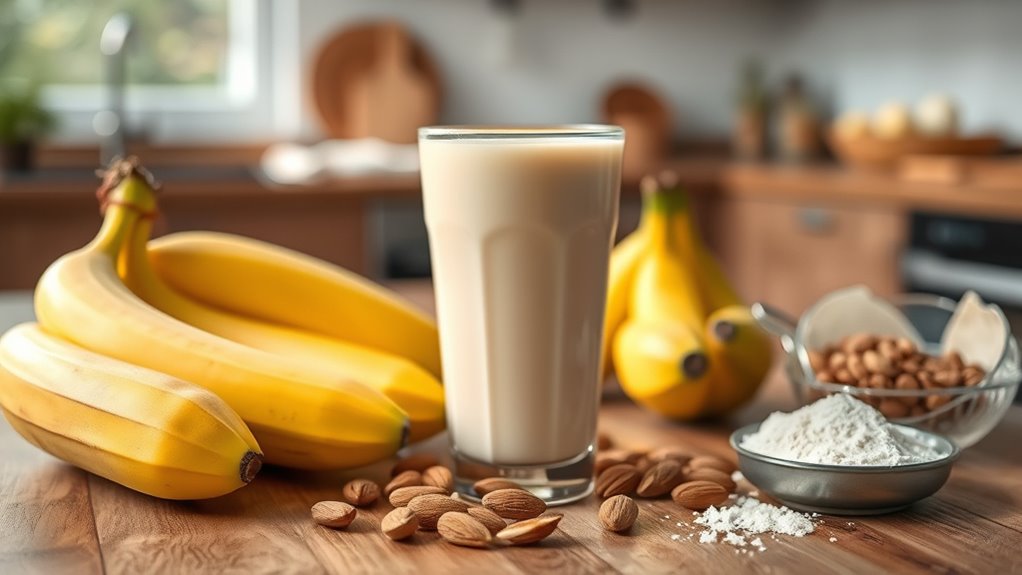
Although many protein shakes simply boost your protein intake, a protein shake becomes a true meal supplement when it offers at least 170 calories, 17 grams of protein, and is fortified with vitamins, minerals, and fiber to substitute a full meal.
To serve as a meal replacement, the shake must provide balanced calories alongside essential nutrients, ensuring you get the energy and nourishment a traditional meal offers. The added vitamins and minerals support your daily dietary needs, helping prevent deficiencies.
Fiber inclusion promotes fullness, which helps you feel satisfied until your next meal. When choosing a protein shake as a meal supplement, look for these key elements to ensure it meets your nutritional requirements and effectively replaces a full meal without compromising your health.
How Do Meal Supplement Shakes Differ From Standard Protein Shakes?
You’ll notice meal supplement shakes pack more than just protein—they include vitamins, minerals, fiber, and enough calories to replace a full meal.
Standard protein shakes mainly boost your protein intake without offering balanced nutrition.
Understanding these differences helps you choose the right shake for your goals.
Nutritional Content Differences
When comparing meal supplement shakes to standard protein shakes, you’ll notice that meal supplements offer a much more balanced nutritional profile. Meal supplement shakes include not just protein but also essential vitamins and minerals, fiber, carbohydrates, and healthy fats, providing closer to complete nutrition.
Standard protein shakes mainly focus on delivering high protein with minimal micronutrients and lower calories.
| Nutrient Type | Meal Supplement Shake | Standard Protein Shake |
|---|---|---|
| Protein | 15-30g | 15-30g |
| Vitamins & Minerals | Included, meets daily needs | Minimal or none |
| Calories | 170+ (balanced macros) | Lower, mostly protein |
This makes meal supplements a more exhaustive option for nutritional content beyond just protein.
Intended Usage Purpose
How do meal supplement shakes differ from standard protein shakes in their intended use? Meal supplement shakes are designed to be a meal replacement, meaning they’re used to substitute a full meal when you’re short on time or need balanced nutrition on the go. They contain added vitamins, minerals, fiber, and enough calories to meet your broader nutritional needs beyond just protein.
Standard protein shakes, on the other hand, primarily focus on delivering high protein amounts and are usually consumed as snacks or post-workout supplements rather than meal substitutes. So, if you’re looking for a shake that can stand in for a full meal while supporting satiety and holistic nutrition, meal supplement shakes are the better choice compared to standard protein shakes.
Meal Replacement Criteria
Understanding the intended use of meal supplement shakes helps clarify the specific criteria that set them apart from standard protein shakes. Meal replacement shakes are designed to provide a complete meal’s nutritional value, balancing calorie content, protein, fiber, vitamins, and minerals. Unlike protein shakes that focus mainly on protein, meal replacements offer broader nutrition to support satiety and health.
Here’s what distinguishes a true meal replacement shake:
- At least 170 calories per serving
- Minimum 17g of protein to support muscle and fullness
- Contains 25% of daily vitamins and minerals for balanced nutrition
- Includes 3g of fiber to aid digestion and satiety
- Formulated to mimic a complete meal’s nutritional profile
When choosing a shake, look for these criteria to ensure it’s a genuine meal replacement.
Key Nutrients That Turn a Protein Shake Into a Meal Replacement
Although protein shakes are often seen as simple supplements, certain key nutrients transform them into effective meal replacements. When choosing a shake as a meal substitute, you want one that offers at least 17 grams of protein, helping support muscle maintenance and fullness. But it’s not just about protein; the inclusion of essential micronutrients—about 25% of your daily vitamins and minerals—ensures you get thorough nutritional support.
Fiber is another critical component, typically around 3 grams per serving, which aids digestion and keeps you feeling satisfied longer. Together, these nutrients make a protein shake nutritionally comparable to a full meal, providing more than just protein by covering essential dietary needs. This balance is what truly sets meal replacement shakes apart from basic protein supplements.
Why Balanced Macronutrients Matter in Protein Meal Supplements
When you choose a protein meal supplement, getting the right balance of macronutrients is essential to keep your energy steady and support muscle recovery. Balanced macronutrients in a meal replacement typically include 20-30 grams of protein, 10-20 grams of carbohydrates, and 3-5 grams of healthy fats per serving. This mix ensures the protein content meets your nutritional needs without causing energy dips or nutrient gaps.
Choosing a protein meal supplement with balanced macronutrients supports steady energy and effective muscle recovery.
If one macronutrient dominates, the supplement may fail as a complete meal replacement. Here’s what balanced macronutrients help you achieve:
- Sustained energy throughout the day
- Efficient muscle repair and growth
- Better satiety to curb hunger
- Stable blood sugar levels
- Alignment with overall health and fitness goals
The Importance of Vitamins and Minerals in Protein Meal Shakes
Why do vitamins and minerals matter in your protein meal shakes? When you rely on these shakes as meal supplements, they need to offer more than just protein. Many protein shakes are fortified with essential vitamins and minerals like vitamin D, calcium, iron, and B-vitamins to boost their nutritional value.
This fortification helps fill nutrient gaps common in diets low in whole foods. Without these micronutrients, a protein-only drink might fall short of providing balanced nutrition. Adequate vitamins and minerals support your immune function, energy metabolism, and overall health, especially when the shake replaces a full meal.
Regulated amounts ensure you get what you need daily, making fortified protein shakes effective and convenient meal supplements that truly nourish your body.
How Calories Affect a Protein Shake’s Role as a Meal Replacement
Since protein shakes vary widely in calorie content, understanding how many calories they provide is key to using them as meal replacements. A protein shake with fewer than 170 calories often won’t satisfy hunger like a full meal, making it better suited as a snack. To effectively replace a meal, your protein shake should offer balanced nutrients and enough calories to keep you energized.
Adding fiber and healthy fats increases calories and fullness, transforming your shake into a true meal replacement.
Imagine your protein shake providing:
- 180+ calories fueling your midday energy
- A blend of protein, fats, and carbs for balance
- Fiber to curb hunger between meals
- Healthy fats for sustained satiety
- Enough volume to feel as filling as a full meal
Choosing the right calorie count guarantees your protein shake works as a satisfying meal replacement.
Why Fiber Is Essential for Fullness and Digestion in Meal Supplements
Although protein and calories are important, fiber plays a crucial role in making your meal supplement truly satisfying and supportive of digestion. Fiber adds bulk to the shake, slowing digestion and promoting feelings of fullness, which helps you control your appetite and avoid overeating. Most meal supplements include at least 3 grams of fiber per serving to enhance satiety and stabilize blood sugar levels.
Soluble fiber, in particular, forms a gel-like substance in your gut that delays nutrient absorption, keeping you full longer. Additionally, fiber supports healthy digestion by regulating bowel movements and preventing constipation. Including enough fiber in your meal supplement not only helps with fullness but also supports smooth digestion, making your protein shake a more effective and balanced meal replacement option.
Ingredients That Improve Protein Shakes for Meal Replacement Benefits
When you want your protein shake to serve as a complete meal replacement, choosing the right ingredients is essential. Incorporating a complete protein source like whey or soy ensures you get all essential amino acids. Adding fiber-rich ingredients promotes fullness and aids digestion.
Healthy fats from nuts or avocado provide lasting energy and balance. Fortification with vitamins, minerals, and carbohydrates like oats or fruit sustains your energy levels throughout the day.
Consider including:
- Whey or soy protein for a complete protein profile
- Chia seeds or oats for fiber
- Nuts or avocado for healthy fats
- Fruits or oats for carbohydrate fortification
- A vitamin and mineral blend for added nutrition
These ingredients make your shake a truly balanced meal replacement.
When Should You Choose a Protein Shake as a Meal Supplement?
You should choose a protein shake as a meal supplement when your timing and nutritional needs align, like during busy days or calorie-controlled diets. It’s important the shake provides enough protein, calories, and essential nutrients to effectively substitute a meal.
Matching your shake choice to your specific goals helps ensure you get the support your body requires.
Protein Shake Timing
Since protein shakes offer quick nutrition, they’re perfect for times when you need a convenient meal supplement. Understanding protein shake timing helps you meet your body needs efficiently and maintain consistent protein intake.
Consider using a protein shake as a meal replacement or supplement during these moments:
- Busy mornings when you don’t have time for a full meal
- Between meals to curb hunger and sustain energy
- Right after workouts to aid muscle recovery
- Before bed with slow-digesting protein for overnight repair
- When whole foods aren’t available but you need balanced nutrition
Choosing the right time guarantees your protein shake supports your body’s demands, making it an effective meal replacement and helping you stay fueled throughout the day.
Nutritional Needs Match
Although protein shakes are convenient, they’ll only work well as meal supplements if they meet your nutritional needs. You should choose a protein shake that is nutritionally complete, containing at least 170 calories, 17g of protein, and fortified with essential vitamins and minerals.
It’s important the shake includes a balanced mix of macronutrients—carbohydrates, healthy fats, and protein—to mimic a full meal’s benefits. Don’t forget fiber; a minimum of 3g helps promote satiety and supports digestive health.
Opt for a shake that aligns with your dietary goals and fits within your daily calorie limits, especially if you’re managing weight or have a busy schedule. When a protein shake meets these criteria, it can effectively replace a meal and support your overall nutrition.
Using Protein Meal Supplements for Weight Management and Portion Control
When managing your weight, protein meal supplements can be a powerful tool because they offer high-protein, low-calorie options that help you feel full longer and curb overeating. Using protein shakes as a meal replacement or snack supports portion control, making it easier to avoid high-calorie foods. These shakes also preserve muscle during calorie cuts, boosting fat loss.
Protein shakes curb hunger, support portion control, and preserve muscle during weight loss for effective fat burning.
By swapping one or two meals with protein supplements, you simplify weight management and maintain a calorie deficit. Imagine:
- A creamy protein shake replacing lunch
- Controlled portions preventing mindless snacking
- Steady energy without hunger pangs
- Muscle retention during dieting
- Easier weight tracking through meal replacement
Incorporating protein shakes into your routine ensures effective weight management and portion control.
How Protein Meal Supplement Shakes Boost Convenience and Nutrition
If you’re juggling a busy schedule, protein meal supplement shakes offer a quick and nutritious way to fuel your body without sacrificing convenience. These shakes typically provide 15-30 grams of protein per serving, which supports muscle repair and keeps you feeling full longer. Formulated with added vitamins, minerals, and sometimes fiber, they closely mimic the nutrition of a balanced meal.
Whether made from whey, soy, or plant-based proteins, they deliver a complete amino acid profile essential for your body. Their liquid or powder form makes preparation fast and easy, perfect for on-the-go consumption. By combining high protein content with essential nutrients, protein meal supplement shakes help you maintain energy levels and meet your nutritional needs when traditional meals aren’t an option.
Popular Flavors and Formats of Protein Meal Replacement Shakes
You’ll find protein meal replacement shakes in a range of flavors from classic chocolate and vanilla to exotic options like matcha and caramel. They come in ready-to-drink bottles for convenience or powdered mixes that let you customize your shake.
Whether you prefer dairy-based or plant-based options, there’s a format and flavor to fit your taste and lifestyle.
Flavor Varieties Available
What flavors do protein meal replacement shakes come in? You’ll find a wide range of flavor varieties designed to suit your taste buds. Popular protein shakes often come in classic options like chocolate, vanilla, and strawberry, perfect for everyday enjoyment.
If you’re craving something different, exotic flavors like mocha, matcha, or caramel might catch your eye. These meal replacement shakes are usually available in convenient ready-to-drink bottles or powder forms you mix yourself.
Here are some flavor varieties to imagine:
- Rich chocolate with cocoa undertones
- Creamy vanilla bean
- Sweet strawberry burst
- Cookies and cream delight
- Exotic matcha green tea
No matter what you prefer, these flavor varieties keep your protein shakes exciting and enjoyable.
Powder Vs. Ready-To-Drink
While both powder and ready-to-drink protein meal replacement shakes offer popular flavors like chocolate, vanilla, and strawberry, they differ in convenience and preparation. If you choose powder, you’ll mix it yourself with water or milk, giving you control over thickness and flavor combinations. Powders usually come in resealable tubs or single-serving sachets, so you can tailor your shake to your taste.
On the other hand, ready-to-drink shakes are pre-mixed and portable, perfect when you need a quick, hassle-free meal supplement on the go. The convenience of ready-to-drink options means no measuring or mixing, just grab and drink. Both formats offer a wide range of flavors to suit your preferences, but your choice depends on how much convenience or customization you want in your protein shake routine.
Customizable Mix Options
Since everyone’s taste and nutritional needs differ, customizable protein meal replacement shakes let you tailor your shake exactly how you want it. With customizable mix options, you can pick from popular flavors like chocolate, vanilla, strawberry, mocha, or chai to suit your cravings. You can mix powders with water, milk, or plant-based alternatives for personalized nutrition.
Flavor-enhancing add-ins such as cocoa powder, spices, or fruit extracts help you adjust both taste and nutrients. Plus, you can choose formats that fit your lifestyle, including single-serving packets, bulk containers, or convenient ready-to-drink bottles.
- Rich chocolate or creamy vanilla flavors
- Fruity strawberry or exotic chai blends
- Mix with almond milk or oat milk
- Add fiber, amino acids, or superfoods
- Grab a ready-to-drink bottle on the go
Drawbacks of Relying Only on Protein Shakes as Meal Replacements
Although protein shakes can be convenient, relying on them exclusively for meals can leave you missing essential vitamins, minerals, and fiber that whole foods provide. This can lead to nutrient deficiencies, which may affect your overall health. Consuming too many protein shakes might also result in high protein intake, potentially straining your kidneys and causing dehydration.
Beyond health risks, depending solely on shakes can create dietary monotony, limiting the variety of nutrients you get and making meals less satisfying. Over time, this habit may hinder balanced eating, making it harder to maintain a diverse and nutritious diet. To support your well-being, it’s important to use protein shakes as supplements rather than complete meal replacements.
Tips for Choosing Quality Protein Shakes as Meal Supplements
If you want to use protein shakes as meal supplements, choosing the right product is essential to meet your nutritional needs. Focus on options that offer high digestibility and balanced nutrients to truly replace a meal without compromising health.
Here are tips for selecting quality protein shakes as a meal supplement:
- Ensure 15-30 grams of complete protein per serving for muscle repair
- Choose shakes fortified with vitamins, minerals, and fiber
- Avoid products with high added sugars, ideally under 3g per serving
- Pick protein sources like whey, casein, or plant-based blends known for high digestibility
- Look for balanced macronutrients, including moderate carbs and healthy fats
How to Include Protein Meal Supplements in a Balanced Diet
When you include protein meal supplements in your diet, it’s important to use them thoughtfully alongside a variety of whole foods to maintain balance and nutrition. Incorporate protein supplements as a snack or post-workout boost rather than a full meal replacement. Pair them with nutrient-rich foods like fruits, vegetables, whole grains, and lean proteins to guarantee you’re getting essential vitamins and minerals.
Limit your protein supplement servings to one or two per day, and combine them with fiber-rich foods to support digestion and satiety. Choose high-quality protein powders that are fortified or contain added nutrients to help meet your nutritional needs without over-relying on supplements. Always monitor your overall protein intake to stay within recommended levels and maintain a balanced diet.
Frequently Asked Questions
Can a Protein Shake Be a Meal Replacement?
A protein shake can be a meal replacement, but only if it’s properly balanced. Most standard protein shakes don’t provide enough calories, fiber, or essential nutrients to fully replace a meal.
If you want to use one as a meal substitute, look for shakes that have at least 170 calories, 17 grams of protein, and 3 grams of fiber. Otherwise, you’ll need to pair it with other foods to meet your nutritional needs.
Would a Protein Shake Be Considered a Meal?
A protein shake usually isn’t a full meal—it’s more like a single puzzle piece in your daily nutrition. You can’t expect it to cover all your bases since it often lacks the carbs, fats, vitamins, and fiber you need to feel truly satisfied and fueled.
If you want it to count as a meal, it has to be balanced with other nutrients, not just protein. Otherwise, it’s just a quick fix, not a feast.
Is a Protein Shake Considered a Supplement?
Yes, a protein shake is considered a supplement because it’s meant to add extra protein to your diet, not replace your meals. You’ll find it helpful for muscle recovery or boosting protein intake, but it usually doesn’t have all the vitamins, minerals, or fiber a full meal provides.
What’s the Difference Between a Meal Replacement Shake and a Nutritional Shake?
Sometimes, life calls for a little extra care, and that’s where meal replacement shakes step in. The difference is, meal replacement shakes are like a comforting, balanced hug—they offer enough calories, protein, and vitamins to stand in for a full meal.
Nutritional shakes, on the other hand, are more like a quick pick-me-up, focusing mainly on protein without all the essential nutrients you’d get from a meal.
Conclusion
Choosing the right protein shake as a meal supplement is like picking the perfect puzzle piece—it completes your nutritional picture. You want more than just protein; balanced macros, vitamins, and minerals all play their part.
While these shakes can boost your diet, don’t rely on them alone. Use them wisely, and they’ll support your health goals without overshadowing whole foods.
Remember, a well-rounded diet is the true foundation of vigor. Incorporating a protein shake as a meal supplement can enhance your nutrition, but it works best alongside a balanced diet rich in whole foods.