How Can You Safely Take Vitamin D Supplement Without Too Much Risk?
You can safely take vitamin D supplements by sticking to recommended doses—usually up to 4,000 IU daily unless your doctor advises otherwise. Taking vitamin D supplements correctly is essential to avoid potential risks such as overdose or deficiency.
Incorporate fat-containing meals when taking your supplement to boost absorption, as vitamin D is fat-soluble.
Check your blood levels of vitamin D regularly to ensure you maintain a healthy balance. Watch for symptoms like nausea or weakness that may signal too much vitamin D in your system.
If you want to better understand timing, food interactions, and how medications may affect you, there’s more helpful info ahead.
Key Takeaways
- Limit daily vitamin D intake to 4000 IU or less unless medically advised to avoid toxicity risks.
- Consult a healthcare provider before starting supplements, especially if on medications or with health conditions.
- Take vitamin D with a fat-containing meal to enhance absorption and use vitamin D3 for better efficacy.
- Monitor vitamin D blood levels regularly to ensure safe, effective dosing and prevent deficiency or overdose.
- Watch for overdose symptoms like nausea, weakness, and confusion; seek immediate medical help if they occur.
How To Safely Take Vitamin D Supplements
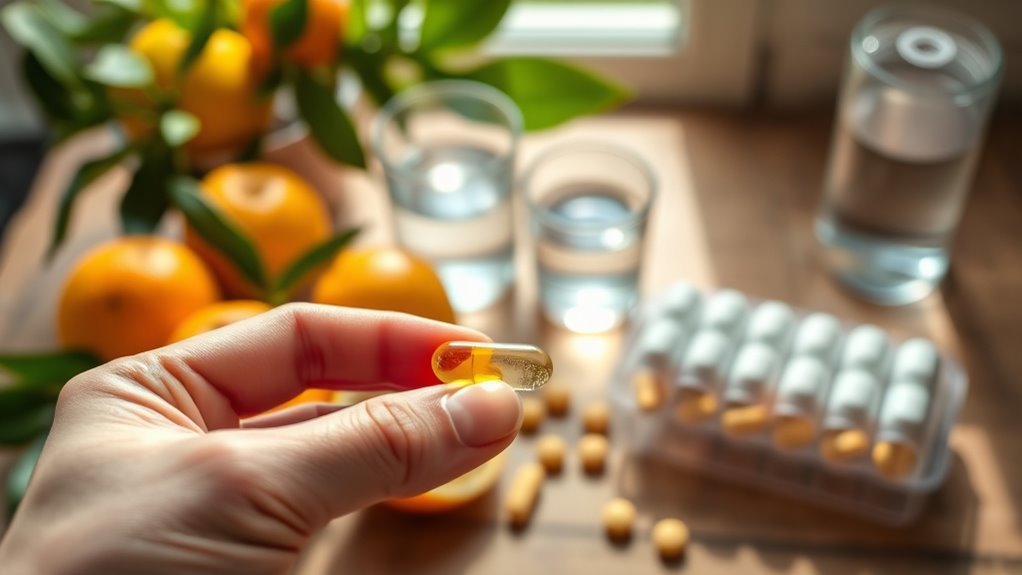
Before you start taking vitamin D supplements, it’s important to stick to the recommended daily limits—usually no more than 4000 IU for adults—unless your healthcare provider advises otherwise. For safe supplementation, always consult a healthcare professional before beginning, especially if you have existing health conditions or take medications. To improve absorption, take your vitamin D supplements with a meal containing fat, preferably vitamin D3.
Regular monitoring of your blood levels through tests is essential to ensure your dosage remains effective without risking toxicity. Watch for overdose symptoms like nausea, weakness, or kidney problems, and seek medical advice if these occur. By following these guidelines, you can maintain appropriate vitamin D levels safely and avoid complications linked to excessive intake.
Daily Vitamin D Needs Explained
While your daily vitamin D needs depend on your age and life stage, most adults require about 600 IU (15 mcg) per day, with seniors needing a bit more at 800 IU (20 mcg). Infants and pregnant or breastfeeding women also have specific age-specific needs, typically around 400 IU (10 mcg) and 600 IU (15 mcg), respectively.
You can usually meet your daily intake through sun exposure from late March to early October, but during winter months, dietary sources and supplementation become essential. Staying within safe limits is vital, as exceeding 4,000 IU (100 mcg) increases toxicity risk.
Regular monitoring of your blood levels helps guarantee you get the recommended amount without going overboard, keeping your vitamin D status balanced and safe.
When And How To Take Your Vitamin D
Getting your daily vitamin D intake right is just part of the equation; knowing when and how to take it can make a big difference in how well your body absorbs and uses it. For best absorption, take your vitamin D supplements with a fat-containing meal, especially if you’re using D3 forms. Stick to the recommended daily intake—usually 600–800 IU for most adults—and never exceed 4,000 IU without consulting your healthcare provider.
If you’re taking multiple doses, spread them evenly throughout the day to boost effectiveness and minimize side effects. Regularly checking your blood levels helps ensure your dosage stays safe and effective. Prioritizing timing and safety with your vitamin D regimen will help you get the most benefit while reducing risks.
How Food Helps Vitamin D Absorption
Since vitamin D is fat-soluble, eating foods rich in vitamin D alongside healthy fats can considerably boost how well your body absorbs it. Pairing fortified dairy or vitamin D-rich foods like salmon with healthy fats enhances vitamin D absorption markedly.
Here’s a quick guide to food sources and absorption enhancement:
| Food Sources of Vitamin D | Healthy Fats to Pair | Absorption Benefit |
|---|---|---|
| Fatty fish (salmon) | Olive oil | Improved absorption |
| Fortified dairy | Avocado | Enhanced utilization |
| Sardines | Nuts | Boosts vitamin D uptake |
| Fortified cereals | Seeds | Supports absorption |
| Powdered milk | Cheese | Absorption enhancement |
Signs Of Vitamin D Deficiency To Watch For
If you’re feeling unusually tired, experiencing muscle weakness, or noticing bone pain, these could be signs that your vitamin D levels are low. Recognizing signs of vitamin D deficiency early is important to prevent complications like osteomalacia in adults or rickets in children.
You might also notice mood changes or fatigue that seem unexplained. A simple blood test measuring your blood levels of 25-hydroxy vitamin D is the best way to confirm a deficiency. Watch for these symptoms:
Unexplained mood changes or fatigue may signal vitamin D deficiency—confirm with a 25-hydroxy vitamin D blood test.
- Persistent bone pain or tenderness
- Muscle weakness or cramps
- Unusual fatigue or low energy
- Mood changes such as depression
If you suspect vitamin D deficiency, consult your healthcare provider to check your blood levels and discuss supplementation.
Vitamin D Overdose Risks And Symptoms
How much vitamin D is too much? Taking over 4,000 IU daily can cause vitamin D toxicity, leading to vitamin D overdose and serious health risks. Excessive vitamin D intake raises high blood calcium, or hypercalcemia, which damages organs and weakens bones.
Watch for overdose symptoms like nausea, vomiting, muscle weakness, confusion, and dehydration. Kidney stones and irregular heart rhythms are also possible. Using vitamin D supplements without medical advice increases these dangers.
| Overdose Risks | Symptoms of Overdose | Potential Health Risks |
|---|---|---|
| >4,000 IU daily | Nausea, vomiting | Kidney stones |
| Hypercalcemia | Muscle weakness | Kidney damage |
| Excessive intake | Confusion, dehydration | Irregular heart rhythm |
| Vitamin D toxicity | High blood calcium | Bone weakening |
What To Do If You Take Too Much Vitamin D
Taking too much vitamin D can lead to serious symptoms like nausea, weakness, and irregular heartbeat that shouldn’t be ignored. If you suspect vitamin D overdose or notice symptoms of overdose, it’s vital to seek healthcare promptly. Vitamin D toxicity often results in hypercalcemia, which raises calcium levels dangerously.
Here’s what you should do if you take too much vitamin D:
- Stop all vitamin D supplements immediately.
- Seek medical attention for blood tests to check calcium levels.
- Follow treatment for excess vitamin D, which may include hydration and reducing calcium intake.
- Monitor symptoms closely and avoid self-medicating.
Getting timely medical attention can prevent complications. Always reduce vitamin D intake to recommended doses to avoid vitamin D toxicity and protect your health.
Who Should Test Vitamin D Levels Before Supplementing?
If you belong to a high-risk group like older adults, pregnant women, or those with certain health conditions, it’s a good idea to test your vitamin D levels before supplementing. Testing helps your healthcare provider determine if you really need supplements and the right dose to avoid complications.
This step guarantees you’re boosting your health safely without risking overdose.
High-Risk Groups
Because certain health conditions and factors can affect how your body processes vitamin D, it’s important to test your levels before starting supplements if you fall into high-risk groups. Testing vitamin D helps guarantee supplement safety by preventing overdose risk or worsening vitamin D deficiency.
You should consider testing if you have:
- Malabsorption syndromes like celiac disease or inflammatory bowel disease
- Chronic kidney disease or liver disease
- A history of kidney stones or hypercalcemia
- Are older than 70, have dark skin, or struggle with obesity
If you’re in these high-risk groups, a medical consultation for testing vitamin D levels is essential before supplementing. This step helps tailor safe dosage and avoids complications linked to improper vitamin D intake.
Testing Benefits
Why should you consider testing your vitamin D levels before starting supplements? A simple blood test measuring 25-hydroxy vitamin D lets you know if you’re deficient, insufficient, or at ideal levels. Testing benefits include ensuring supplement safety by helping your healthcare provider tailor the right supplement dosing, reducing the overdose risk.
If you’re older, have darker skin, limited sun exposure, or medical conditions like osteoporosis, testing is especially important. Symptoms such as bone pain, muscle weakness, or fatigue also suggest you should check your vitamin D levels. Testing helps avoid both deficiency and excess, making supplementation safer and more effective.
How Vitamin D Interacts With Common Medications
You should know that vitamin D can affect how some medications work and may increase the risk of high calcium levels when combined with certain drugs. It’s important to manage your supplement use carefully, especially if you’re taking blood pressure meds, corticosteroids, or anticonvulsants.
Always talk to your doctor before adding vitamin D to your routine to avoid any harmful interactions.
Medication Interaction Risks
When you’re taking vitamin D supplements, it’s important to contemplate how they might interact with your medications. Vitamin D interactions can affect drug efficacy and medication safety, especially if you’re on medications affecting vitamin D or calcium metabolism. Be aware of these key risks:
- Combining vitamin D with calcipotriene or calcium supplements may raise your hypercalcemia risk.
- Medications like anticonvulsants (phenobarbital, phenytoin) can reduce vitamin D effectiveness.
- Excessive vitamin D intake or overdose can lead to hypercalcemia, interfering with thiazide diuretics and steroids.
- Vitamin D may alter absorption or efficacy of cholesterol-lowering drugs such as atorvastatin.
Always consult your healthcare provider before starting supplements to avoid harmful drug interactions and ensure safe vitamin D use.
Managing Supplement and Drug Use
Although vitamin D is essential for health, it can interact with various medications you might be taking, affecting their effectiveness or causing side effects.
To guarantee supplement safety, it’s vital to discuss your vitamin D dosage and all medications with your healthcare provider. Proper medication monitoring helps prevent risks like hypercalcemia and overdose risk.
| Medication Type | Interaction Risk |
|---|---|
| Anticonvulsants | Reduce vitamin D blood levels |
| Calcium-based antacids | Increase hypercalcemia risk |
| Blood pressure meds | Possible blood pressure fluctuations |
Managing supplement and drug use means regular blood levels checks and careful supplement management.
Always inform your provider to avoid harmful medication interactions and maintain safe vitamin D supplementation.
Natural Ways To Support Vitamin D Levels Alongside Supplements
Since supplements alone might not fully meet your vitamin D needs, it’s important to support your levels naturally through lifestyle and diet. Sun exposure is key; spend 10-30 minutes several times a week in sunlight with arms and legs uncovered to boost vitamin D production. Eating fatty fish like salmon provides a powerful natural source, while fortified foods enhance your intake.
Also, UV-exposed mushrooms add to your vitamin D from natural sources. To optimize calcium absorption and bone health, maintain a balanced diet rich in these nutrients. Consider these tips:
- Get regular sun exposure for natural vitamin D production
- Include fatty fish such as salmon and mackerel in meals
- Consume fortified foods like milk, yogurt, and cereals
- Add UV-exposed mushrooms to your diet for extra support
Frequently Asked Questions
How to Take Vitamin D Supplements Safely?
To take vitamin D supplements safely, start with a low dose and don’t exceed 4,000 IU daily unless your doctor advises otherwise. Always take them with a meal that has healthy fats to help absorption. Get your blood levels checked regularly to avoid toxicity.
Also, talk to your healthcare provider before combining supplements with any medications or if you have health issues. This way, you’ll reduce risks and boost benefits effectively.
Can Taking a Vitamin D Supplement Be Harmful?
Imagine your body as a delicate garden—too much water can drown the roots. Yes, taking vitamin D supplements can be harmful if you overdo it. Excessive doses might lead to nausea, weakness, or even kidney damage.
But if you stick to recommended amounts and check with your doctor, you’ll nourish your body safely without flooding it. So, don’t let too much sunshine inside; balance is key.
What Are 5 Physical Signs You’re Taking Too Much Vitamin D?
You might notice nausea, vomiting, or stomach pain if you’re taking too much vitamin D. Muscle weakness and fatigue are common signs, too. You could also experience confusion or mental fog.
Frequent urination and dehydration might pop up, indicating kidney stress. Ultimately, watch out for irregular heartbeat or persistent pain; if these happen, you should get medical help right away.
What Are the Two Most Common Mistakes People Make When Taking Vitamin D Supplements?
You might think taking more vitamin D is always better, but the two most common mistakes you make are exceeding the recommended 4,000 IU daily and skipping blood level checks to guide your dosage.
Without monitoring, you risk toxicity or deficiency.
Conclusion
Taking vitamin D supplements safely is easier than you might think. Did you know that nearly 42% of adults in the U.S. are deficient in vitamin D? To avoid risks, stick to recommended doses, take your supplement with food to boost absorption, and consider testing your levels before starting.
If you’re on medications, check with your doctor about interactions. By being mindful, you can support your health without overdoing it. Remember, safe vitamin D supplementation is key to maintaining optimal health and preventing deficiency.