Why Are Turmeric Supplements Good for You?
Turmeric supplements are good for you because they provide powerful anti-inflammatory and antioxidant benefits that support overall health. These supplements help reduce joint pain and stiffness, making daily movement easier. They also boost your immune system, helping your body fight off illnesses more effectively.
The key compound in turmeric, curcumin, actively fights inflammation and lowers harmful markers in your body. To increase the effectiveness of turmeric supplements, taking them with black pepper or fats enhances absorption significantly. This combination ensures you get the most benefits from each dose.
Besides reducing inflammation, turmeric supports overall cell health and metabolic function. By incorporating these supplements into your routine, you can promote better wellness and vitality.
Keep exploring how to choose and use turmeric supplements safely and effectively for optimal results.
Key Takeaways
- Turmeric supplements provide powerful anti-inflammatory and antioxidant effects that support joint health and reduce pain and stiffness. Curcumin in turmeric lowers inflammatory markers like CRP and TNF-α, helping reduce chronic inflammation.
- They enhance metabolic health by lowering blood sugar and triglycerides, reducing risks of chronic diseases. Supplements with piperine or taken with fats improve curcumin absorption for maximum therapeutic benefits.
- Regular use supports immune function, cell protection, and overall wellness when taken at recommended dosages.
What Is Turmeric and Why Take It as a Supplement?
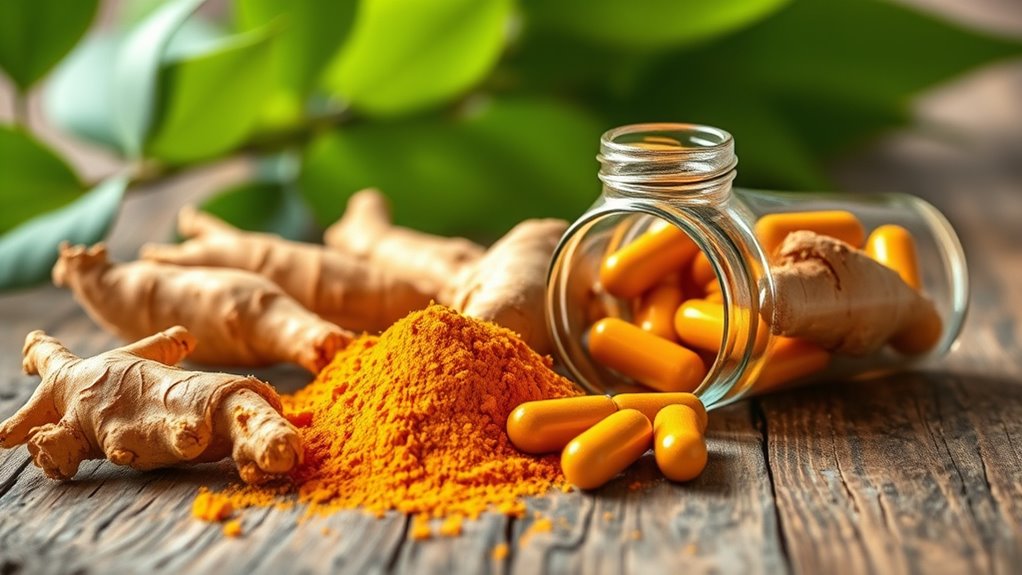
What makes turmeric such a popular supplement? You’ll find turmeric, a bright yellow spice from the Curcuma longa plant, valued for its powerful biological activity, especially in traditional medicine like Ayurveda and Chinese practices. The key to its health benefits lies in curcumin, the main active compound, known for its anti-inflammatory and antioxidant properties.
When you take turmeric as a supplement, you get a concentrated dose of curcumin, much higher than what you’d get through cooking. This boost enhances the potential health benefits, supporting your body’s natural defenses and overall wellness. So, choosing turmeric supplements can be a smart way to tap into its long-standing medicinal reputation and maximize curcumin’s positive effects on your health.
How Curcumin in Turmeric Supplements Supports Your Health
You’ll find that curcumin, the key compound in turmeric supplements, offers powerful anti-inflammatory and antioxidant effects that can help protect your body from chronic inflammation and oxidative stress.
These benefits play a vital role in supporting your overall health and well-being. Let’s explore how curcumin works to keep your body balanced and resilient.
Anti-Inflammatory Effects
Although inflammation is your body’s natural response to injury or infection, chronic inflammation can lead to various health issues. Curcumin, the active compound in turmeric supplements, offers powerful anti-inflammatory effects by inhibiting NF-κB, a key regulator that triggers the production of inflammatory cytokines like IL-6 and TNF-α. This reduction in cytokines helps lower inflammatory markers such as CRP, which are often elevated in chronic conditions.
Clinical trials have shown that taking 1-2 grams of curcumin daily can notably reduce inflammation, easing symptoms of conditions like osteoarthritis and Crohn’s disease. By modulating multiple signaling pathways involved in inflammation, curcumin supports your body’s ability to maintain a healthier, balanced immune response.
Antioxidant Benefits
When your body faces oxidative stress, curcumin in turmeric supplements steps in with powerful antioxidant properties that help neutralize harmful free radicals. This reduces oxidative damage and supports cell protection. Curcumin also boosts antioxidant enzymes like superoxide dismutase (SOD) and catalase, enhancing your body’s natural defenses.
Studies show turmeric supplements lower markers of oxidative damage, which may reduce risks of chronic diseases. Here’s a quick look at how curcumin supports your health:
| Benefit | Function | Result |
|---|---|---|
| Antioxidant properties | Neutralize free radicals | Reduced oxidative stress |
| Enzyme activation | Boost antioxidant enzymes | Improved cell protection |
| Cell protection | Prevent DNA damage | Lower chronic disease risk |
Turmeric’s curcumin truly helps shield your cells and promote overall wellness.
Top Health Benefits of Turmeric Supplements
Since turmeric supplements contain concentrated curcumin, they offer powerful anti-inflammatory benefits that can help ease joint pain and stiffness, especially if you’re dealing with osteoarthritis.
Beyond relieving joint discomfort, turmeric benefits include reducing oxidative stress, which supports your body’s defense against cell damage. This can boost your immune health, helping you fend off illnesses more effectively.
Additionally, turmeric supplements have shown promise in improving metabolic health by lowering blood sugar and triglyceride levels, which may contribute to better overall wellness.
Reducing Inflammation and Pain With Turmeric Supplements
If you’re looking to reduce inflammation and ease pain naturally, turmeric supplements could be a great option. The key ingredient, curcumin, has powerful anti-inflammatory effects that help lower inflammation markers like CRP, IL-6, and TNF-α. Clinical studies show that turmeric extracts with high curcumin content can provide significant pain relief, especially for arthritis sufferers dealing with joint pain and stiffness.
Taking around 500 mg of curcumin twice daily may improve mobility and reduce reliance on NSAIDs. Curcumin works by inhibiting inflammatory pathways such as NF-κB and COX-2, making turmeric supplements a natural choice for managing chronic inflammation and pain. Incorporating turmeric supplements into your routine could support your body’s fight against inflammation and improve your quality of life.
Choosing and Taking Turmeric Supplements Safely
When choosing turmeric supplements, make sure they’re certified by trusted third parties like USP or NSF to guarantee quality. Stick to the recommended dosages, such as 500 mg of curcumin twice daily, and time your intake as advised.
Always check with your healthcare provider before starting, especially if you take blood thinners or have liver or gallbladder concerns.
Selecting Quality Turmeric Supplements
Although turmeric supplements offer promising health benefits, choosing the right one requires careful attention to quality and safety. To select a high-quality supplement, consider these key points:
- Look for third-party tested products certified by USP, NSF, or NPA to ensure safety verification.
- Choose supplements with a high curcumin concentration, ideally up to 95%, for maximum health benefits.
- Check supplement labeling for quality ingredients and minimal fillers or harmful additives like lead or artificial dyes.
- Always follow the recommended dosage and consult a healthcare professional, especially if you have medical conditions or take blood thinners.
Recommended Dosages And Timing
Since turmeric supplements vary widely in potency and formulation, it’s important you follow recommended dosages carefully to guarantee safety and effectiveness. Most supplements contain concentrated curcumin, often up to 95%, which is much stronger than culinary turmeric. The Arthritis Foundation suggests a dosage of 500 mg of curcumin extract twice daily for symptom relief.
To improve absorption, take your supplements with a small amount of fat or black pepper. Timing your doses evenly throughout the day can help maintain steady curcumin levels in your body. Always check the manufacturer’s instructions for specific dosage and timing, as formulations differ.
Staying within 500 mg to 2,000 mg daily is generally safe; avoid exceeding 8 grams to prevent side effects.
Precautions And Medical Advice
Following the recommended dosages is important, but you should also be aware of precautions to take when choosing and using turmeric supplements. Always consult healthcare professionals before starting, especially if you have gallbladder issues, take blood thinners, or are pregnant.
For supplement safety, opt for products certified by third-party organizations. Avoid exceeding recommended dosages to reduce risks like liver toxicity or gastrointestinal discomfort.
Here are key precautions to keep in mind:
- Consult healthcare before use to prevent blood thinner interactions and other complications.
- Choose supplements verified by USP or NSF for quality assurance.
- Avoid turmeric if you have gallbladder problems without medical advice.
- Stop taking turmeric at least two weeks before surgery to minimize bleeding risk.
Who Should Avoid Turmeric Supplements?
If you have liver disease, gallbladder problems, or kidney issues, you should steer clear of turmeric supplements because they might worsen your symptoms or increase the risk of kidney stones. Turmeric can boost bile production, which may aggravate gallbladder problems and liver disease. If you’re on blood-thinning medications like warfarin or aspirin, be cautious—turmeric may increase bleeding risk.
Pregnant women should avoid high doses due to potential uterine stimulation and safety concerns. Those with kidney stones or oxalate-related issues should limit turmeric to prevent stone formation. Also, if you have hormone-sensitive conditions, such as certain cancers or hormonal imbalances, it’s wise to consult your healthcare provider before using turmeric supplements to avoid unintended effects.
Adding Turmeric to Your Diet Alongside Supplements
While turmeric supplements can offer concentrated benefits, you don’t have to rely solely on them to enjoy turmeric’s health advantages. Incorporating turmeric through culinary use complements supplements by providing steady, natural intake of curcumin and other compounds.
Here’s how you can add turmeric alongside supplements:
- Include turmeric in curries, soups, or rice dishes for flavor and health benefits.
- Pair turmeric with healthy fats like olive or coconut oil to improve curcumin absorption.
- Enjoy turmeric beverages such as golden milk or turmeric tea for an easy, tasty option.
- Use supplements to boost anti-inflammatory effects while maintaining regular turmeric consumption in meals.
This combined approach maximizes turmeric’s overall impact on your health without relying entirely on supplements.
Tips for Maximizing Absorption and Effectiveness
Because curcumin—the active compound in turmeric—is fat-soluble and poorly absorbed on its own, you’ll want to pair turmeric with healthy fats and black pepper to get the most benefit. Consuming turmeric with fats like olive or coconut oil markedly boosts curcumin absorption, while black pepper containing piperine can increase its bioavailability by up to 2,000%.
When you cook or simmer turmeric in dishes, it helps break down cell walls, enhancing curcumin release and effectiveness. For supplements, choose standardized formulas with high curcumin content (up to 95%) to guarantee consistent dosing. Taking turmeric supplements alongside meals rich in fats further maximizes absorption and therapeutic potential, helping you get the most out of your turmeric intake.
Frequently Asked Questions
What Are the Benefits of Taking Turmeric Supplements?
Taking turmeric supplements can help reduce inflammation, easing joint pain and arthritis symptoms you might experience. They also support your cellular health by fighting oxidative stress. You may notice improvements in your metabolic health, like lowered blood sugar and blood pressure.
Plus, turmeric can boost your mood and strengthen your immune system. Just be sure to check with your healthcare provider before starting, especially if you have existing health conditions.
What Happens When You Take Turmeric Pills Every Day?
When you take turmeric pills every day, imagine a gentle fire calming the inflammation storms inside your joints, easing stiffness and pain.
Over time, you might notice smoother movement and a boost in your immune defenses, like a shield strengthening quietly within.
Your metabolism could also find balance, helping blood sugar and fats stay in check.
Just remember, it’s wise to check with your doctor to avoid any unwanted interactions.
Is Turmeric Good for Pregnant?
Turmeric isn’t usually recommended for you during pregnancy, especially in supplement form. While small amounts used in cooking are generally safe, taking high doses could cause uterine contractions or bleeding, which might put you and your baby at risk.
Before adding any turmeric supplements to your routine, it’s really important to talk with your healthcare provider to make sure it’s safe for you and won’t interfere with your pregnancy.
Is Turmeric Good for Acid Reflux?
Isn’t it frustrating when acid reflux keeps you up at night? Turmeric can be helpful because its anti-inflammatory effects might soothe your stomach lining and reduce symptoms.
But don’t assume it’s perfect for everyone—sometimes it can relax the muscle that keeps acid down, making reflux worse.
Conclusion
You might’ve heard turmeric is a miracle spice, but does it really live up to the hype? The truth is, its active compound, curcumin, has powerful anti-inflammatory and antioxidant effects that can support your health in real ways.
While it’s not a cure-all, adding turmeric supplements thoughtfully to your routine could make a noticeable difference. Just be sure to choose quality products and consult your doctor, so you get the best benefits safely.
In conclusion, turmeric supplements are good for you because they help reduce inflammation and oxidative stress. Incorporating turmeric supplements into your daily regimen can promote overall wellness and support a healthy lifestyle.