Is Miralax a Fiber Supplement?
MiraLAX isn’t a fiber supplement; it’s an osmotic laxative that works by drawing water into your colon to soften stool, making it easier to pass.
Unlike fiber supplements that add bulk and promote long-term regularity, MiraLAX provides faster relief from constipation by increasing water content without adding fiber.
This key difference makes MiraLAX a preferred option for those seeking quick relief rather than dietary fiber benefits.
If you’re curious about how it compares to fiber options like Metamucil or who should use each, there’s more to explore on their differences and benefits.
Understanding these distinctions can help you choose the most appropriate remedy for your needs.
Key Takeaways
- MiraLAX contains polyethylene glycol 3350, an osmotic laxative, not fiber.
- It works by drawing water into the colon to soften stool, not by adding bulk.
- Fiber supplements like Metamucil add soluble or insoluble fiber to increase stool bulk.
- MiraLAX provides quicker relief from constipation than fiber supplements, typically within 1-3 days.
- Therefore, MiraLAX is not classified or used as a fiber supplement.
What Is MiraLAX and How Does It Work?
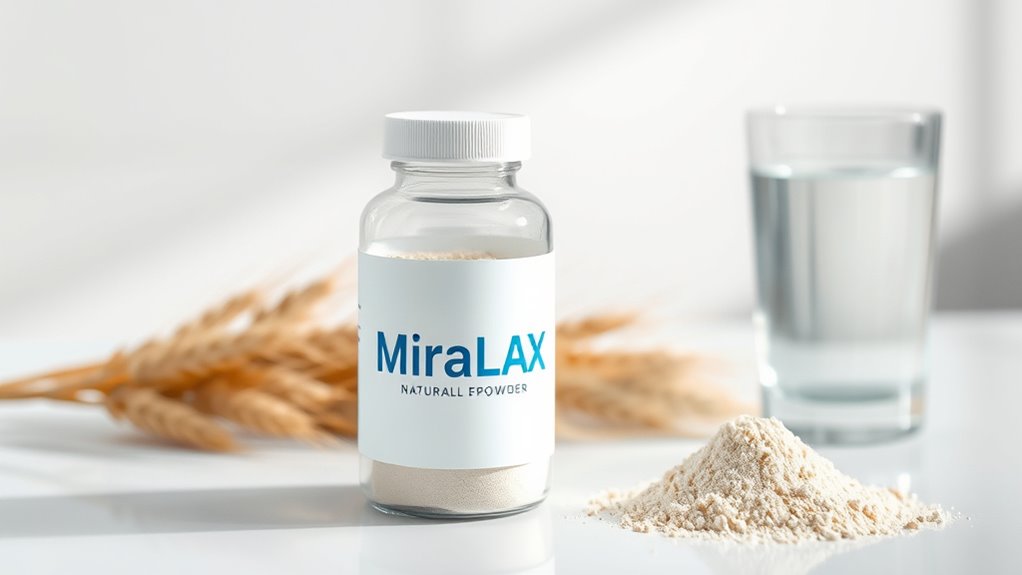
What exactly is MiraLAX, and how does it help with constipation? MiraLAX is an osmotic laxative containing polyethylene glycol 3350. It works by drawing water into your colon, which increases water absorption in the stool.
This extra moisture helps soften stool, making it easier for you to pass and promoting smoother bowel movements. Unlike fiber supplements, MiraLAX doesn’t add bulk or fiber-like substances to your digestive system. Instead, it targets water content directly, providing short-term relief from constipation.
What Are Fiber Supplements and How Do They Aid Digestion?
You might wonder what fiber supplements really do for your digestion. They come in different types, like soluble and insoluble fibers, each playing a key role in keeping your bowel movements regular.
Plus, getting enough fiber can help prevent constipation, lower cholesterol, and even stabilize your blood sugar.
Types Of Fiber
Fiber supplements come in various forms, each designed to support digestion and bowel regularity in different ways. Soluble fiber, like psyllium found in Metamucil, dissolves in water to form a gel that softens stool and slows digestion. Psyllium acts as a bulk-forming laxative, adding volume to stool to stimulate bowel movements gently.
Insoluble fiber, on the other hand, adds bulk without dissolving, helping move waste through your intestines faster. Products like methylcellulose and wheat dextrin offer these benefits. Unlike fiber supplements, polyethylene glycol (found in Miralax) is an osmotic laxative that works differently by drawing water into the colon.
Knowing the types of fiber helps you choose the right supplement to improve digestion and maintain regularity.
Fiber’s Role In Digestion
Although they don’t contain active laxatives, fiber supplements help keep your digestion on track by adding bulk to your stool, which encourages natural bowel movements. Fiber supplements like psyllium contain soluble fiber, which forms a gel-like substance that eases digestion and softens stool. This bulkier stool stimulates your bowel muscles to contract, promoting regularity and preventing constipation.
Insoluble fiber, found in other supplements, adds bulk without dissolving, speeding up stool passage through your digestive tract. By increasing stool volume, fiber supports your bowel’s natural function without harsh chemicals. Remember to drink plenty of fluids with fiber supplements to enhance their effectiveness and avoid discomfort like bloating.
Benefits Of Fiber Intake
Adding fiber supplements like psyllium or inulin to your diet can considerably improve digestion by increasing stool bulk and encouraging regular bowel movements. These supplements provide essential dietary fiber that softens stool, making it easier to pass and enhancing stool consistency. By supporting digestive health, fiber supplements help prevent constipation and reduce risks of hemorrhoids and other gastrointestinal issues.
They also promote the growth of beneficial gut bacteria, which aids nutrient absorption and overall gut function. When combined with adequate water intake, fiber supplements decrease intestinal transit time, ensuring smoother digestion. Beyond digestion, regular fiber intake can lower cholesterol and regulate blood sugar, benefiting cardiovascular and metabolic health.
Incorporating dietary fiber through supplements is a simple, effective way to maintain digestive balance and overall well-being.
Why Isn’t MiraLAX Considered a Fiber Supplement?
You might think MiraLAX works like fiber, but its chemical makeup is quite different. It softens stool by pulling water into your colon, rather than adding bulk like fiber does.
Understanding these distinct mechanisms helps explain why MiraLAX isn’t classified as a fiber supplement.
Chemical Composition Differences
Since MiraLAX contains polyethylene glycol 3350, a synthetic osmotic agent, it doesn’t act like traditional fiber supplements that rely on plant-based or soluble fibers to add bulk. Its chemical composition lacks the natural fibers found in supplements like psyllium or inulin, which increase stool bulk through water absorption and fermentation.
Instead, polyethylene glycol in MiraLAX works by retaining water in the intestines, promoting water retention rather than adding physical bulk to stool. Because of this, MiraLAX is classified as an osmotic laxative, not a fiber supplement.
Unlike fiber supplements that form gels and increase stool volume via microbial activity, MiraLAX’s unique chemical structure focuses solely on drawing water into the colon, distinguishing its function and classification clearly from fiber-based products.
Mechanism Versus Fiber Function
Understanding how MiraLAX works differently from fiber supplements clears up why it’s not classified as one. MiraLAX contains polyethylene glycol, an osmotic laxative that draws water into your colon, promoting water retention and stool softening. This mechanism helps ease bowel movement without adding bulk.
In contrast, fiber supplements contain plant-based fibers that physically increase stool volume by absorbing water and forming a gel-like substance. These fibers stimulate intestinal contractions through fermentation, aiding digestion. Since MiraLAX doesn’t add any indigestible material or fiber, it lacks the bulk-building function typical of fiber supplements.
Instead, it solely relies on softening stool by increasing water content. That’s why MiraLAX is considered an osmotic laxative rather than a fiber supplement, emphasizing its distinct role in relieving constipation.
How Does MiraLAX Differ From Fiber Supplements Like Metamucil?
Although MiraLAX and fiber supplements like Metamucil both help with constipation, they work in very different ways. MiraLAX contains polyethylene glycol, an osmotic laxative that promotes stool softening by increasing water retention in the colon. It doesn’t add bulk or fiber to your stool but makes it easier to pass by drawing water into your intestines.
In contrast, fiber supplements like Metamucil contain soluble or insoluble fibers that physically bulk up stool, stimulating bowel movements through expansion. While fiber supplements support long-term bowel health and regularity, MiraLAX offers a more immediate, water-based stool-softening effect. So, although they both relieve constipation, polyethylene glycol in MiraLAX isn’t a source of dietary fiber like the fibers in Metamucil, making them distinct in how they aid digestion.
How Does Polyethylene Glycol 3350 Soften Stool?
When you take polyethylene glycol 3350 (PEG 3350), it works by drawing water into your colon through osmosis, which softens your stool. As an osmotic agent, PEG 3350 promotes water retention directly in the stool without being absorbed or metabolized by your body. This increase in water content improves stool consistency, making it softer and easier to pass.
Unlike fiber supplements, it doesn’t add bulk but creates an isotonic environment in your intestines, preventing excess water absorption or secretion. By softening stool and enhancing its volume, polyethylene glycol 3350 helps stimulate natural bowel movements gently.
When and Why Do People Use MiraLAX for Constipation Relief?
If you’re dealing with occasional or chronic constipation, MiraLAX is often the go-to choice because it softens your stool by drawing water into your intestines. You might turn to MiraLAX for constipation relief when dietary fiber alone isn’t enough or when you need a more predictable, gentle solution.
As an osmotic laxative, MiraLAX encourages water retention in your colon, making bowel movements easier without causing harsh cramping or dependence. People commonly use it for short-term relief, bowel cleansing before procedures, or when managing conditions like IBS.
Unlike dietary fiber, which works more gradually, MiraLAX offers a reliable, non-stimulant option that usually produces a bowel movement within 1 to 3 days, helping you regain comfort and regularity efficiently.
How Fast Does MiraLAX Work Compared to Fiber Supplements?
Because MiraLAX draws water into your colon to soften stool, you’ll usually experience relief faster than with fiber supplements, which rely on gradually increasing stool bulk. MiraLAX’s onset of action typically results in a bowel movement within 1 to 3 days due to its water absorption and stool softening effects.
In contrast, fiber supplements like Metamucil generally take 12 to 72 hours but often require consistent daily use over several days to build stool bulk and stimulate bowel activity. While both aid constipation, MiraLAX works faster by directly softening the stool, making it a quicker option for immediate relief.
Fiber supplements promote regularity over time but don’t soften stool as rapidly. So, if you need faster results, MiraLAX usually acts more quickly than fiber supplements.
Can MiraLAX and Fiber Supplements Be Used Together Safely?
You might wonder if using MiraLAX and fiber supplements together is safe since they work differently—MiraLAX softens stool by drawing in water, while fiber adds bulk. Combining them can improve constipation relief, but it’s important to space them out and stay well-hydrated.
Always check with your doctor before mixing treatments to avoid any complications.
Safety of Combined Usage
While MiraLAX works by drawing water into the stool to soften it, fiber supplements add bulk and encourage natural bowel movements, so using them together can actually improve your bowel regularity. The safety of combining MiraLAX with fiber supplements like psyllium is generally well established, as they complement each other without chemical interference. To maintain effectiveness and avoid potential interference with absorption, it’s best to space out their intake by at least an hour.
However, before you start using both regularly, it’s important to consult your healthcare provider, especially if you have underlying health conditions or plan long-term use. This ensures safe, effective management tailored to your needs without unexpected side effects.
Mechanisms of Action
Understanding how MiraLAX and fiber supplements work helps explain why they can be safely combined. MiraLAX, an osmotic laxative containing polyethylene glycol, works by drawing water into your colon. This water absorption softens your stool, easing passage without adding bulk.
In contrast, fiber supplements increase stool bulk and stimulate bowel movements through mechanical expansion and fermentation in your gut. These different mechanisms of action complement each other, as MiraLAX focuses on stool softening, while fiber supplements promote bulk formation. Using both together can improve bowel regularity effectively.
Just remember, since fiber requires adequate hydration to work well, maintaining enough fluid intake is essential when combining these treatments to avoid worsening constipation or dehydration.
Medical Guidance Importance
Because MiraLAX and fiber supplements work differently, combining them can be effective but requires careful medical guidance. You should always consult a healthcare provider before using both to guarantee safe use and prevent overuse, which can lead to unwanted side effects. MiraLAX draws water into the colon to soften stool, while fiber adds bulk, so together they may improve constipation relief.
However, following healthcare advice on dosing and timing is vital. Proper hydration is also essential when using these products together to support bowel function and avoid dehydration. By seeking medical guidance, you can safely incorporate MiraLAX and fiber supplements into your routine, optimizing your digestive health without risking complications from improper use.
What Side Effects Are Unique to MiraLAX Versus Fiber Supplements?
How do the side effects of MiraLAX differ from those of fiber supplements? MiraLAX works through osmotic water retention, softening stool by increasing water absorption, which can cause unique side effects like bloating, gas, and nausea. Unlike fiber supplements that add bulk and often lead to increased gas and abdominal discomfort due to fermentation, MiraLAX typically won’t make you feel full or increase stool bulk.
Another important difference is that long-term use of MiraLAX may cause electrolyte imbalances, a risk not seen with fiber supplements. Fiber, on the other hand, promotes healthy gut microbiota and offers prebiotic benefits, which MiraLAX lacks entirely. So, the side effects you experience depend largely on how each product works in your digestive system.
Who Should Avoid MiraLAX and Who Benefits Most From Fiber Supplements?
While MiraLAX can provide quick relief for occasional constipation, it’s not suitable for everyone—especially if you have bowel obstruction, kidney issues, or allergies to its ingredients like polyethylene glycol. You should avoid MiraLAX if:
- You have a known bowel blockage or severe gut inflammation
- You suffer from kidney disease
- You have an allergy to polyethylene glycol
- You experience adverse effects from osmotic laxatives
On the other hand, fiber supplements benefit those with chronic constipation by increasing dietary fiber and stool bulk, promoting regularity. If you have irritable bowel syndrome, particularly IBS-D, you might need to be cautious with fiber supplements or use them under medical guidance to avoid worsening symptoms.
How Do Fiber Supplements Support Long-Term Digestive Health?
If you want to maintain healthy digestion over time, fiber supplements are a reliable choice. They increase stool bulk, which promotes regular bowel movements and prevents constipation, supporting your long-term digestive health. Unlike Miralax, which softens stool by drawing in water, fiber supplements like psyllium stimulate natural intestinal contractions, encouraging effective waste movement.
Soluble fibers in these supplements form a gel-like substance that improves stool consistency and nurtures healthy gut bacteria. This balance supports a resilient digestive system and can reduce risks of gastrointestinal issues like hemorrhoids and diverticulosis. By consistently using fiber supplements, you not only maintain smooth bowel function but also contribute to overall gut health, making them a smart solution for lasting digestive wellness.
What Natural Alternatives to MiraLAX Help Manage Constipation?
Beyond fiber supplements, there are several natural ways you can manage constipation effectively without relying on MiraLAX. Incorporating natural fiber sources and other habits can support your bowel health and ease constipation.
Try these natural alternatives:
- Psyllium husk, a soluble fiber, helps soften stool by absorbing water in your intestines.
- Eating high-fiber foods like fruits, vegetables, whole grains, and legumes boosts bowel regularity.
- Drinking plenty of water enhances fiber’s ability to prevent and relieve constipation naturally.
- Regular physical activity stimulates bowel movements and complements a fiber-rich diet.
How to Choose Between MiraLAX and Fiber Supplements Based on Your Needs?
How do you decide whether MiraLAX or a fiber supplement is right for you? It depends on your goals. MiraLAX is an osmotic laxative that offers quick relief by softening stool but doesn’t provide dietary fiber.
If you need fast symptom relief or a short-term solution, MiraLAX is effective. On the other hand, fiber supplements like Metamucil add dietary fiber, which helps improve bowel habits gradually and supports long-term prevention of constipation.
If you’re aiming for ongoing management and better gut health, fiber supplements are a smarter choice. Ultimately, MiraLAX is best for immediate relief, while fiber supplements work over time to promote regularity and overall digestive wellness. Choose based on whether you need quick relief or long-term prevention.
Frequently Asked Questions
Which Is Better to Take Daily, Miralax or Metamucil?
For daily use, Metamucil is usually better because it contains fiber that helps maintain regular bowel movements and supports long-term digestive health. Miralax works well for occasional constipation relief by softening stool quickly, but it’s not ideal for daily use since it doesn’t provide fiber.
You should talk to your healthcare provider to figure out which option fits your needs best, especially if you have ongoing digestive concerns.
What Is the Best Fiber Supplement to Take?
You want the best fiber supplement? Psyllium-based ones like Metamucil often top the list. Why? Because they provide soluble fiber that promotes regularity and supports heart health.
Plus, they’re backed by solid research. But don’t overlook inulin, a prebiotic fiber that feeds good gut bacteria. Just remember to drink plenty of water with any fiber supplement to avoid discomfort.
Pick what suits your needs best!
Is Miralax the Same as Taking Fiber?
No, Miralax isn’t the same as taking fiber. While fiber adds bulk to your stool and helps move things along by stimulating your intestines, Miralax works by drawing water into your colon to soften stool without adding bulk.
They both relieve constipation but do it differently. So, if you’re considering switching or combining them, it’s best to check with your healthcare provider first.
Can You Take Miralax Every Day?
Yes, you can take Miralax every day, but it’s best to do so under your doctor’s supervision. While short-term daily use is generally safe to manage constipation, using it long-term might cause issues like electrolyte imbalances.
Always follow the dosing instructions carefully, and if you find yourself needing it regularly for more than a week, check in with your healthcare provider to discuss safer, long-term options.
Conclusion
MiraLAX isn’t a fiber supplement; it works by drawing water into your stool, while fiber supplements add bulk to aid digestion. You’ll choose MiraLAX for quick relief, fiber supplements for long-term health. You’ll avoid MiraLAX if you need gentle, gradual support, and lean on fiber if you want natural, lasting benefits.
Understanding these differences helps you make the best choice, balancing immediate comfort with ongoing digestive wellness. For those wondering, “Is MiraLAX a fiber supplement?” the answer is no. Knowing how MiraLAX and fiber supplements work can guide you toward the right option for your digestive health.