How to Safely Take a Potassium Supplement Daily
To safely take potassium supplements daily, it’s important to follow your healthcare provider’s dosage instructions carefully. Potassium supplements help maintain proper electrolyte balance and support heart and muscle function. Taking them correctly can prevent potential side effects and ensure effectiveness.
Always take the supplement with a full glass of water or juice, preferably after a meal to reduce stomach upset. Avoid missing doses, but if you do, never double up to make up for it. Consistency is key for maintaining stable potassium levels.
Regularly monitor your potassium levels through blood tests, especially if you have kidney or heart conditions. These health issues can affect how your body processes potassium.
Proper storage and management of your supplement also play a role in safety and efficacy.
Keep reading to learn more about choosing the right form of potassium supplement and how to prevent side effects for optimal health.
Key Takeaways
- Take potassium supplements with a full glass of water or juice and preferably after a meal to reduce stomach upset.
- Follow your healthcare provider’s prescribed dosage and do not exceed recommended amounts.
- Swallow long-acting tablets whole; dissolve powders or granules completely before drinking.
- Monitor potassium levels regularly through blood tests and consult your doctor about testing frequency.
- Store supplements properly and never double doses if you miss one; maintain a consistent schedule.
How To Take Potassium Supplements Safely
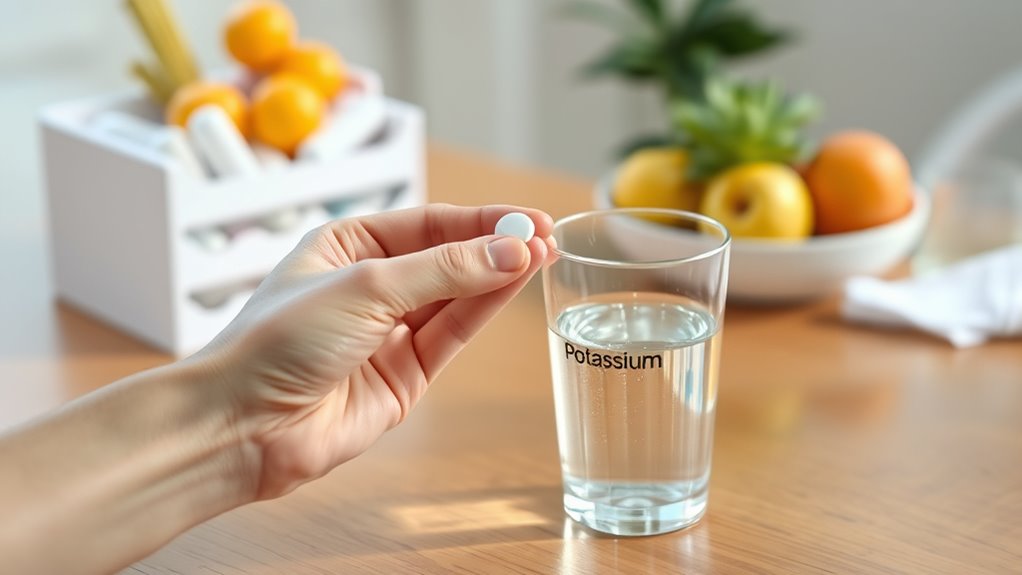
When you take potassium supplements, always use a full glass of water or juice to help absorption and prevent stomach upset. Stick to the dosage your healthcare provider prescribes—don’t go over it, as too much potassium can be harmful.
If you’re using long-acting tablets or capsules, swallow them whole; don’t crush or chew unless your doctor says so. For powders or granules, dissolve them completely in at least one cup of cold liquid and wait for the fizzing to stop before drinking.
It’s important to have regular blood tests, especially if you have health conditions like kidney problems or take medications affecting potassium levels. Monitoring guarantees your potassium stays within a safe range and prevents complications.
Why Do You Need Potassium Supplements?
You might need potassium supplements if you’re losing this essential mineral due to illness, medications, or diet. Keeping your potassium levels balanced is key for muscle strength, nerve function, and a healthy heart.
Supplements help prevent issues like weakness and irregular heartbeat that come from low potassium.
Potassium Deficiency Causes
Although potassium is essential for your body’s proper function, many factors can lead to its deficiency, making supplements necessary. Potassium deficiency often results from inadequate dietary intake, especially if your diet lacks fruits and vegetables. You might also lose potassium through frequent vomiting, diarrhea, or excessive sweating.
Certain medical conditions and medications can increase your risk, and sometimes your body simply doesn’t absorb potassium well. Watch for symptoms like muscle weakness, fatigue, or irregular heartbeat. Key causes include:
- Poor dietary intake of potassium-rich foods
- Excessive loss from vomiting or diarrhea
- Increased potassium loss due to medical conditions or diuretics
- Poor absorption from the digestive tract
- Symptoms signaling the need for supplementation
Understanding these causes helps you address potassium deficiency effectively.
Supplementation Benefits Explained
Because potassium plays a vital role in heart, muscle, and nerve function, taking supplements can be essential if your body isn’t getting enough from your diet or is losing too much due to illness or medication. Potassium supplements help restore electrolyte balance, which is crucial for preventing symptoms like muscle weakness, fatigue, and irregular heartbeat.
If you have conditions such as kidney disease or are taking diuretics, supplementation supports deficiency prevention and safeguards your health. By maintaining proper potassium levels, these supplements provide significant health benefits, ensuring your body functions smoothly.
Always use potassium supplements under medical supervision to avoid complications and maximize their positive effects on your overall well-being. This approach helps you maintain optimal electrolyte balance and prevents health issues related to potassium deficiency.
How To Choose The Right Potassium Supplement Form
Choosing the right potassium supplement depends on the form that best fits your lifestyle and health needs. You’ll want to contemplate how quickly your body absorbs it and whether you have any medical conditions that affect your choice.
Always check with your healthcare provider to find the safest and most effective option for you.
Common Supplement Forms
When you need to take a potassium supplement, it helps to know the different forms available, since each offers unique benefits and absorption rates. The most common type is potassium chloride, widely used to prevent or treat deficiency. Extended-release formulations release potassium slowly, reducing stomach upset and maintaining steady levels.
Potassium citrate is often chosen for kidney stone prevention or metabolic issues. Here are common supplement forms to contemplate:
- Tablets and capsules for convenience
- Powders that mix into drinks
- Liquid forms for easy swallowing
- Effervescent tablets that dissolve in water
- Extended-release formulations for gentle absorption
Choosing the right one depends on your health needs, ease of use, and how your body absorbs the supplement. Always check with your healthcare provider before starting.
Absorption and Bioavailability
How well your body absorbs potassium depends on the supplement form you pick. Potassium chloride is the most common supplement form and is generally well-absorbed, making it a solid choice for many. However, if you’re focusing on higher bioavailability, potassium citrate offers better absorption, especially when taken with food, benefiting kidney health and urinary alkalization.
Some supplements come in extended-release versions, which improve absorption by releasing potassium slowly, reducing gastrointestinal side effects. Remember, the supplement form affects not just how much potassium your body gets but also how comfortable the supplement is to take. Choosing the right form based on absorption and bioavailability ensures you get the most from your potassium supplement daily.
Medical Conditions Considerations
Understanding the absorption and bioavailability of potassium supplements is just one part of the equation. When considering medical conditions, choosing the right form is vital, especially if you have kidney disease or heart conditions. Here’s what you should keep in mind:
- Avoid potassium supplements without medical advice if you have kidney disease, as excess potassium can’t be effectively removed.
- If you have heart conditions, such as arrhythmias, select supplements carefully to prevent dangerous hyperkalemia.
- Extended-release tablets are often safer for chronic use, reducing gastrointestinal irritation and ensuring gradual absorption.
- Liquid or effervescent forms absorb faster but require precise dosing to avoid overdose.
- Always consult your healthcare provider about your medication and health status before starting potassium supplements.
Why Take Potassium With Food Or Juice?
Since potassium supplements can sometimes irritate your stomach, taking them with food or juice helps reduce this discomfort. When you consume potassium alongside a meal or a glass of juice, it slows the release of potassium, which prevents sudden spikes in your blood levels and promotes steady absorption. This approach also cushions your stomach lining, minimizing risks of irritation or gastrointestinal upset like nausea or vomiting.
Drinking a full glass of water or juice guarantees potassium dissolves properly, further aiding absorption and tolerance. Following this simple step aligns with medical guidelines and makes your potassium supplement easier to handle daily. So, pairing potassium with food or juice isn’t just about comfort—it’s essential for effective, safe supplementation.
Medications And Conditions That Affect Potassium Safety
If you have kidney problems or take certain medications, potassium supplements could pose serious risks. Kidney disease reduces your body’s ability to remove excess potassium, increasing the chance of dangerous hyperkalemia. Certain medications also affect potassium levels, so you must be cautious.
Here’s what to keep in mind:
- ACE inhibitors, ARBs, and potassium-sparing diuretics can raise potassium dangerously when combined with supplements.
- Conditions like Addison’s disease, severe dehydration, or uncontrolled diabetes alter potassium balance.
- Regular blood tests are vital to monitor potassium levels if you’re on medications or have health issues.
Always seek medical supervision before starting supplements. Disclose all medications and conditions to your healthcare provider to guarantee safety. Taking these steps helps you manage potassium safely and avoid complications.
Foods To Limit Or Avoid When Taking Potassium
When managing your potassium levels, paying attention to the foods you eat is just as important as monitoring medications or health conditions. To keep your potassium balanced, you’ll want to limit or avoid high-potassium foods like potatoes, oranges, bananas, and dried fruits. Certain vegetables, such as spinach, tomatoes, and broccoli, should also be eaten cautiously if you need to control potassium intake.
Be wary of processed foods and snacks, which might contain added potassium salts or preservatives. Avoid salt substitutes containing potassium chloride unless your healthcare provider approves them. Always check food labels carefully for potassium content, especially on products marked “low sodium” or “low salt,” since these can still be high in potassium.
Being mindful of potassium-rich foods and foods to limit helps maintain safe potassium levels.
How To Avoid Common Side Effects Of Potassium Supplements
To avoid common side effects, make sure you take your potassium supplement with plenty of water and never on an empty stomach to reduce discomfort. Start with a low dose and adjust it only under your doctor’s guidance to keep your digestive system calm.
Also, regularly monitor your potassium levels and report any unusual symptoms to stay safe.
Minimize Gastrointestinal Discomfort
Although potassium supplements can cause gastrointestinal discomfort, you can often reduce these side effects by taking them with a full glass of water or juice and consuming them alongside food. To minimize discomfort, keep these tips in mind:
- Always take your supplement with a full glass of water to help dilute stomach acid.
- Consume with food, preferably after a meal, to cushion your stomach lining.
- Avoid taking potassium on an empty stomach to prevent nausea or upset stomach.
- Start with a lower dose and gradually increase dosage under your healthcare provider’s guidance.
- If discomfort persists, consult your doctor to adjust your dose or try alternative supplement forms.
Following these steps can help you safely include potassium supplements in your routine while limiting gastrointestinal discomfort.
Monitor Potassium Levels Regularly
Managing gastrointestinal discomfort is just one part of taking potassium supplements safely. Equally important is monitoring your potassium levels regularly to avoid serious issues like hyperkalemia. Your healthcare provider will likely recommend periodic blood tests to track these levels and guarantee your dosage is appropriate.
It’s essential to follow their instructions closely and not exceed the prescribed amount. Be vigilant for symptoms such as muscle weakness, irregular heartbeat, or numbness, which might signal high potassium. Also, watch your intake of potassium-rich foods and drinks, as they can add up quickly.
Maintaining open communication with your provider and promptly reporting any adverse symptoms is key to supplement safety and preventing complications.
How To Monitor Your Potassium Levels
Since potassium levels can fluctuate due to supplements, medications, or health conditions, you need regular monitoring to stay safe. To effectively monitor your potassium levels, consider these steps:
- Schedule regular blood tests, like serum potassium levels, as advised by your healthcare provider.
- Keep a detailed log of your supplement intake, symptoms, and test results.
- Watch for symptoms such as muscle weakness or irregular heartbeats and seek medical advice if they occur.
- Use at-home blood testing kits for interim checks but confirm results with your doctor.
- Follow your provider’s recommendations on testing frequency, especially if you have kidney problems or take certain medications.
What To Do If You Miss A Dose Of Potassium
If you miss a dose of potassium, take it as soon as you remember unless it’s nearly time for your next one. Avoid doubling up to make up for a missed dose, as this can increase the risk of side effects and compromise supplement safety. Keeping a consistent schedule helps maintain stable potassium levels and reduces the chance of missed doses.
If you’re unsure about what to do after missing a dose, don’t hesitate to contact your healthcare provider for advice. Always follow instructions provided by your doctor regarding missed doses to ensure safe and effective supplementation. By handling missed doses properly and communicating with your healthcare provider, you can maintain the benefits of potassium supplementation while minimizing risks.
How To Store And Dispose Of Potassium Supplements
Although potassium supplements are essential for your health, how you store and dispose of them can impact their effectiveness and safety. Proper handling ensures they remain potent and out of reach from unintended users. To store and dispose of potassium supplements correctly, keep these tips in mind:
Proper storage and disposal of potassium supplements maintain their effectiveness and keep them safe from unintended use.
- Store potassium supplements in their original container, tightly closed, at room temperature.
- Avoid heat, moisture, and direct sunlight to prevent degradation.
- Keep supplements away from children and pets to avoid accidental ingestion.
- Never flush supplements down the toilet unless instructed; it harms the environment.
- Dispose of unused or expired supplements through local disposal guidelines or medication take-back programs.
Frequently Asked Questions
Is It Safe to Take a Potassium Supplement Daily?
Yes, it can be safe to take a potassium supplement daily, but only if your healthcare provider recommends it based on your specific needs. You shouldn’t start taking potassium supplements on your own, especially if you have kidney problems or heart issues. Your doctor will likely monitor your blood potassium levels to avoid any risks like hyperkalemia.
Always follow their advice and prioritize getting potassium from your diet first.
Can Potassium Cause Heartburn?
Potassium can sometimes stir up a bit of discomfort in your chest, which you might recognize as heartburn. This usually happens if you take it on an empty stomach or in large amounts, as it might relax the valve between your stomach and esophagus, letting acid sneak up.
To keep things smooth, it’s best to take potassium with food and check with your healthcare provider, especially if you already have reflux issues.
What’s the Best Way to Take Potassium Supplements?
The best way to take potassium supplements is with a full glass of water or juice to reduce stomach upset. Always swallow extended-release tablets whole—don’t crush or chew them. Stick to the prescribed dose and schedule.
If you use powders, dissolve them fully before drinking. Checking with your healthcare provider before starting or changing your supplement routine is essential to avoid interactions and guarantee safety.
Can Potassium Pills Cause Headaches?
Yes, potassium pills can cause headaches, but it’s usually when your potassium levels get too high. If you take too much without medical advice, you might experience symptoms like muscle weakness, irregular heartbeats, or headaches due to changes in blood pressure.
If you start having headaches while on potassium supplements, it’s important to see your doctor to check your electrolyte balance and rule out other causes.
Conclusion
Taking potassium supplements safely is like steering a ship through calm waters—you need careful attention and the right knowledge to avoid rough seas. By choosing the right form, taking them with food or juice, and monitoring your levels, you’ll keep your body balanced and healthy.
Remember to contemplate your medications and health conditions, never skip doses without guidance, and store supplements properly. These steps are essential for maintaining your health and preventing complications.
With these steps, you’ll navigate your potassium needs confidently and safely. Proper potassium supplementation supports heart health, muscle function, and overall well-being. Always consult with a healthcare professional to ensure safe daily potassium supplement use.