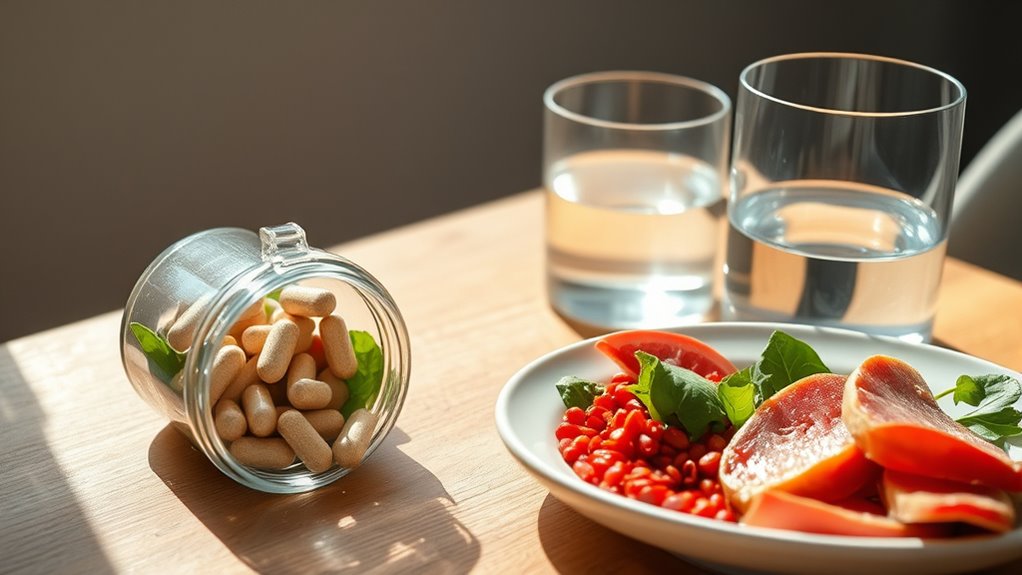
How Much Iron Supplement Should You Take Daily?
How Much Iron Supplement Should You Take Daily? This question is important because iron is essential for your body’s oxygen transport and energy production.
Generally, you need about 8.7 mg of elemental iron daily if you’re a man or an older woman, and around 14.8 mg if you’re a younger woman.
Pregnant women require more iron—about 27 mg daily—to support their increased blood volume and the developing baby.
Taking iron supplements depends on your specific needs, absorption factors, and any deficiency you have.
It’s best to follow medical advice and adjust doses as needed to avoid side effects.
Keep in mind, understanding how to optimize your intake and manage supplements can really make a difference.
Always consult with a healthcare professional before starting supplementation.
Key Takeaways
- Adult men and women over 50 generally need about 8.7 mg of elemental iron daily from supplements if deficient.
- Women aged 19-49 require around 14.8 mg daily, while pregnant women need approximately 27 mg to support fetal development.
- Alternate-day dosing improves absorption and reduces side effects compared to daily dosing, often without lowering effectiveness.
- Take iron supplements on an empty stomach or with vitamin C-rich foods to enhance absorption and avoid calcium or antacids nearby.
- Follow medical advice for dosage and duration, monitoring blood levels to avoid under-treatment or iron overload risks.
How Much Elemental Iron Do Adults Need Daily?
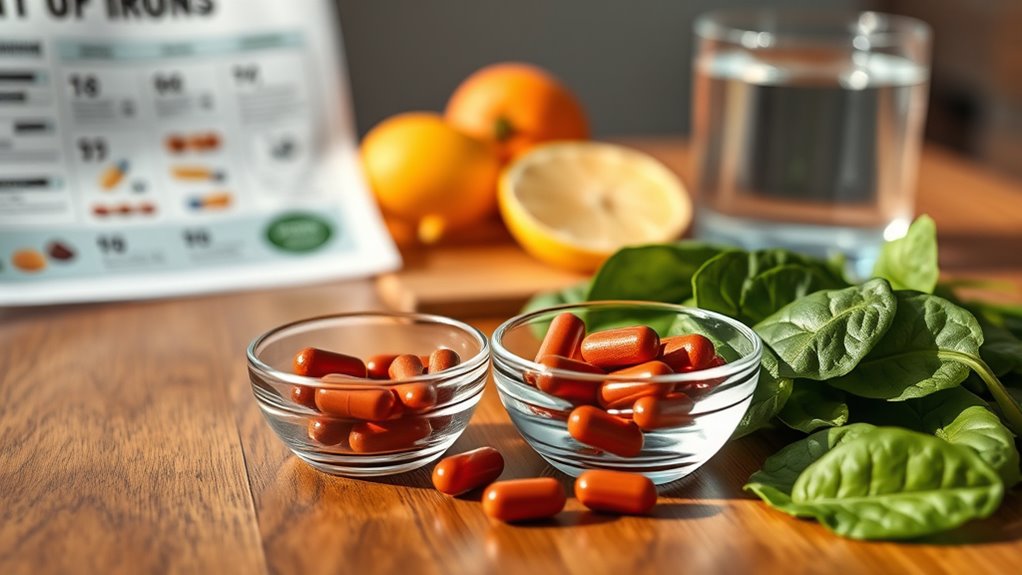
Although your exact iron needs depend on factors like age and gender, adult men typically require about 8.7 mg of elemental iron daily, while women aged 19 to 49 need around 14.8 mg. Women over 50 usually need about 8.7 mg, matching men’s needs. Pregnant women require a higher daily intake of approximately 27 mg to support increased blood volume.
Most adults can maintain healthy blood levels by consuming iron-rich foods such as meats, beans, and fortified cereals, reducing the risk of deficiency. If you consider supplementation, it’s essential to stick to the recommended dose, as exceeding the tolerable upper intake level of 45 mg per day may cause side effects. Always tailor your iron intake to your individual needs, ideally under medical guidance.
Common Reasons To Take Daily Iron Supplements
If you struggle with low iron levels, daily supplements can be essential for restoring your body’s normal function. Iron deficiency is common among those with anemia, heavy menstrual bleeding, or gastrointestinal blood loss, and daily iron supplements help normalize blood levels.
Pregnant women often need a specific iron dosage—typically 27 mg daily—to support fetal growth and increased blood volume. Vegetarians and vegans may require supplements since plant-based dietary sources offer lower iron absorption.
Children who consume excessive cow’s milk or have inadequate iron intake might also benefit from daily supplementation to prevent iron deficiency symptoms like fatigue and weakness. Addressing iron deficiency early ensures your body maintains healthy red blood cell production and overall well-being.
Single Vs. Multiple Daily Iron Doses: Which Is Better?
Once you decide to start iron supplements, figuring out how often to take them becomes important. Choosing between a single daily dose or alternate-day dosing impacts iron absorption and tolerability. Here’s what to evaluate:
- Alternate-day dosing often improves iron absorption by lowering hepcidin levels.
- Both single and alternate-day schedules raise hemoglobin levels effectively over time.
- A single daily dose may cause more gastrointestinal side effects, reducing tolerability.
- Personalized iron supplementation plans help manage iron deficiency with fewer adverse effects.
Ultimately, your dosing schedule should balance maximizing iron absorption and minimizing side effects. Both approaches can be effective, but alternate-day dosing tends to offer better tolerability without compromising iron repletion.
How To Maximize Iron Absorption When Supplementing
To get the most out of your iron supplements, you’ll want to focus on timing, diet, and formulation. Taking your iron on an empty stomach boosts iron absorption, but if it upsets your stomach, try a small amount of food. Pairing iron with vitamin C-rich foods or supplements greatly enhances iron bioavailability by converting it into a form your body absorbs better.
Be mindful of food interactions—avoid calcium, caffeine, dairy, and antacids near your supplement timing, as they hinder absorption. Spreading out your dosage, such as taking iron every other day, helps lower serum hepcidin levels, which maximizes absorption. Liquid iron can be especially effective when measured accurately and taken between meals or with vitamin C to further improve iron absorption.
Managing Common Side Effects Of Iron Supplements
Although iron supplements are essential for boosting your levels, they often come with side effects like nausea, stomach upset, and constipation that can make sticking to your regimen challenging.
Iron supplements are vital but may cause nausea, stomach upset, and constipation, complicating adherence to your routine.
To manage these gastrointestinal side effects and improve tolerability, try the following:
- Take iron supplements with food to reduce nausea and stomach upset, but be aware this may slightly lower absorption.
- Include vitamin C-rich foods with your dose to boost iron absorption and ease discomfort.
- Increase dietary fiber and drink plenty of water to combat constipation, a common side effect.
- Start with a lower dose and gradually increase it, allowing your body to adjust and minimizing side effects.
If side effects persist, consult your healthcare provider for alternative options or dose adjustments.
Adjusting Your Iron Supplement Dosage
Because your iron needs can change based on factors like age, gender, and health status, adjusting your supplement dosage is important to guarantee effectiveness and safety. The right dose varies—adult women often need around 18 mg daily, while men require about 8 mg. If you have iron deficiency anemia, your healthcare provider might prescribe 60-100 mg per day.
Regular blood tests help monitor your iron levels, guiding any necessary adjustment to avoid deficiency or overload. Taking iron supplements every other day can improve absorption and reduce side effects. Always follow your healthcare provider’s advice for dosage changes, since too much iron can lead to serious toxicity.
Careful management ensures you get the benefits without risks.
When To Talk To A Doctor About Your Iron Dose
If your iron levels aren’t improving after a few weeks or you notice side effects, it’s time to check in with your doctor. You should also get tested if you experience symptoms like severe stomach pain or unusual stools.
Regular testing helps guarantee your dose is right for your needs.
Signs You Need Testing
When you notice persistent fatigue, pale skin, or dizziness, it’s important to talk to a doctor about your iron levels. These symptoms of iron deficiency could signal anemia or low iron in diet absorption. To confirm, your doctor will likely order blood tests measuring hemoglobin, hematocrit, and serum ferritin.
Don’t self-diagnose or adjust iron supplements without testing, since excess iron can be harmful. You should consider testing if you experience:
- Unusual cravings like pica or cold extremities
- Frequent infections or shortness of breath
- Heavy menstrual bleeding or pregnancy
- History of gastrointestinal issues or blood loss
Regular testing guarantees your iron levels stay balanced and helps guide safe supplementation.
When To Adjust Dose
Monitoring how your body responds to iron supplements helps determine if your current dose is right. You should consider an iron dose adjustment if you experience persistent side effects like stomach upset or constipation, or if blood tests show no improvement in hemoglobin or iron levels after 4-6 weeks.
Pregnant women may need dose changes to meet increased iron needs. Signs of iron overdose require immediate medical attention. Regular follow-up with your healthcare provider ensures your treatment is safe and effective.
| When to Adjust Dose | What to Do |
|---|---|
| Persistent side effects | Consult doctor for adjustment |
| No hemoglobin/iron improvement | Medical supervision for dosage |
| Pregnancy | Follow doctor’s recommendations |
| Symptoms of iron overdose | Seek immediate medical care |
| Regular follow-up | Monitor and adjust as needed |
How Long Should You Take Iron Supplements?
Although the exact duration varies, you’ll generally need to take iron supplements for three to six months to effectively treat a deficiency. The treatment duration depends on your iron deficiency severity and how your body responds. Here’s what you should keep in mind:
- Continue supplementation for at least 1-2 months after your hemoglobin and blood levels normalize to restore iron stores fully.
- Regular follow-up blood tests are essential to monitor your progress and adjust dosage accordingly.
- Stopping iron supplements too soon can cause your deficiency to return, so stick to your healthcare provider’s advice.
- If you have chronic iron deficiency or an underlying condition, longer-term supplementation may be necessary under medical supervision.
Following this guidance ensures effective and safe iron supplement treatment.
Frequently Asked Questions
Is 65 Mg of Iron a Day Too Much for Anemia?
Yes, 65 mg of iron a day can be too much if you’re not under medical supervision. While higher doses might be prescribed to treat anemia, taking that amount on your own could cause side effects like nausea or constipation and even lead to iron toxicity.
It’s important you follow a doctor’s advice, so they can monitor your levels and adjust your dosage safely, preventing any serious health risks.
What Is a Safe Amount of Iron to Take Daily?
You definitely don’t want to turn into an iron furnace by taking too much! A safe daily amount usually tops out at 45 mg for most adults to avoid nasty side effects like stomach pain or worse. Women and men have different needs, but sticking close to the recommended dose is key.
Always check with your healthcare provider before upping your iron—overdoing it can cause serious health issues, so play it safe!
Can Iron Deficiency Cause Swollen Tongue?
Yes, iron deficiency can cause your tongue to become swollen, red, and sore. This happens because low iron levels lead to inflammation of the tiny bumps on your tongue, making it smooth and painful. You might also find chewing or speaking uncomfortable.
If you notice these symptoms, it’s important to get tested and consider iron supplements or dietary changes to help reduce swelling and improve your overall health.
Can Iron Pills Cause Heartburn?
Imagine a fiery burn rising from your stomach—that’s how iron pills can cause heartburn. Yes, they can irritate your stomach lining, especially if you take them on an empty stomach.
To soothe that burning sensation, try taking your supplement with food or a glass of water or milk. If the discomfort lingers, you might want to talk to your doctor about adjusting your dose or switching to a gentler form of iron.
Conclusion
You might be surprised to learn that nearly 20% of women worldwide don’t get enough iron daily, highlighting how common deficiencies are. Taking the right amount of elemental iron—usually between 8 to 18 mg for adults—can make a big difference in your energy and health.
Remember, it’s all about the right dose, timing, and absorption. If you’re unsure, consulting with your doctor ensures you’re on the safest, most effective track. Proper iron supplement dosage helps prevent deficiency and supports overall well-being.


